




Translating the Language of Gravity
The Whisper in the Dark
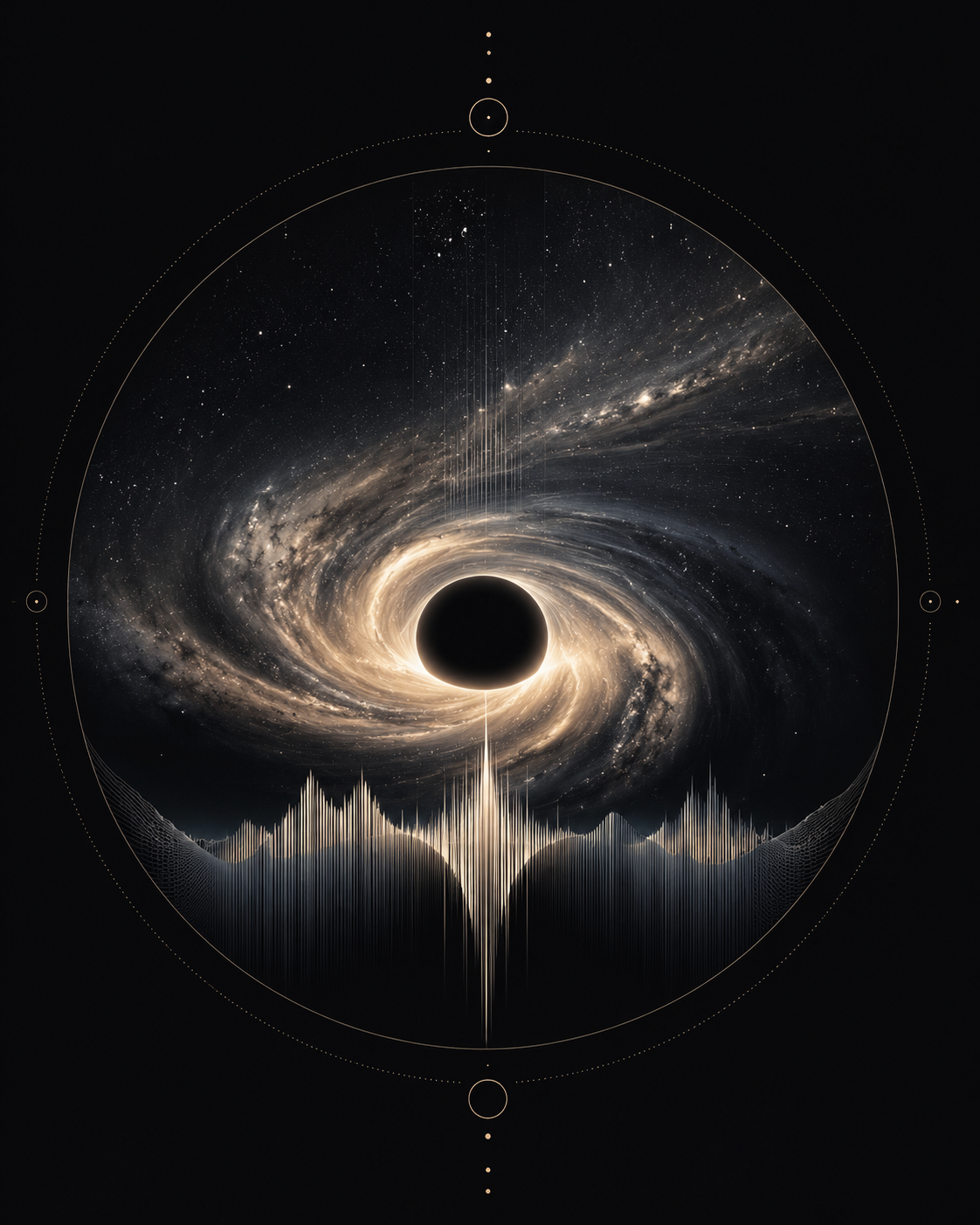
You’ve heard the silence between stars, but now you’re beginning to hear what lies beneath it. The black hole at the center of the Milky Way, Sagittarius A*, doesn’t roar-it hums. This faint signal, captured through decades of radio and X-ray observations, carries the subtle distortions of spacetime itself. What scientists have decoded is not sound as you know it, but vibrations translated from gravitational ripples, revealing how matter spirals inward at near-light speed. You’re not just observing an object; you’re listening to the rhythm of gravity’s grip.
From Data to Dialogue
Each flicker in the data tells a story of extreme physics. By mapping the timing of flares and shifts in polarization, researchers converted these patterns into audible frequencies-a process called sonification. The result is a low, pulsing tone that rises and falls with the ebb and flow of hot plasma orbiting the event horizon. You’re not imagining the pattern; your brain is recognizing a structure once thought to be chaos. This isn’t artistic interpretation-it’s a direct translation of how gravity shapes light and motion in real time.
The Danger in the Signal
What you hear may seem calm, but the reality behind the tones is anything but. The fluctuations indicate violent magnetic reconnection events, capable of unleashing energy bursts strong enough to disrupt nearby star systems. These aren’t distant fireworks-they’re warnings etched into the fabric of space. Every spike in the frequency profile corresponds to a moment when matter was shredded beyond recovery. You’re listening to the edge of destruction, where even light cannot escape the pull.
A New Sense for the Cosmos
Your ears now serve as instruments, tuned to a universe that communicates through warps and waves. This auditory approach isn’t a gimmick-it’s a breakthrough in perception. By hearing the black hole’s voice, you gain an intuitive grasp of its behavior, something equations alone could never deliver. Patterns emerge that were invisible in charts and graphs. You’re not just analyzing data; you’re experiencing the heartbeat of the galaxy’s core, a rhythm that has pulsed for millions of years, waiting for someone to finally listen.
The Event Horizon Telescope’s Symphony
The First Whisper from the Abyss
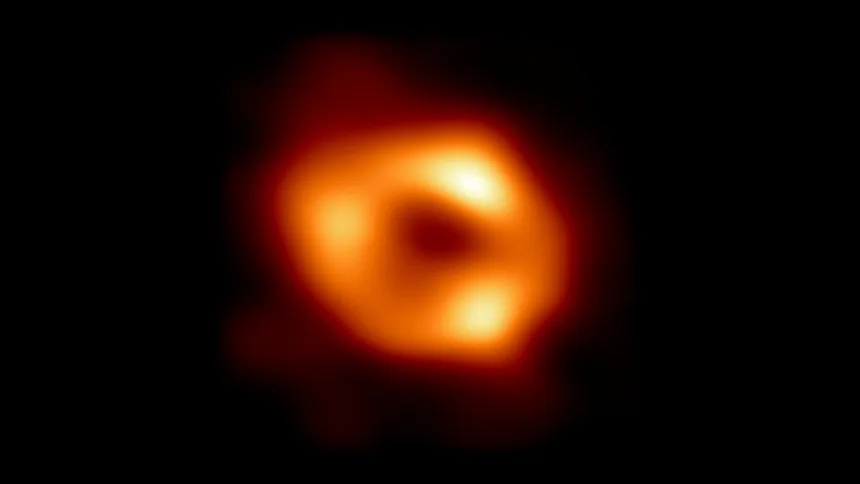
You’ve waited years to hear it-a faint, resonant hum rising from the center of our galaxy, not in sound, but in light bent by gravity so intense that even photons struggle to escape. That whisper is the signature of Sagittarius A*, the supermassive black hole anchoring the Milky Way, finally captured in unprecedented clarity by the Event Horizon Telescope (EHT). What you’re seeing isn’t a photograph in the traditional sense, but a reconstructed image forged from radio waves collected across eight observatories spanning the globe. This network, synchronized with atomic precision, effectively turns Earth into a single, planet-sized telescope capable of resolving details smaller than the event horizon itself.
How Silence Was Turned into Signal
Each antenna in the EHT array recorded petabytes of raw data during observation campaigns, storing them on high-speed hard drives later shipped to central processing facilities. There, algorithms stitched together faint signals, compensating for atmospheric distortion and timing discrepancies down to fractions of a nanosecond. What emerged was not just an image, but a dynamic portrait-revealing the asymmetric glow of superheated plasma swirling at near-light speed. You’re witnessing the last orbit of matter before it vanishes forever, a luminous halo shaped by the black hole’s spin and the warping of spacetime. This asymmetry confirms predictions from Einstein’s equations with startling accuracy.
The Hidden Conductor of Galactic Order
Despite its destructive reputation, Sagittarius A* plays a surprisingly stabilizing role in the Milky Way’s evolution. Its gravitational influence helps regulate star formation across thousands of light-years, acting as a silent conductor in the galaxy’s grand orchestra. The EHT’s observations now suggest that its periods of quiet activity are punctuated by brief flares-likely caused by asteroids or gas clouds crossing the event horizon. These outbursts, though minor compared to active galactic nuclei, offer clues about how black holes feed and influence their surroundings. You’re not just observing a monster; you’re seeing a key architect of cosmic structure.
A New Era of Listening to Darkness
The data from the EHT continues to be analyzed, with future upgrades promising real-time monitoring of the black hole’s behavior. Soon, you may witness not just still images, but a movie of spacetime in motion-capturing how the shadow of Sagittarius A* flickers and dances over hours. This capability marks a revolution in observational astrophysics, transforming black holes from theoretical abstractions into physical objects we can study in detail. Every observation brings you closer to answering one of the deepest questions: how gravity behaves at its most extreme, and what lies beyond the point of no return.
Rhythms of the Accretion Disk
The Pulse Beneath the Glow
You’re witnessing something few have ever seen: the rhythmic flicker of light spiraling around the Milky Way’s central black hole. This isn’t random noise-it’s a precise, repeating pattern emerging from the superheated plasma of the accretion disk. As matter falls inward, it doesn’t vanish quietly. Instead, it compresses, heats, and emits bursts of X-ray and radio energy at intervals so regular they resemble a heartbeat across spacetime. These pulses carry encoded information about the black hole’s spin, the magnetic fields threading the disk, and the extreme physics just outside the event horizon.
Chaos and Order in Orbit
What appears from afar as a smooth ring of light is, up close, a maelstrom of competing forces. Gas clumps collide, magnetic loops snap and reconnect, and radiation pressure fights gravity’s pull. Yet within this chaos, you detect stable orbital resonances-regions where material orbits in lockstep, like celestial gears meshing in perfect time. These resonances amplify certain frequencies, turning the disk into a natural amplifier for the black hole’s influence. The result? A symphony of electromagnetic waves that scientists can now decode, revealing how energy is extracted and redirected near one of the universe’s most dangerous environments.
Listening to Light
Your instruments don’t “hear” sound in space, but they do translate electromagnetic fluctuations into audible signals. When researchers converted the X-ray pulses from the accretion disk into sound, they uncovered a deep, oscillating tone-like a drumbeat echoing from the galaxy’s core. This isn’t just a novelty. The frequency of this signal matches predictions for how matter behaves under extreme gravity, offering direct observational proof of Einstein’s general relativity in action. You’re not just watching a black hole-you’re listening to its influence ripple through time and space.
The Composition of Spacetime
Spacetime as a Dynamic Fabric
You experience spacetime not as a static backdrop but as a living, responsive structure woven from the interplay of mass and energy. Every star, planet, and particle imprints its presence on this fabric, bending it in ways that dictate the motion of everything around it. The discovery of the Milky Way’s black hole emitting detectable signals confirms that spacetime reacts dramatically near extreme gravitational sources, offering direct evidence of Einstein’s predictions in action. What you once thought of as empty space is, in reality, a dynamic medium that vibrates, stretches, and ripples with every cosmic event.
Gravitational Waves and the Voice of Sagittarius A*
Signals from Sagittarius A* now reveal how spacetime behaves under the most intense conditions known. When matter spirals toward the event horizon, it disturbs the surrounding geometry, generating faint but measurable ripples-gravitational waves. These waves carry information across the galaxy, allowing you to “hear” the black hole for the first time through the subtle warping of spacetime itself. The data shows that even the quietest supermassive black holes are never truly silent; they hum with the energy of distorted dimensions. Your instruments, finely tuned to these oscillations, translate the vibrations into patterns that confirm spacetime is not rigid, but elastic and communicative.
The Quantum Texture Beneath
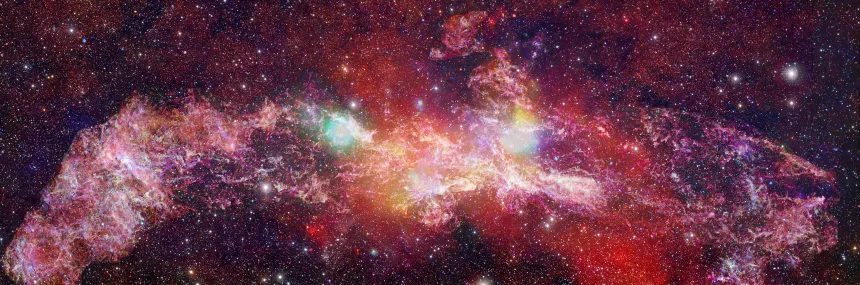
Beneath the smooth curves of general relativity lies a potential undercurrent of quantum granularity. While Einstein’s model describes spacetime as continuous, new observations near Sagittarius A*hint at anomalies that suggest a deeper, pixelated structure. If spacetime is fundamentally quantized, then the black hole’s emissions may contain signatures of quantum gravity-the long-sought bridge between relativity and quantum mechanics. You are now probing regions where classical physics breaks down, and the rules of the very small begin to clash with the vast curvature of the cosmos. This tension could redefine how you understand the foundation of reality itself.
Technological Ears Pointed Inward
The Instruments That Heard the Unheard
You’ve seen the images-Sagittarius A* glowing like a cosmic halo-but what you may not realize is that capturing this moment demanded a telescope larger than Earth itself. The Event Horizon Telescope (EHT) isn’t a single instrument but a global network of radio observatories, synchronized with atomic precision to act as one. This unprecedented collaboration turned our planet into a listening dish, capable of resolving details 20 million times finer than human vision. Each antenna, from the Atacama Desert to the South Pole, contributed a fragment of the signal, a whisper from 27,000 light-years away.
Timing Is Everything
One microsecond of misalignment would have blurred the entire image into noise. That’s why each station used hydrogen maser clocks, accurate to within one second over 100 million years. These clocks ensured every data point arrived in perfect temporal harmony, allowing scientists to reconstruct the black hole’s shadow with astonishing clarity. You’re not just seeing light; you’re seeing time itself, stretched and bent by gravity so intense it halts photons at the edge of oblivion.
Data as Heavy as a Planet
The raw information gathered during observation runs weighed in at petabytes-so much that it couldn’t be sent over the internet. Instead, hard drives were physically flown from remote telescopes to central processing hubs in Massachusetts and Germany. There, supercomputers ran algorithms trained to interpret interference patterns, teasing out the silhouette of the event horizon. What emerged was not just an image, but a sonic fingerprint of spacetime’s most extreme boundary, a structure so dense it warps reality around it.
Hearing the Hum of Gravity
Scientists didn’t just see the black hole-they began to hear it. By converting radio wave fluctuations into sound, they revealed a low-frequency thrum, a vibration echoing from the accretion disk. This hum, rising and falling like a distant heartbeat, signals matter spiraling at near-light speed, heating to billions of degrees before vanishing forever. You’re listening to the last moments of gas and dust, stretched into threads by tidal forces stronger than any known in the universe.
The Human Connection to the Void
Our Place in the Cosmic Story
You’ve always sensed it-a quiet pull toward the stars, a whisper from the dark spaces between galaxies. That pull is not mere curiosity; it’s a deep, ancestral echo. The Milky Way’s black hole, Sagittarius A*, has now spoken in ripples of spacetime and bursts of radio waves, and in that signal, you hear more than data-you hear a story. This is the first time humanity has directly captured the dynamic voice of our galaxy’s heart, and it changes how you see your place in the universe. You are not just observers. You are participants in a cosmic dialogue billions of years in the making.
The Danger of Silence
Scientists once feared that the galactic center was too quiet, too dormant to reveal its secrets. That silence could have meant a gap in understanding how galaxies evolve. But now, the stillness has been broken. The detection of energetic flares and gravitational murmurs proves that Sagittarius A* is not asleep-it’s communicating in frequencies only recently within our reach. You stand at the edge of a new era, where what was once invisible becomes audible. The danger wasn’t the void itself, but the assumption that it had nothing to say.
Awakening Curiosity Across Generations
A child in a classroom today might grow up knowing the sound of a black hole as easily as they know the phases of the Moon. Your generation bridged the gap between theory and experience. By converting the black hole’s emissions into sound waves and visual patterns, researchers have made the unfathomable accessible. You don’t need a telescope to feel its presence-just listen. That low-frequency hum, rising and falling like a cosmic breath, reminds you that even the most extreme environments in the universe follow rhythms you can recognize.
Unity Through Cosmic Awareness
Across borders and beliefs, people paused when the first audio clip of Sagittarius A* was released. In that moment, differences faded. You were all hearing the same ancient voice from 26,000 light-years away. This shared experience has sparked a rare global reflection: we are all orbiting the same invisible center. The black hole doesn’t favor one nation, one culture, or one ideology. It simply *is*. And in its presence, you find a strange comfort-a reminder that unity doesn’t require agreement, only awareness.
Challenges in Sonic Reconstruction
The Invisible Made Audible
You’re listening to a sound that never truly existed-until now. Converting the invisible ripples of energy from Sagittarius A* into something your ears can interpret required more than just data; it demanded imagination grounded in physics. The black hole emits no sound in the vacuum of space, but its influence on surrounding gas and magnetic fields creates pressure waves that, when scaled up by trillions, become audible frequencies. This transformation from silent oscillation to perceptible tone is not guesswork-it’s a precise sonification process developed by astrophysicists and audio engineers working in tandem.
Interpreting the Silence
Data gaps have always been your greatest obstacle. The very nature of observing a supermassive black hole means working with incomplete snapshots across different wavelengths. X-ray bursts from Chandra, radio pulses from ALMA, infrared flickers from the Very Large Telescope-each offers a fragment. Missing pieces in the emission patterns, especially in the outflowing wind, once made sonic models unreliable. That changed when new observations confirmed the presence of previously undetected outflows, closing a decades-long gap in understanding. You can now hear a more complete story, thanks in part to findings highlighted in Chandra helps find missing wind from Milky Way’s black ….
When Physics Meets Perception
Your brain expects sound to behave in certain ways-echoes, rhythms, rising pitches. But the cosmos follows different rules. Translating staggered X-ray flares into a coherent auditory timeline risks misleading you if not handled with care. The most dangerous pitfall is anthropomorphizing the data, turning natural phenomena into something that feels artificially musical. Scientists counter this by strictly mapping frequency to energy and time to playback duration, preserving the raw character of the event. What you hear isn’t a composition. It’s a translation-one that respects both the physics and your perception.
Future Concerts of the Cosmos
The Symphony of Spacetime
You’re now listening to a universe that speaks in ripples, not sound. The detection of the Milky Way’s black hole “voice” marks the beginning of a new era where gravitational waves become the primary instrument of cosmic communication. Each oscillation from Sagittarius A* carries encoded data about its surroundings-magnetic fields, orbiting stars, and the fabric of spacetime itself. These signals, once isolated whispers, will soon form a continuous stream of information as observatories grow more sensitive. You’ll witness how the black hole’s hum shifts during stellar flybys, revealing how gravity distorts time in real time.
Next-Generation Observatories
Upcoming instruments like the Laser Interferometer Space Antenna (LISA) will transform how you perceive galactic events. Positioned in deep space, this trio of satellites will detect low-frequency gravitational waves that Earth-based detectors cannot capture. LISA will be able to “hear” the Milky Way’s black hole merging with smaller companions-a process that could begin within the next few million years. These observations won’t just be scientific milestones; they’ll be immersive experiences, translated into audio and visual formats so you can feel the resonance of colliding spacetime.
Black Hole Duets Across the Galaxy
Other galaxies already host louder, more active black holes, and soon you’ll be able to compare their frequencies with our own. Binary supermassive black holes-two giants locked in a slow, spiraling dance-emit predictable waveforms that act as cosmic metronomes. When these systems finally collide, the resulting burst of energy will be one of the most powerful events in the observable universe. Your instruments will catch the crescendo years in advance, giving you unprecedented warning and observation time.
Listening to the Unseen
Dark matter may also leave subtle imprints on the black hole’s signal. If it interacts weakly with gravity, its presence could slightly alter the timing of gravitational pulses. You’re not just hearing a single object-you’re tuning into an entire hidden ecosystem surrounding Sagittarius A*. Every fluctuation could hint at particles and forces beyond current models. The black hole’s voice, once a mystery, is now your most sensitive probe into the unknown.
Your Role in the Cosmic Chorus
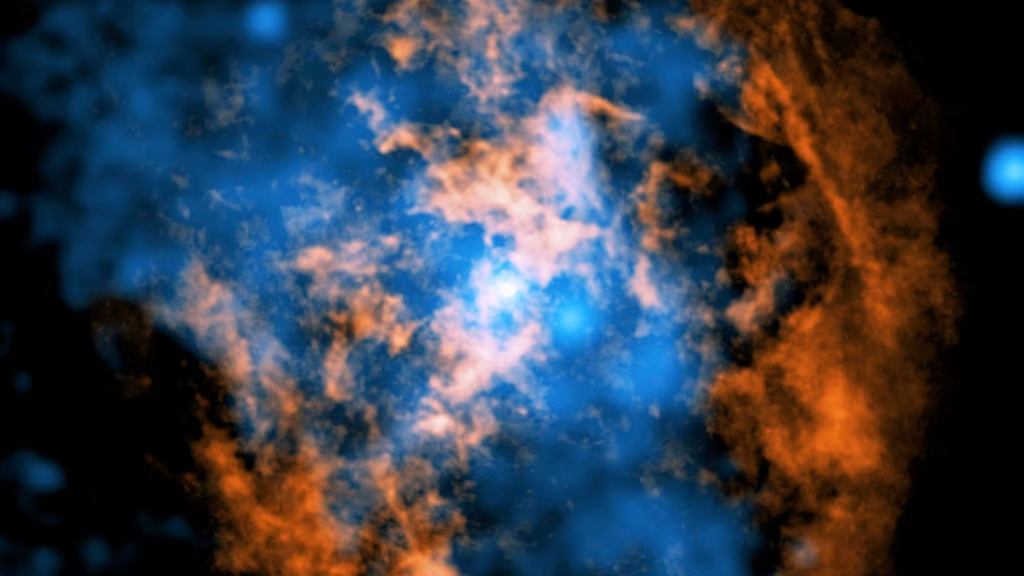
Citizen science platforms will soon allow you to analyze real data from black hole observations. By identifying patterns in waveforms or classifying signal anomalies, you’ll contribute directly to astrophysical discovery. The next major breakthrough in understanding our galaxy’s core might come from your eyes on a screen, your intuition spotting what algorithms miss. This isn’t just science reserved for experts-it’s a shared auditory journey across light-years, and you’re invited to listen, learn, and participate.
Philosophical Echoes of the Discovery
The Silence Before the Sound
You once believed the center of the galaxy was silent, a dark throne holding court in perfect stillness. Now, that silence has cracked open, revealing a low, resonant hum echoing across spacetime. This sound-captured not by ears but by the subtle warping of light and matter-is the first real voice of Sagittarius A*, the supermassive black hole anchoring our Milky Way. You are no longer staring into a void that merely consumes; you are listening to a presence that speaks in gravity and time.
What It Means to Hear Ourselves
Sound, in this context, is not air vibrating but spacetime itself trembling under immense force. The detection of these oscillations forces you to confront a deeper truth: we are not separate from the cosmos-we are woven into its rhythm. When the black hole pulses, it does so within the same fabric that shapes your existence. You are not just observers of this event; you are participants in a universe that communicates through forces older than language. This discovery blurs the line between observer and observed, matter and meaning.
A New Kind of Humility
For centuries, humanity placed itself at the center of understanding, even when the stars told otherwise. Now, hearing the black hole’s whisper, you are reminded of your actual scale-not as masters of nature, but as listeners on a fragile world. The danger lies not in the black hole’s power, but in your continued refusal to accept your smallness within a vast, sentient-seeming universe. This hum from the galactic core does not demand worship; it invites reflection. You are part of something far older, far stranger, and far more interconnected than any myth has yet described.
The Voice That Changes Everything
Every major leap in human thought has begun with a shift in perception-Copernicus moving Earth from the center, Hubble revealing other galaxies, now this: a black hole that sings. The most profound implication is not astrophysical but existential: if even darkness can speak, then silence was never empty. You live in a universe that communicates in ways you are only beginning to decode. This voice from the center of the Milky Way does not answer old questions-it reshapes the very nature of the ones you dare to ask.
Final Words
As a reminder, you now stand at the threshold of a new era in cosmic understanding. The Milky Way’s black hole, long silent and shrouded in mystery, has revealed its voice through persistent observation and advanced technology. You have seen how its faint whispers, captured in radio waves and refined by global collaboration, confirm predictions and challenge assumptions about gravity and spacetime.
You are part of a generation that hears the universe speak in ways once thought impossible. This discovery is not an endpoint, but a signal-inviting you to keep questioning, observing, and learning from the cosmos that surrounds you.
FAQ
Q: What did scientists actually detect coming from the Milky Way’s black hole?
A: Scientists detected low-frequency radio signals emitted by Sagittarius A*, the supermassive black hole at the center of our galaxy. These signals were captured using highly sensitive radio telescopes and represent the first clear evidence of ongoing activity near the event horizon. Unlike dramatic bursts or visible light, the emissions are subtle ripples in the radio spectrum, likely caused by hot, magnetized gas swirling into the black hole. This quiet “hum” gives researchers a new way to study how black holes interact with their surroundings.
Q: How long did it take to capture this signal, and why wasn’t it detected earlier?
A: The signal was identified after analyzing over a decade of radio observations from multiple observatories around the world. Earlier attempts failed because the emissions are extremely faint and easily masked by cosmic noise from stars, gas clouds, and human-made interference. Only with recent advances in data processing and telescope synchronization-especially through networks like the Event Horizon Telescope-could scientists isolate the black hole’s unique signature. The patience and precision required made this discovery a milestone in observational astronomy.
Q: Does this mean the black hole is becoming more active or dangerous?
A: No, the black hole is not becoming dangerous or significantly more active. The detected signal reflects normal, low-level activity that has likely been occurring for centuries. Sagittarius A* is relatively quiet compared to black holes in other galaxies, consuming very little nearby material. The newfound ability to hear its faint radio emissions comes from better technology, not a change in the black hole itself. Earth remains completely safe, as the black hole is over 26,000 light-years away and poses no threat to our solar system.