





Wearable History – The Revolutionary New Patches of the FIFA World Cup
The FIFA World Cup has always been the ultimate theater of dreams, a global stage where momentary flashes of brilliance are permanently etched into footballing folklore. For nearly a century, the tournament has evolved from a simple gathering of national teams into a multi-billion-dollar cultural phenomenon where heritage, identity, and modern innovation intersect. In recent years, this evolution has found a magnificent new canvas: the football jersey itself. Gone are the days when a kit was merely a blend of polyester and national colors meant to distinguish one side from another. Today, international kits serve as highly sophisticated, wearable historical records.
By introducing an advanced, layered hierarchy of official sleeve and chest patches, FIFA, in collaboration with elite sports licensing and collectible brands, has revolutionized the visual storytelling of the beautiful game. These precisely engineered badges turn tournament jerseys into dynamic historical archives, allowing fans, tactical analysts, and casual viewers to instantly decode a player’s individual milestones, career longevity, past tournament triumphs, and national heritage at a single glance on their high-definition screens.
This modern initiative bridges the deep-seated nostalgia of retro digital gaming and physical card collecting with the fast-paced, high-stakes reality of contemporary international football. It adds an unprecedented layer of narrative depth to every pass, tackle, and celebration. Furthermore, the lifecycle of these patches extends far beyond the stadium floodlights; selected game-worn kits featuring these unique badges are systematically cataloged and preserved to be embedded into premium physical trading cards and global museum exhibitions, ensuring that the history created on the pitch becomes a tangible relic for generations to come.
A New Era of World Cup Heritage: How Jersey Badges Transformed Modern Football Storytelling
To fully appreciate the cultural weight of these modern jersey patches, one must understand how international football has traditionally honored its history. For decades, the only true visual indicator of historical success on a national kit was the inclusion of stars meticulously embroidered above a country’s football federation crest—each star representing a hard-fought World Cup championship victory. While those stars still hold an sacred status, they only tell the story of the collective nation, completely obscuring the individual journeys, sacrifices, and miraculous achievements of the individual athletes wearing the shirts.
The introduction of the new multi-tiered patch system completely disrupts this old paradigm, shifting the spotlight onto both national pride and personal elite performance simultaneously. This systematic visual architecture categorizes players based on their hard-earned status, creating an elite ecosystem where a footballer’s shirt acts as a literal resume of their international career. When a squad steps out of the tunnel and lines up for the national anthems, the array of patches gleaming under the stadium lights tells a silent yet incredibly powerful story of who they are, where they have been, and what they have conquered.
For the global sports marketing industry and memorabilia collectors, this innovation represents a golden era of authenticity. Every single patch is embedded with micro-texturing, anti-counterfeiting holographic elements, and precise tournament metadata, transforming ordinary sportswear into high-value historical artifacts. Fans are no longer just watching a tactical battle between two nations; they are witnessing an active, living museum where a player’s historic achievements are visually integrated into their armor as they fight for ultimate glory.
Official World Cup & Winner’s Patch: The Visual Hierarchy of Football Royalty

The foundation of a country’s visual identity during the tournament begins on the right sleeve, a designated space traditionally reserved for the official tournament logo. However, FIFA has transformed this standard real estate into a powerful tool of psychological prestige by establishing a strict color-coded hierarchy that immediately separates football royalty from the rest of the field. Every single participating country carries the official tournament emblem displaying the coveted World Cup trophy silhouette, but the color palette of that emblem is determined entirely by past historical dominance.
Nations that are still chasing their first-ever world title or have historically struggled to break through the elite barriers of the knockout rounds are assigned the standard monochrome variation of the patch, typically rendered in sharp, clean black or white depending on the base color of the jersey kit. This sleek, modern badge represents the baseline of global excellence—it signifies that a nation has successfully navigated the grueling continental qualification process and earned the right to stand among the top teams on the planet. Yet, it also serves as a stark reminder of the ultimate mountain they have yet to climb.
In contrast, an elite circle of traditional footballing superpowers is granted the exclusive privilege of wearing the prestigious Gold Edition of the Official Tournament Patch. This radiant gold badge is reserved solely for former world champions, serving as an immediate visual reminder of a nation’s historical dominance and deep footballing lineage before the referee even blows the opening whistle. When powerhouses like Brazil, Germany, Italy, Argentina, France, Uruguay, England, and Spain step onto the pitch, the gleaming gold on their sleeves projects an aura of immense authority and psychological intimidation. It tells their opponents that they are not just playing against eleven contemporary athletes, but against the crushing weight of a historic legacy that knows exactly how to win the ultimate prize.
Iconic Examples of the Official World Cup & Winner’s Patch:
The Five-Star Elite (Brazil): The Seleção carry the glorious Gold Winner’s Patch on their sleeve, perfectly complementing the five iconic stars above their crest, reminding the world of their unmatched status as five-time champions.
The European Powerhouses (Germany & France): Both nations sport the gold-variant emblem, a testament to their modern dominance and rich history of lifting the golden trophy across different eras.
The Chasers (Croatia, Netherlands, Morocco): Despite reaching the absolute pinnacle of tournament semi-finals and finals in recent history, these elite nations wear the standard monochrome version, fueling their fierce hunger to finally unlock the gold patch.
World Champion Patch: The Ultimate Shield of Global Supremacy
While the gold sleeve emblem honors a nation’s historic lineage across the decades, there is one badge that represents the absolute zenith of current, undisputed global supremacy. Placed proudly and conspicuously in the absolute center of the jersey chest, nestled precisely between the national team crest and the technical sponsor logo, sits the FIFA World Champion Patch. This immaculate gold-and-white shield is the single most prestigious temporary honor in the entire realm of international sports, and its criteria for acquisition are beautifully simple yet brutally difficult: it is reserved exclusively for the reigning title holders, and it can only be worn until a new champion is officially crowned in the World Cup final.
The history of this specific shield is rooted in a desire to give the reigning kings of football a distinct mark of honor that separates them from the rest of the world during their four-year reign. It is a symbol of absolute tactical, physical, and mental perfection, earned through a grueling tournament run where a single misstep means elimination. For forty-eight months, the players of the winning nation wear this golden shield as a literal target on their chests, an open invitation for every opponent to give their absolute best effort to defeat the reigning monarchs.
Wearing the World Champion Patch changes the dynamic of every single international match, transforming standard qualifiers and friendly fixtures into high-stakes battles where opponents fight desperately to claim the scalp of the world champions. It infuses a squad with a profound sense of supreme confidence while simultaneously demanding total accountability; you cannot play a mediocre match when the golden shield of FIFA is gleaming on your sternum. It is a badge of honor that every child dreaming of football hopes to wear just once in their lifetime, representing the ultimate validation of a career fully realized.
Iconic Examples of the World Champion Patch:

Argentina (Current Cycle): Following their legendary, cinematic triumph in the Qatar final, Lionel Messi and his Albiceleste teammates have worn the golden shield at the center of their chests, defending it with fierce national pride across every continent.
France (2018–2022 Era): Led by a youthful Kylian Mbappé, the Les Bleus carried this prestigious shield across global stadiums, cementing their status as the absolute benchmark of international excellence during their four-year reign.
Germany (2014–2018 Era): After their clinical victory in Brazil, the Die Mannschaft proudly displayed the shield, embodying a golden generation of tactical and technical perfection.
Debut: The Birth Certificate of a Future Icon
There is no emotion in sports quite like the overwhelming mix of pride, adrenaline, and pure terror that a young footballer experiences when stepping onto a World Cup pitch for the very first time. To capture and immortalize this unique psychological milestone, the innovative “Debut” patch was created. Awarded exclusively to an athlete during their opening minutes of their first-ever World Cup match, this badge features an intricate, laser-cut design that signifies raw promise, rising talent, and the fulfillment of a lifelong childhood dream.
The inclusion of the Debut patch is a masterstroke of sports storytelling because it instantly contextualizes the narrative of the match for millions of viewers watching worldwide. When a manager turns to his substitutes’ bench late in a tense group-stage match and calls upon a teenage prodigy, the immediate application or uncovering of that Debut patch shifts the energy of the stadium. It reminds the audience that they are witnessing a historic origin story in real-time—the exact moment a young athlete transitions from a localized domestic talent into a certified warrior on the global stage.
Every single legendary career in football history, from Pelé in 1958 to modern icons, had to begin with a nervous, breathless first step onto the tournament grass. The Debut patch honors that foundational moment, serving as a beautiful tribute to grassroots football development and the relentless scouting networks that unearth talent across the globe. For the players themselves, keeping that specific debut jersey with the unblemished patch intact is a deeply personal rite of passage, a physical proof that they defied the impossible odds to represent their people at the highest level of human competition.
Iconic Examples of the Debut Patch:

Lamine Yamal (Spain): The teenage sensation, having already shattered records at the club and continental level, wears the Debut patch as a symbol of a spectacular new generation of Spanish technical brilliance.
Erling Haaland (Norway): The prolific, record-breaking goal machine brings his terrifying physical presence to the global stage for the first time, with the Debut patch marking the official arrival of international football’s most feared striker.
Andy Robertson (Scotland): The veteran left-back and inspirational leader carries the patch as Scotland marks a historic return to the grandest stage, proving that a debut can be a crowning achievement at any point in an elite career.
Legacy: The Immutable Crown of Football’s Immortal Giants
If the Debut patch represents the exciting dawn of an international career, the highly exclusive, awe-inspiring “Legacy” patch represents its ultimate twilight perfection. Replacing generic veteran labels or simple captaincy bands, this hyper-customized badge is reserved strictly for an immortal echelon of footballers who are participating in their historic fifth (or more) World Cup tournament. To put this achievement into perspective, playing in five World Cups requires maintaining world-class physical conditioning, elite tactical relevance, and unyielding mental resilience across nearly twenty consecutive years on the global stage.
The Legacy patch is a marvel of custom design, tailored specifically to the individual titan who earns it. Each badge is intricately woven with the player’s surname, a stylized golden silhouette capturing their signature playing style, and their respective national flag embedded into the background textures. When a player walks out of the tunnel with the Legacy badge gleaming on their sleeve or chest, it demands immediate, unconditional reverence from referees, opponents, journalists, and fans alike. It signifies that the individual is no longer just a participant in the tournament; they are a living, breathing monument to the sport itself.
Seeing a Legacy patch in active competition is a rare, generational privilege that evokes a profound sense of bittersweet nostalgia. It signals to the world that we are watching the final, majestic chapters of an era that defined the sport for decades. These athletes have survived tactical shifts, outlasted generations of younger challengers, and carried the hopes of their respective nations across multiple decades. The Legacy patch ensures that their unparalleled longevity is properly celebrated in the present moment, cementing their status as immortal icons whose impact on the global game will be studied and revered long after they finally hang up their boots.
Iconic Examples of the Legacy Patch:
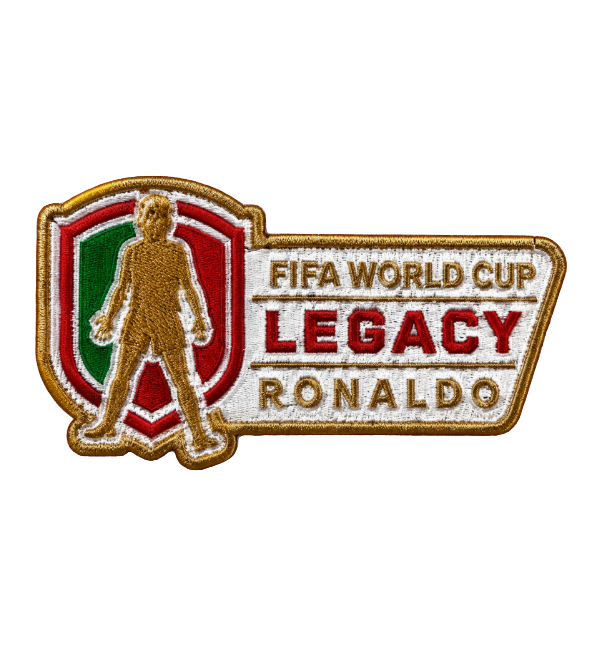

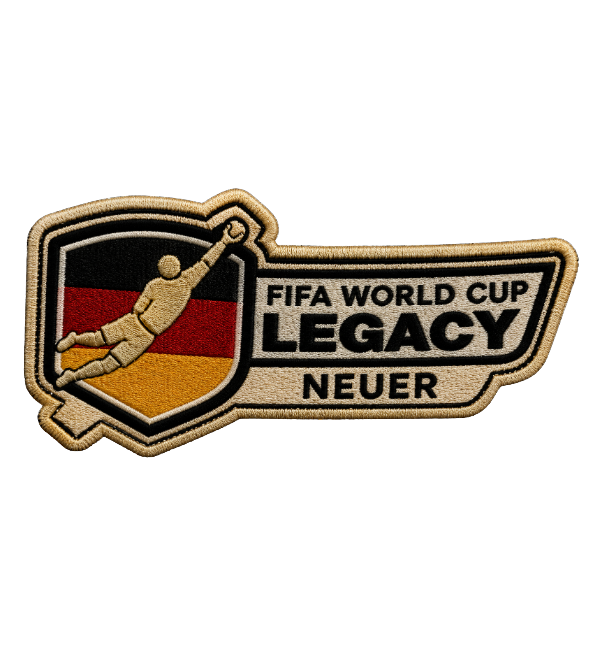

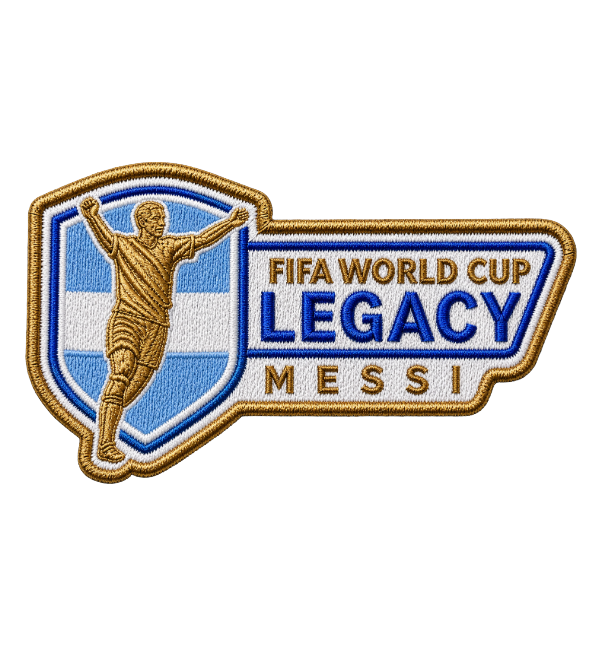
Lionel Messi (Argentina): The ultimate footballing maestro wears a Legacy patch that tells the story of a dramatic, multi-decade journey from a long-haired teenage prodigy in 2006 to the triumphant king of the world, solidifying his status as the greatest to ever play the game.
Cristiano Ronaldo (Portugal): The epitome of athletic perfection and relentless work ethic, Ronaldo’s Legacy patch celebrates an unmatched scoring record across five distinct tournament editions, a testament to his unbreakable willpower.
Luka Modrić (Croatia): The timeless midfield orchestrator carries the Legacy badge as a tribute to an extraordinary career where he repeatedly defied physics and age, leading a proud nation to unprecedented heights.
Manuel Neuer (Germany): The revolutionary “sweeper-keeper” sports the Legacy patch on his goalkeeper jersey, honoring two decades of redefining the art of goalkeeping on the world’s biggest stage.
Yuto Nagatomo (Japan): The legendary, tireless full-back embodies the samurai spirit of consistency and dedication, wearing his Legacy badge as an inspiration for the rapidly growing powerhouse of Asian football.
Golden Ball Patch: The Badge of the Ultimate Master Artist
Individual excellence within a team sport reaches its absolute pinnacle with the presentation of the tournament’s Golden Ball—the award given to the single best player across the entire World Cup campaign. To honor the rare living legends who have previously claimed this monumental prize, FIFA introduced the “Golden Ball” patch. This hyper-exclusive sleeve badge features a stunning, metallic gold rendering of a classic football surrounded by an artistic laurel wreath, symbolizing supreme creative intellect, match-winning wizardry, and an extraordinary tournament performance that bordered on the divine.
To win a Golden Ball, an athlete must do more than simply score goals; they must completely dominate the tempo of games, inspire their teammates through impossible moments of adversity, and leave an indelible artistic mark on the history of the tournament. Because this award is voted on by technical experts and international journalists, it represents the ultimate peer validation of footballing genius. Consequently, seeing the Golden Ball patch on a modern pitch is an exceptionally rare occurrence, reserved only for a select few generational maestros who have demonstrated the capacity to carry an entire nation’s dreams on their shoulders.
When a midfielder or forward receives the ball while sporting the Golden Ball patch, the entire stadium holds its collective breath. Opposing managers are forced to alter their entire defensive structures specifically to neutralize the player wearing this badge, deploying double-teams and tactical fouls just to disrupt their vision. The patch serves as a visible warning code to the opposition: you are not dealing with a standard elite footballer; you are entering the grid with a verified master artist who has already mastered the grandest stage in human sports.
Iconic Examples of the Golden Ball Patch:

Lionel Messi (Argentina – 2014 & 2022 Winner): As the only player in football history to win the tournament’s ultimate individual honor twice, Messi’s kit carries a unique iteration of this patch, commemorating his heartbreakingly beautiful run in Brazil and his triumphant masterpiece in Qatar.
Luka Modrić (Croatia – 2018 Winner): The magical maestro wears the Golden Ball patch as a permanent reminder of his legendary 2018 campaign in Russia, where his sublime passing and tireless leadership carried a nation of four million people all the way to the World Cup final.
Golden Boot Patch: The Mark of the Ruthless Clinical Assassin
While the Golden Ball celebrates the artistic brilliance of the tournament’s finest overall player, the “Golden Boot” patch honors a completely different, highly lethal breed of footballer: the undisputed top goalscorer. This badge, designed with a sleek, aggressive golden silhouette of a striking football boot, is awarded exclusively to those elite attackers who have previously claimed the top-scorer title at a past World Cup. It is the ultimate mark of the clinical assassin, celebrating the ruthless efficiency, positioning instinct, and ice-cold composure required to consistently find the back of the net under extreme global pressure.
Scoring a single goal at a World Cup is enough to make a player a hero for life in their home country, but winning the Golden Boot requires embarking on a sustained scoring tear against the most organized, disciplined defensive structures in the world. The Golden Boot patch visualizes this terrifying offensive capability directly onto the striker’s kit, serving as an immense psychological boost for the wearer and a source of deep anxiety for opposing center-backs. It tells the defensive line that the man standing across from them does not need multiple chances to destroy their tournament dreams; he only needs a single half-yard of space or a momentary lapse in concentration.
The physical presence of the Golden Boot patch completely changes the gravity of an attacking third. Strikers wearing this badge possess an innate, unteachable understanding of space, timing, and structural vulnerability, allowing them to anticipate deflections and errors a split-second before they happen. For fans and tactical analysts, tracking the movement of a player wearing the Golden Boot patch provides a masterclass in modern offensive movement, showcasing the absolute pinnacle of finishing artistry under the unforgiving glare of the global spotlight.
Iconic Examples of the Golden Boot Patch:

Kylian Mbappé (France – 2022 Winner): The explosive, terrifying forward sports the Golden Boot patch following his historic, breathtaking hat-trick in the Qatar final, confirming his status as the most lethal and unstoppable big-game scorer of the modern era.
Harry Kane (England – 2018 Winner): The quintessential modern number nine wears the badge as a tribute to his clinical, masterfully organized goalscoring campaign in Russia, where his penalties and poaching instincts led the Three Lions deep into the tournament.
James Rodríguez (Colombia – 2014 Winner): The talismanic playmaker carries the patch as a beautiful reminder of his magical, breakout summer in Brazil, where his audacious volleys and creative scoring bursts captivated the entire planet.
Golden Glove Patch: The Shield of the Impenetrable Guardian
In a sport that naturally romanticizes goalscorers and creative playmakers, the men who stand alone between the goalposts are often overlooked until the absolute fate of a nation rests on their fingertips. To ensure that the monumental contributions of defensive saviors are properly celebrated, FIFA introduced the “Golden Glove” patch. Positioned conspicuously on the sleeve or chest of the specialized goalkeeper jersey, this brilliant badge displays a stylized golden goalkeeper glove, reserved exclusively for the elite guardians who have been officially voted the absolute best goalkeeper of a past World Cup tournament.
The psychological burden borne by an international goalkeeper is immense; while an attacker can miss multiple chances throughout a match and still redeem themselves with a late winner, a goalkeeper can execute ten miraculous saves but be permanently vilified for a single, microscopic error in the ninetieth minute. The Golden Glove patch honors the extraordinary mental toughness, cat-like reflexes, and defensive organization required to maintain clean sheets against the most sophisticated attacking forces on Earth. It transforms the goalkeeper’s jersey into a literal psychological shield, projecting a sense of total security to their defensive line and an aura of complete impenetrability to approaching attackers.
When a striker breaks through a high-pressing defensive line and finds themselves in a one-on-one breakaway, catching a glimpse of the Golden Glove patch on the approaching goalkeeper’s chest can cause a fatal moment of hesitation. It reminds the attacker that they are not just trying to beat an ordinary shot-stopper; they are facing a certified titan who has historically defied the laws of physics to deny the greatest players in the world. The patch celebrates those unforgettable, high-drama moments—from fingertip saves in extra time to cold-blooded penalty shootout heroics—that ultimately decide who hoists the golden trophy and whose heart is broken.
Iconic Examples of the Golden Glove Patch:
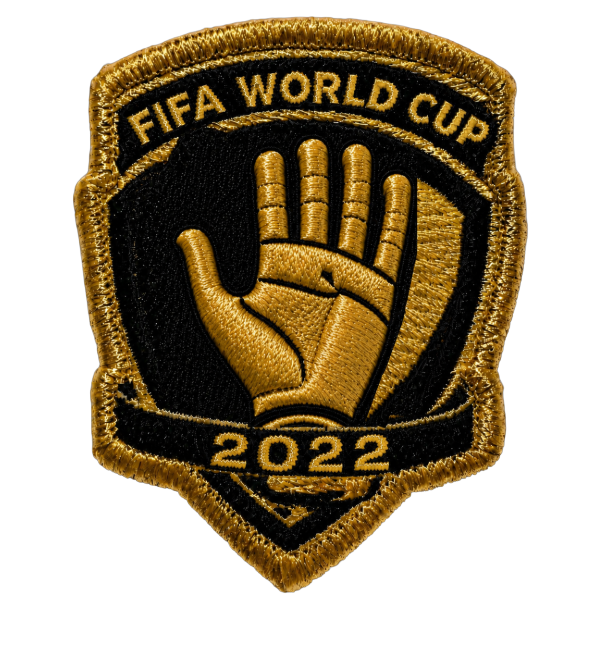
Emiliano Martínez (Argentina – 2022 Winner): The charismatic, fiercely competitive penalty specialist sports the Golden Glove patch, a permanent tribute to his legendary, heart-stopping 123rd-minute save in the Qatar final and his subsequent shootout mastery that secured global glory.
Thibaut Courtois (Belgium – 2018 Winner): The towering, aerially dominant Belgian guardian carries the badge as a testament to his spectacular, wall-like performance in Russia, where his acrobatic extensions systematically dismantled the world’s most elite offenses.
Frequently Asked Questions (FAQ)
Can a player wear multiple individual award patches on their jersey at the same time?
Yes, absolutely. FIFA’s official uniform regulations permit players who have won multiple distinct individual accolades throughout their careers to display all corresponding patches simultaneously on their designated kit real estate. For example, a transcendent, generation-defining athlete like Lionel Messi has the unique honor of wearing the exclusive “Legacy” patch on one section of his kit, alongside his historic “Golden Ball” patch, while his chest simultaneously features the prestigious gold-and-white FIFA “World Champion” Patch. This multi-badge integration creates the ultimate visual masterpiece, transforming the jersey into an elite, wearable historical archive of unparalleled athletic achievement.
How do these real-world jersey patches connect to digital gaming and physical collectibles?
The introduction of these physical patches represents a highly calculated, multi-platform synergy between real-world international football and the massive global industries of digital gaming and physical sports memorabilia. The visual architecture of the badges deliberately mirrors the high-end, rare card tiers found in popular digital football simulation modes, instantly appealing to younger, tech-savvy demographics. Furthermore, through official partnerships with elite collectible and trading card brands, selected jerseys worn by players during actual World Cup matches are systematically collected, authenticated, and cut into small pieces to be permanently embedded into premium, limited-edition physical trading cards, allowing collectors to own a literal piece of the patch and jersey history.
What happens to a player’s patch status if their country wins the World Cup during the tournament?
The visual hierarchy of the patches remains locked from the opening match of the group stage until the final whistle of the tournament to maintain structural consistency and sporting integrity. If a nation successfully navigates the knockout rounds and wins the World Cup, they do not immediately alter their jerseys on the pitch during the tournament itself. Instead, the transition occurs immediately after the official trophy presentation. The newly crowned champions are officially presented with their customized kits featuring the golden FIFA “World Champion” Patch for the first time during the locker room celebrations and the subsequent global victory tour, which they will proudly defend for the next four years.