




Over 50 years, physicists pursued the Higgs boson, the particle that gives mass to all matter. You exist because of its field. Without it, electrons, atoms, and stars could not form. In 2012, the Large Hadron Collider confirmed its existence-a landmark discovery reshaping your understanding of reality’s foundation.
The Invisible Ocean
What You’re Swimming Through Right Now
You exist inside a field no instrument can see, yet it shapes every atom in your body. The Higgs field permeates all of space, even the vacuum between stars, and it is the reason anything has mass at all. Without it, electrons would zip away at light speed, atoms couldn’t form, and the universe as you know it would not exist. This invisible presence isn’t magic-it’s physics, confirmed by decades of prediction and experimentation.
Why Mass Isn’t What You Think
Mass feels like a basic property, something inherent to matter. But the Higgs mechanism reveals a deeper truth: particles gain mass by interacting with the Higgs field. The stronger the interaction, the heavier the particle. Photons, for example, don’t interact at all-they remain massless and travel at light speed. But W and Z bosons absorb mass from the field, which is why the weak nuclear force has such a short range. Your own mass, down to the quarks in your protons, comes from this cosmic drag.
The Ripple That Proved the Ocean
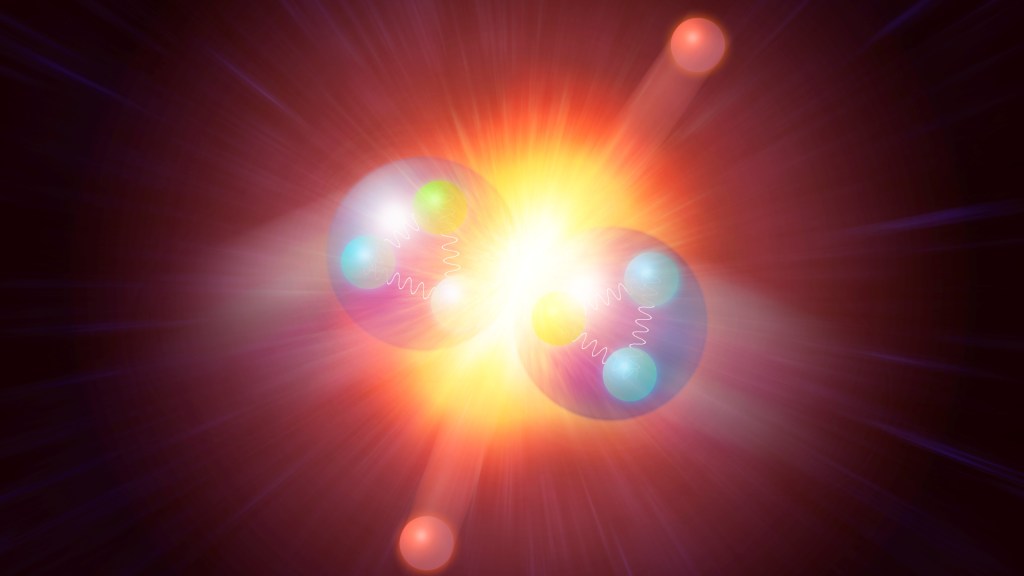
In 2012, scientists at CERN detected a tiny disturbance in the field-a ripple confirming its existence. That ripple was the Higgs boson, the particle associated with the Higgs field. Finding it was like seeing a splash in an invisible sea, proof that the ocean was real. The discovery didn’t just complete the Standard Model; it validated a 50-year-old theoretical framework that now underpins our understanding of reality. You’re not just reading about history-this is the foundation of how everything holds together.
What Happens If the Field Changes
The Higgs field has remained stable since the early universe, but that stability isn’t guaranteed forever. If the field were to shift to a lower energy state, a bubble of new physics could expand at light speed, rewriting the laws of nature. Within that bubble, atoms might not form, chemistry could cease, and life as you know it would be impossible. This isn’t science fiction-such a phase transition is theoretically possible, though current data suggests it’s unlikely for billions of years, if ever. Still, the mere possibility shows how delicate the balance of our universe truly is.
The Great Search at CERN
Probing the Heart of Matter
You stand at the edge of one of the most complex machines ever built-the Large Hadron Collider (LHC)-a 27-kilometer ring buried 100 meters beneath the French-Swiss border. This machine accelerates protons to 99.999999% the speed of light before smashing them together, recreating conditions a fraction of a second after the Big Bang. Each collision produces a burst of energy and particles, some of which exist for less than a trillionth of a second. Your goal is not to see the Higgs boson directly-it decays too quickly-but to detect its signature among the debris. The sheer energy required to produce it meant physicists had to wait decades for technology to catch up with theory.
Detectors That See the Invisible
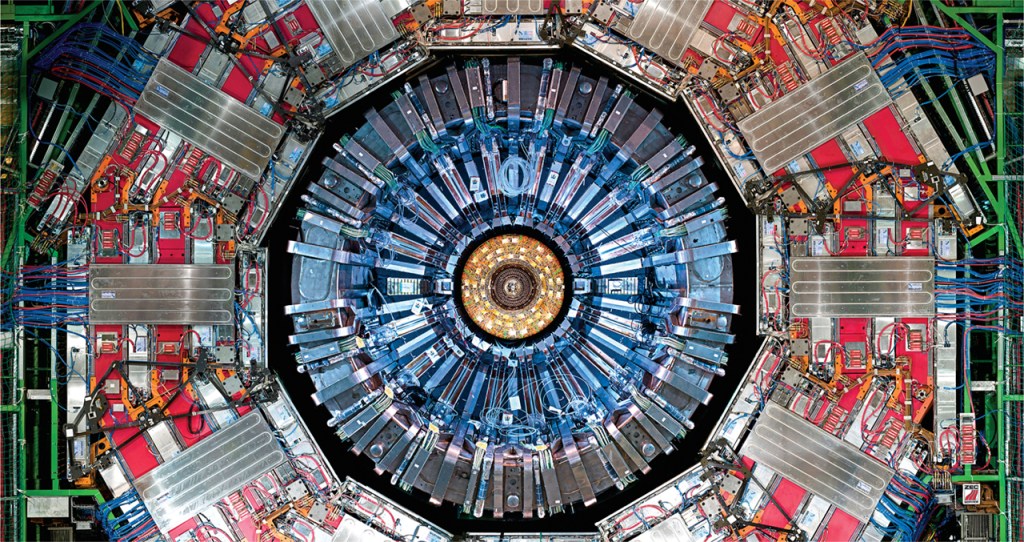
Four main detectors line the LHC’s tunnel, each designed like a giant, layered onion to capture different types of particles. ATLAS and CMS, the two largest, are your primary tools in the hunt. These detectors weigh thousands of tons and contain millions of sensors that track the paths, energies, and identities of particles born in each collision. When a Higgs boson forms, it instantly decays into other particles-photons, Z bosons, bottom quarks-leaving behind a unique fingerprint. You analyze petabytes of data, searching for a tiny excess of events at a specific energy: 125 billion electronvolts. That number becomes the most important clue in confirming the Higgs’s existence.
The Risk of Failure
Billions of dollars and the careers of thousands of scientists rested on whether the Higgs would appear. If it didn’t, decades of theoretical work would face a crisis. The Standard Model, which predicted the Higgs, would need a complete overhaul. There was also the very real danger that the LHC could fail mechanically-superconducting magnets quenching, vacuum leaks, or software errors-halting progress for months. Even with flawless operation, background noise from common particle decays could drown out the Higgs signal. You had to be certain, not just hopeful. Statistical significance-measured in sigma levels-would determine whether you’d found a discovery or just a fluke.
A Triumph of Persistence
On July 4, 2012, the world watched as CERN scientists announced they had observed a new particle consistent with the Higgs boson. The signal reached a 5-sigma threshold, meaning there was less than a one-in-a-million chance it was random noise. You felt the weight of that moment-not just as a scientific milestone, but as a testament to human curiosity and collaboration. Over 10,000 scientists from more than 100 countries had contributed. The discovery didn’t just complete the Standard Model; it opened new questions about dark matter, the stability of the universe, and whether more undiscovered particles await in higher energy realms.
The Fabric of the Future
Unseen Forces, Visible Impact
You live in a universe shaped by invisible rules, where forces you cannot see dictate how everything behaves. The Higgs boson is no longer just a particle confined to high-energy collisions-it’s a key to understanding how mass itself emerges from the quantum field. Every time you feel the weight of an object in your hand, you’re experiencing the aftermath of interactions with the Higgs field. Without it, electrons would zip away at light speed, atoms would never form, and the matter you know-including your own body-would not exist. This isn’t speculation; it’s the confirmed foundation of how reality holds itself together.
Engineering the Next Era
Particle accelerators like the Large Hadron Collider were once seen as tools for pure discovery, but now they’re becoming blueprints for future technologies. The engineering feats required to detect the Higgs boson have already led to advances in superconducting magnets, cryogenics, and data processing. These innovations are now being adapted for medical imaging, radiation therapy, and even quantum computing architectures. You’re already benefiting from Higgs-related research, even if you don’t realize it. The pursuit of fundamental knowledge often seeds practical revolutions in ways no one can predict.
What Lies Beyond the Standard Model
The discovery of the Higgs boson completed the Standard Model, but it also exposed its limitations. You now know that this model doesn’t account for dark matter, dark energy, or gravity. The Higgs could be a portal to new physics-perhaps it interacts with unknown particles or even decays into invisible forms of matter. Experiments are already searching for these rare behaviors. If such decays are found, they would be among the most important breakthroughs in modern physics, reshaping your understanding of the cosmos.
A Field of Possibility
The Higgs field permeates all of space, but its exact properties-like its strength and stability-could determine the ultimate fate of the universe. If the field is metastable, a catastrophic quantum event could one day rewrite the laws of physics in a bubble expanding at light speed. This isn’t science fiction; it’s a real possibility grounded in current measurements. Yet, the same field also enables stars, planets, and life. You exist because of a delicate balance-one that could be far more fragile than it appears.
Shaping Tomorrow’s Discoveries
Future colliders are being designed not just to study the Higgs more precisely, but to produce thousands of them for detailed analysis. These machines could reveal whether the Higgs interacts with itself, how it couples to lighter particles, and whether it has hidden siblings. What you learn in the next two decades may answer whether our universe is unique or just one of many in a vast multiverse. The Higgs boson, once a missing piece, is now a guidepost pointing toward the next frontier of human knowledge.
Final Words
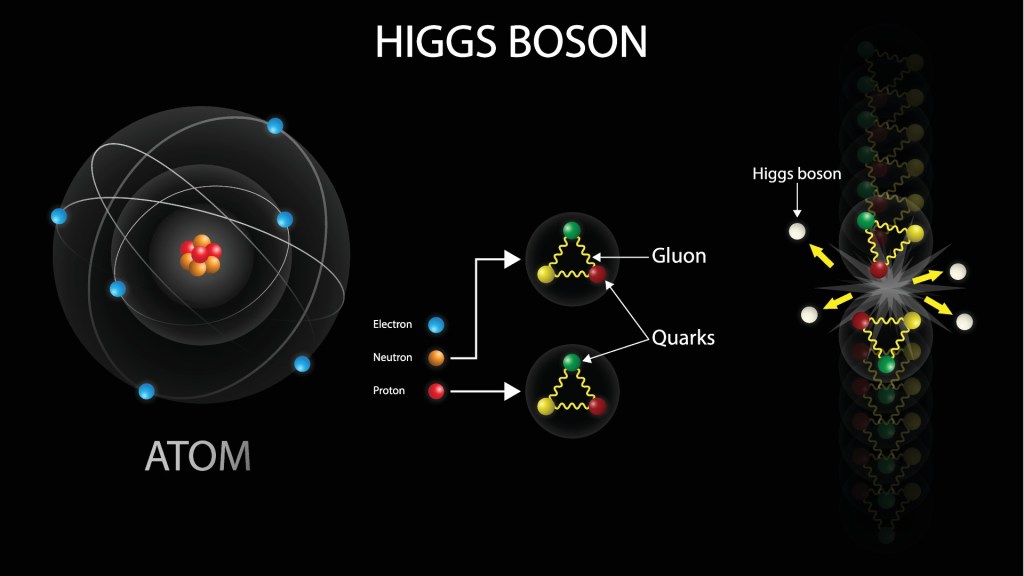
So the Higgs boson is not just another particle-it’s the key to why anything has mass at all. You exist, planets form, and stars shine because this particle interacts with the Higgs field across the universe. Without it, electrons would zip away at light speed, atoms wouldn’t bind, and matter as you know it wouldn’t exist. The 2012 discovery at CERN confirmed a 50-year-old theory, closing one chapter of physics while opening others.
You now stand at a threshold. The Higgs boson answers a foundational question, yet it raises new ones about dark matter, gravity, and the stability of the universe. Your understanding of mass is complete-but the deeper structure of reality still waits.
FAQ
Q: What is the Higgs boson and why is it called the ‘God Particle’?
A: The Higgs boson is a fundamental particle associated with the Higgs field, an invisible energy field that gives mass to other elementary particles like electrons and quarks. When particles interact with this field, they gain mass-the stronger the interaction, the heavier the particle. The term ‘God Particle’ originated from the title of a book by physicist Leon Lederman, who reportedly wanted to call it the ‘Goddamn Particle’ because of how difficult it was to detect. The nickname stuck in popular media, though most scientists avoid it because it overstates the particle’s role and creates misleading religious connotations. The Higgs boson does not create the universe, but it helps explain why matter has mass, which is vital for the formation of atoms, stars, and planets.
Q: How was the Higgs boson discovered?
A: The Higgs boson was discovered in 2012 at CERN, the European Organization for Nuclear Research, using the Large Hadron Collider (LHC). Scientists accelerated protons to nearly the speed of light and collided them inside massive detectors like ATLAS and CMS. These collisions produced extreme energy conditions similar to those just after the Big Bang. By analyzing the debris from billions of collisions, researchers identified a new particle with a mass of about 125 billion electron volts (GeV) that matched the predicted properties of the Higgs boson. The discovery confirmed a key part of the Standard Model of particle physics, a theory that describes the fundamental particles and forces in the universe. The work earned François Englert and Peter Higgs the Nobel Prize in Physics in 2013.
Q: Does the Higgs boson explain the origin of all mass?
A: The Higgs boson explains the origin of mass for fundamental particles like quarks and electrons, but it does not account for all mass in the universe. Most of the mass in everyday objects comes from the binding energy that holds protons and neutrons together, not from the Higgs mechanism. Protons and neutrons are made of quarks, which do get their small intrinsic mass from the Higgs field, but over 90% of their total mass arises from the strong nuclear force interactions between quarks and gluons, as described by quantum chromodynamics. The Higgs field is vital for giving elementary particles their mass, but it plays a minor role in the overall mass of composite particles and visible matter. Dark matter and the mass of the universe as a whole remain unexplained by the Higgs boson alone.