




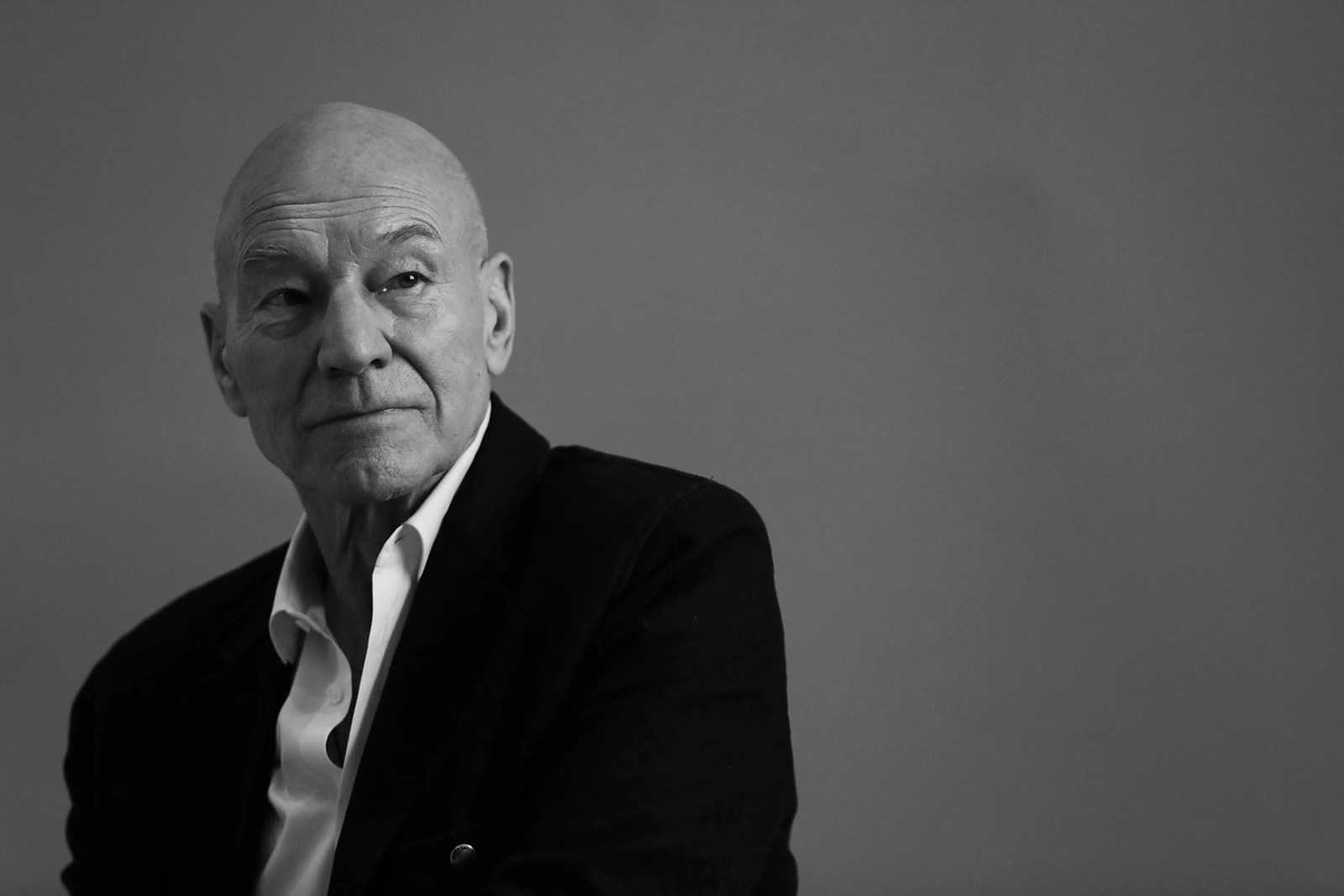
The international cultural sphere has suffered an irreplaceable loss with the passing of Sir Patrick Stewart, an artist whose transformative voice, rigorous stage discipline, and profound human decency fundamentally reshaped both classical theatre and global cinematic storytelling over a career spanning more than six decades. Confirmed by his family and representatives, Stewart passed away peacefully on Wednesday, 28 October 2026, at his home in Los Angeles, California, at the age of 86, surrounded by his wife, Sunny Ozell, and his extended family. His passing marks the close of an unmatched chapter in dramatic history, drawing heartfelt mourning and tributes from heads of state, renowned artistic institutions, fellow performers, and millions of devoted spectators across Europe, North America, and every continent where his work left an indelible mark.
Stewart occupied a singular place in the history of modern performance. He belonged to that extraordinary cadre of mid-twentieth-century British classical actors whose formidable stage roots became the foundation for iconic screen achievements. Long before he commanded the starship USS Enterprise as Captain Jean-Luc Picard or founded Xavier’s School for Gifted Youngsters as Professor Charles Xavier, Stewart was recognized within theatrical circles as one of the most intellectually rigorous and emotionally resonant verse-speakers of the Royal Shakespeare Company. His transition into global blockbuster franchises did not compromise his high artistic standards; instead, it elevated science fiction, fantasy, and superhero cinema into arenas of serious moral inquiry, diplomatic idealism, and philosophical depth.
The Mirfield Foundations: Poverty, Trauma, and the Sanctuary of the Spoken Word
Born on 13 July 1940 in Mirfield, a small industrial town in the West Riding of Yorkshire, Patrick Hewes Stewart was raised in modest, challenging working-class conditions. The younger son of Gladys Barrowclough, an industrious weaver and textile worker, and Alfred Stewart, a regimental sergeant major in the British Army who had served in the King’s Own Yorkshire Light Infantry and the Parachute Regiment, Patrick’s early years were shaped by the social realities of post-war northern England. His father suffered from what was then dismissively categorized as shell shock, but is now understood as acute post-traumatic stress disorder. The domestic volatility resulting from his father’s untreated psychological trauma created an atmosphere of instability in the household.
Stewart frequently recalled in later life that the theatre became his sanctuary, a space where order, discipline, and emotional truth could conquer uncertainty. At Mirfield Church of England Secondary Modern School, a pivotal encounter changed the trajectory of his life. An English teacher named Cecil Dormand handed Stewart a volume of William Shakespeare and instructed him to stand and read aloud before the class. The young boy discovered an innate affinity for the cadence, precision, and emotional architecture of classical drama. In the lines of the Elizabethan and Jacobean masters, he found an articulate vocabulary for experiences and feelings that had previously felt unnamable.
At age fifteen, Stewart left school to enter the workforce, taking a position as a junior reporter and obituary writer for the local Mirfield & District Reporter. Yet the amateur dramatic societies of Dewsbury, Wakefield, and Mirfield claimed all his imaginative energy. When local editorial management presented him with an ultimatum demanding he choose between regional news reporting and stage rehearsals, Stewart walked out of the newspaper office without hesitation, committing his future entirely to the dramatic arts. He worked for a period as a furniture salesman, saving every shilling to fund auditions and living expenses, before earning a competitive scholarship in 1957 to train at the prestigious Bristol Old Vic Theatre School.
| Stage Institution | Active Timeline | Distinction and Impact |
| Bristol Old Vic Theatre School | 1957 to 1959 | Intensive classical actor training under the British repertory tradition |
| Library Theatre Manchester | 1959 to 1961 | Early regional repertory apprenticeship across classical drama |
| Royal Shakespeare Company | 1966 to 1982 | Core Company Member and lifelong Associate Artist |
| West End Theatrical Seasons | 1978 to 2011 | Landmark runs in Shakespeare, Pinter, and modern British dramatic works |
| Broadway and International Tours | 1991 to 2014 | Celebrated Broadway adaptations, including A Christmas Carol and Waiting for Godot |
The Royal Shakespeare Crucible: Twenty-Seven Years of Classical Rigour
The training at Bristol Old Vic introduced Stewart to the rigours of voice production, physical agility, and textual analysis under the guidance of legendary voice coach Duncan Ross. After early professional repertory engagements with the Library Theatre in Manchester and regional companies in Sheffield, Liverpool, and Birmingham, Stewart auditioned for the Royal Shakespeare Company in 1966. His admission into the company marked the beginning of a creative association that would span nearly three decades, establishing him as one of the finest classical actors of his generation.
During his formative RSC years in Stratford-upon-Avon and at the Aldwych Theatre in London, Stewart worked alongside towering theatrical minds including Peter Brook, Sir Trevor Nunn, Terry Hands, and John Barton. In 1970, he participated in Peter Brook’s legendary, white-box production of A Midsummer Night’s Dream, portraying Snout. Brook’s radical staging stripped away Victorian decorative traditions, relying instead on circus acrobatics, stark white surfaces, and direct textual clarity to release the play’s psychological energy. The production toured globally, including extended runs in New York, Paris, and Tokyo, altering the landscape of twentieth-century stage direction and broadening Stewart’s artistic horizons.
Stewart tackled a vast spectrum of classical characters across the dramatic canon. He appeared as Hector in Troilus and Cressida, the title role in King John, Cassius in Julius Caesar, Touchstone in As You Like It, and Claudius in Hamlet. In 1978, his magnetic portrayal of Enobarbus in Peter Brook’s production of Antony and Cleopatra, opposite Glenda Jackson and Alan Howard, earned him the Society of West End Theatre Award, now known as the Laurence Olivier Award, for Best Actor in a Supporting Role. Reviewers noted his capacity to humanize complex characters, delivering verse with natural conversational ease while preserving poetic metric precision.
In parallel with his ensemble work, Stewart developed a celebrated solo adaptation of Charles Dickens’s A Christmas Carol. Performing all thirty-eight characters through vocal transformation and subtle physical mannerisms, without elaborate costumes or scenic machinery, Stewart’s solo show debuted in London before captivating Broadway audiences in 1991. The production garnered critical acclaim, including a Drama Desk Award for Outstanding One-Person Show, returning to Broadway and West End stages for multiple seasons and becoming a celebrated theatrical tradition.
Theatrical Repertoire Highlights
- A Midsummer Night’s Dream: Snout (Directed by Peter Brook, World Tour 1970)
- Antony and Cleopatra: Enobarbus (Olivier Award Winner, RSC 1978)
- The Merchant of Venice: Shylock (RSC Stratford and International Seasons)
- Othello: Othello (Photo-negative production, Shakespeare Theatre Company 1997)
- The Tempest: Prospero (RSC and West End 2006)
- Macbeth: Macbeth (Chichester Festival, West End, BAM, Broadway 2007 to 2008)
- Hamlet: Claudius / Ghost (Olivier Award Winner, RSC 2008)
- Waiting for Godot: Vladimir (Opposite Sir Ian McKellen, Theatre Royal Haymarket 2009)
- No Man’s Land: Hirst (Opposite Sir Ian McKellen, West End and Broadway 2013 to 2016)
The Bridge of the Enterprise: Reinventing Science Fiction Leadership
By the mid-1980s, Stewart was an accomplished leading actor in Great Britain, yet largely unfamiliar to general American television audiences outside of British period imports such as the BBC’s I, Claudius (in which he played the ruthless Sejanus) and John le Carré’s Tinker Tailor Soldier Spy and Smiley’s People (in which he portrayed the enigmatic Soviet spymaster Karla). In 1986, while conducting a public literary reading at the University of California, Los Angeles, Stewart caught the attention of television producer Robert Justman. Justman immediately recognized that Stewart possessed the gravitas, vocal command, and emotional intelligence required to lead Paramount Pictures’ revival of the Star Trek franchise: Star Trek: The Next Generation.
Franchise creator Gene Roddenberry was initially resistant to the concept of casting a bald, middle-aged British classical actor to captain a predominantly American-produced television enterprise. Studio executives expressed comparable reservations, questioning whether American viewers would connect with a commanding figure who lacked the rugged, swashbuckling physicality associated with William Shatner’s Captain James T. Kirk. However, during formal screen tests, Stewart’s authority and articulate bearing convinced Roddenberry that he had discovered the central figure for this new era of science fiction.
When Star Trek: The Next Generation premiered in September 1987, Captain Jean-Luc Picard quickly proved to be a revolutionary departure from conventional action protagonists. Stewart approached the character not as a space cowboy, but as an enlightened French philosopher, seasoned diplomat, and resolute moral guardian. Picard was an explorer whose primary weapons were intellect, historical perspective, international law, and articulate rhetoric. Over seven seasons spanning 178 episodes and four major motion pictures, Stewart made Picard a worldwide symbol of rationalism, civil liberties, and ethical command.
Episodes such as “The Measure of a Man”—in which Picard defends the sentient civil rights of the android Data against military requisition—and “The Inner Light”—where Picard lives out an entire lifetime of a long-dead alien civilization through a memory probe—became landmarks of dramatic television. Stewart’s willingness to ground science-fiction scenarios in Shakespearean psychological depth elevated the entire medium, demonstrating that popular serialized television could engage critically with fundamental philosophical and moral questions.
| Franchise Milestone | Release Period | Format | Cultural and Narrative Impact |
| Star Trek: The Next Generation | 1987 to 1994 | Syndicated Television (178 Episodes) | Replaced action tropes with diplomacy, ethics, and philosophical depth |
| Star Trek Generations | 1994 | Feature Film | Bridged original series continuity with Next Generation leadership |
| Star Trek: First Contact | 1996 | Feature Film | Critically lauded theatrical triumph examining obsession and trauma |
| Star Trek: Insurrection | 1998 | Feature Film | Moral exploration of cultural sovereignty and military interventionism |
| Star Trek: Nemesis | 2002 | Feature Film | Final cinematic voyage for the original Next Generation enterprise crew |
| Star Trek: Picard | 2020 to 2023 | Streaming Television (3 Seasons) | Deconstructive study of aging, institutional disillusionment, and legacy |
Stewart returned to the character nearly two decades after Star Trek: Nemesis in the critically acclaimed Paramount+ series Star Trek: Picard (2020–2023). Insisting that the narrative explore an aged, vulnerable Picard confronting institutional decay, physical mortality, and personal regret, Stewart turned the series into a poignant meditation on aging and historical consequence. The acclaimed third season in 2023 reunited the original core cast for an emotional farewell, earning widespread praise for its artistic maturity, thematic closure, and emotional resonance.

Professor Charles Xavier and the Genesis of Modern Superhero Cinema
In 2000, director Bryan Singer embarked on the cinematic adaptation of Marvel Comics’ X-Men, a project that would lay the structural foundations for the twenty-first-century comic book movie boom. For comic book enthusiasts and industry commentators, there was only one actor alive who possessed the physical silhouette, aristocratic bearing, and moral authority to embody Professor Charles Francis Xavier: Sir Patrick Stewart.
Stewart’s portrayal of Xavier, the telepathic champion of peaceful coexistence between mutants and humans, provided the thematic core of the franchise. Approaching the material with absolute artistic conviction, Stewart treated the conflict between Xavier’s integrationist philosophy and Erik Lehnsherr’s separatist radicalism as a direct modern parallel to the civil rights struggles of the mid-twentieth century.
The casting of Stewart opposite his close friend and classical theatre compatriot Sir Ian McKellen as Magneto was an inspired creative triumph. The pair brought decades of mutual respect, classical repertoire mastery, and intense dramatic weight to their roles. Their philosophical confrontations elevated comic book films from juvenile action entertainment into serious examinations of discrimination, human rights, state surveillance, and minority marginalization.
Across multiple films, including X-Men (2000), X2: X-Men United (2003), X-Men: The Last Stand (2006), and the ambitious time-travel epic X-Men: Days of Future Past (2014), Stewart remained the empathetic core of mutantkind. His dedication culminated in James Mangold’s critically acclaimed neo-western masterpiece Logan (2017).
In Logan, Stewart delivered what many critics consider the finest screen performance of his cinematic career. Stripped of the polished authority and pristine resources of Xavier’s School, Stewart portrayed a ninety-year-old Charles Xavier deteriorating from a degenerative brain disease, confined to an abandoned water tank in the desert near the Mexican border, cared for by Hugh Jackman’s exhausted Wolverine. Stewart rendered the tragic unraveling of the world’s most powerful mind with unflinching honesty, blending confusion, lucid sorrow, and gentle humor. The performance earned widespread critical acclaim, celebrating how classical vulnerability could give profound emotional depth to comic book cinema.
| Film Production | Director | Year | Critical Focus and Narrative Role |
| X-Men | Bryan Singer | 2000 | Grounded comic book adaptations in civil rights themes and dignified drama |
| X2: X-Men United | Bryan Singer | 2003 | Deepened mutant integration debates amid state-sponsored institutional persecution |
| X-Men: The Last Stand | Brett Ratner | 2006 | Tragic confrontation with philosophical consequences and moral sacrifice |
| X-Men: Days of Future Past | Bryan Singer | 2014 | United past and future franchise generations against technological annihilation |
| Logan | James Mangold | 2017 | Raw, poignant deconstruction of dementia, vulnerability, and heroic mortality |
| Doctor Strange in the Multiverse of Madness | Sam Raimi | 2022 | Cameo appearance honoring Xavier’s enduring cultural resonance in the Marvel Cinematic Universe |
Humanitarian Advocacy, Public Service, and Social Leadership
Beyond stage and screen, Sir Patrick Stewart consistently used his public standing to advocate for social justice, human rights, and humanitarian philanthropy. His private life was defined by active civic responsibility, drawing inspiration from his personal experiences to dismantle systemic taboos and provide tangible institutional support to vulnerable communities.
Foremost among his philanthropic commitments was his long-standing work with Refuge, the premier United Kingdom charity dedicated to supporting women and children escaping domestic abuse. For decades, Stewart served as a patron of Refuge, speaking publicly about his childhood memories of his father’s violence toward his mother. He participated in international public awareness campaigns, delivered keynote addresses to parliamentary committees, and worked across Europe and North America to urge men to take responsibility for addressing domestic violence. His candid discussions helped remove shame from survivors, transforming private family trauma into an international crusade for systemic legal and institutional reform.
Stewart was equally active as a patron of Combat Stress, the leading British charity focused on treating mental health conditions, clinical depression, and post-traumatic stress disorder in military veterans. Later in life, having gained medical understanding of his father’s psychological trauma after service in World War II, Stewart expressed deep compassion for veterans navigating psychological distress, advocating for expanded state-funded mental health support across the United Kingdom and Europe.
In educational and civic leadership, Stewart served from 2004 to 2015 as Chancellor of the University of Huddersfield, located near his West Yorkshire birthplace. Rather than viewing the appointment as merely ceremonial, Stewart was an active, visible presence on campus, delivering masterclasses to dramatic arts students, meeting with faculty researchers, and championing widening participation for students from non-traditional and working-class backgrounds.
For readers seeking to understand the neurological challenges Stewart faced in his final days, the Alzheimer’s Association provides extensive research, family guidance, and educational materials regarding neurodegenerative care.
Honors, Royal Investitures, and Global Recognition
Throughout his life, Sir Patrick Stewart received numerous civic, academic, and artistic honors celebrating his enduring cultural contributions. These distinctions reflected his dual standing as an ambassador of the British stage and a global popular culture pioneer whose work unified diverse audiences across international borders.
In the 2001 New Year Honours, Queen Elizabeth II appointed Stewart an Officer of the Order of the British Empire (OBE) in recognition of his services to drama. Nine years later, in the 2010 New Year Honours, he received the highest civil recognition when he was knighted by Queen Elizabeth II at Buckingham Palace, formally becoming Knight Bachelor. The investiture was widely celebrated as a fitting recognition for an artist who rose from modest industrial beginnings in Yorkshire to represent the finest traditions of British dramatic art across the globe.
| Distinction Title | Conferring Body | Recognition Domain |
| Officer of the Order of the British Empire | HM Queen Elizabeth II | Services to British drama and cultural development |
| Knight Bachelor | Buckingham Palace | Outstanding lifetime contribution to performing arts and diplomacy |
| Laurence Olivier Award (Supporting Actor) | Society of London Theatre | Classical performance excellence in Antony and Cleopatra |
| Laurence Olivier Award (Supporting Actor) | Society of London Theatre | Performance as Claudius / The Ghost in Hamlet |
| Grammy Award (Best Spoken Word Album for Children) | National Academy of Recording Arts and Sciences | Excellence in children’s literary audio narration for Prokofiev: Peter and the Wolf |
| Chancellor Emeritus | University of Huddersfield | Over a decade of dedicated university service and academic stewardship |
| Hollywood Walk of Fame Star | Hollywood Chamber of Commerce | Enduring international cinematic and television impact |
His theatrical accolades included two Laurence Olivier Awards and multiple nominations, alongside Drama Desk Awards and Tony Award nominations for his work on Broadway. In the broadcast realm, Stewart received numerous Primetime Emmy Award and Golden Globe Award nominations for works including The Next Generation, Moby Dick (in which he delivered a memorable portrayal of Captain Ahab), and The Lion in Winter. In 1996, Stewart was awarded a Grammy Award for Best Spoken Word Album for Children for his recording of Prokofiev: Peter and the Wolf, underscoring the communicative power of his voice across all mediums.
Personal Life: Companionship, Generosity, and Humor
Stewart’s public gravitas was balanced by a warm personal manner, characterized by self-effacing humor and genuine delight in collaboration. His friendship with Sir Ian McKellen became one of the most celebrated artistic partnerships in modern theatre. Together, they starred in acclaimed West End and Broadway productions of Samuel Beckett’s Waiting for Godot and Harold Pinter’s No Man’s Land, capturing international admiration for their playful companionship and creative synergy.
In his personal life, Stewart was married three times. His first marriage, to Sheila Falconer, lasted from 1966 to 1990 and produced his two children, Daniel and Sophie, both of whom pursued artistic and professional lives away from the spotlight. In 2000, he married television producer Wendy Neuss, an association that concluded in 2003. In 2008, Stewart met American singer-songwriter Sunny Ozell while performing in Macbeth at the Brooklyn Academy of Music. The couple married in 2013, in an intimate ceremony officiated by Sir Ian McKellen. Their partnership brought Stewart deep tranquility, creative vitality, and stability throughout the final chapters of his extraordinary life.
Stewart also discovered a passionate affection for rescue animals, becoming an enthusiastic foster guardian and vocal advocate for pit bulls through his work with the American Society for the Prevention of Cruelty to Animals (ASPCA). Videos of Stewart interacting with foster dogs in his Los Angeles home showed his gentle warmth, endearing him to new generations of fans who knew him not only as an actor, but as an authentic champion of animal welfare.
The Transcendent Voice: Reflections on an Artistic Philosophy
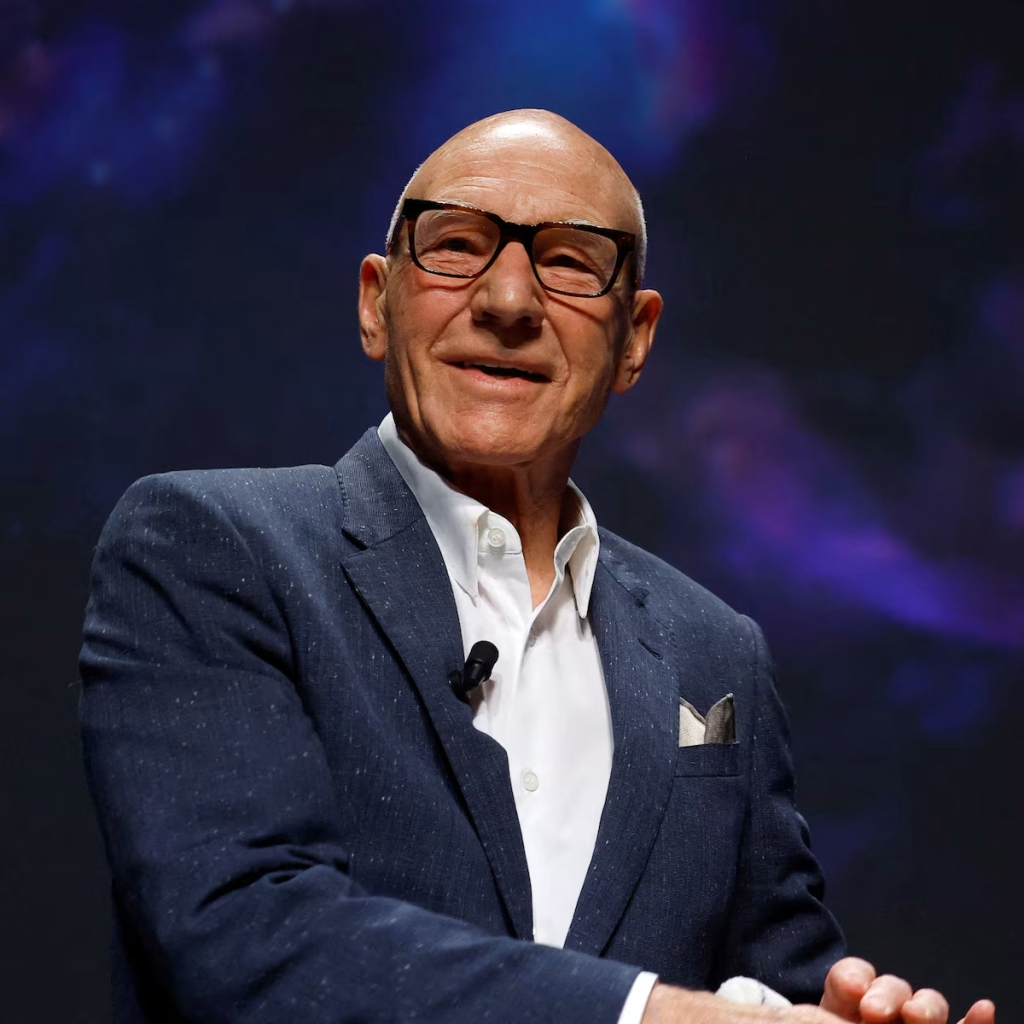
Sir Patrick Stewart operated from a coherent, deeply considered artistic philosophy. He believed drama was not an escapist distraction, but a vital civic space where society could examine its dilemmas, process its collective trauma, and celebrate its highest aspirations. He treated classical verse and mass television scripts with equal seriousness, bringing the same precision, preparation, and emotional truth to a studio soundstage in Burbank as he did to the Royal Shakespeare Theatre in Stratford.
He was celebrated for his generous mentorship of younger actors, instilling a belief that true professionalism requires discipline, humility, punctuality, and an abiding respect for fellow crew members and performers. Directors who collaborated with Stewart remarked on his tireless curiosity. He never relied merely on his vocal power, but interrogated every script, searching for truth, psychological subtext, and authentic human motivation.
Stewart remained an unyielding optimist about human potential. Through Captain Picard, he popularized Gene Roddenberry’s vision of an enlightened future where humanity has overcome poverty, war, and internal division to journey peacefully into the cosmos. Through Professor Xavier, he reminded audiences of the moral courage needed to choose compassion and mutual understanding over hatred and prejudice. These were not merely acting roles for Stewart; they were expressions of his personal world view, shared with millions around the globe.
An Indelible Cultural Legacy
As tributes arrive from cultural institutions, film academies, and fans across the world, Sir Patrick Stewart leaves behind an extraordinary body of work spanning classical stages, mainstream cinema, and episodic television. From the Yorkshire mills of his youth to the pinnacles of stage, screen, and civic leadership, his life showed how classical artistry can illuminate the human condition across diverse platforms.
Colleagues remember a generous friend, a loyal collaborator, and a passionate advocate for social justice. Admirers remember a voice that provided comfort, inspired intellect, and invited audiences to imagine an equitable, courageous, and compassionate future. While the final curtain has fallen on an extraordinary performance, Sir Patrick Stewart’s legacy remains immortal, inspiring generations to reach across differences, uphold moral integrity, and boldly explore the frontiers of human creativity.