





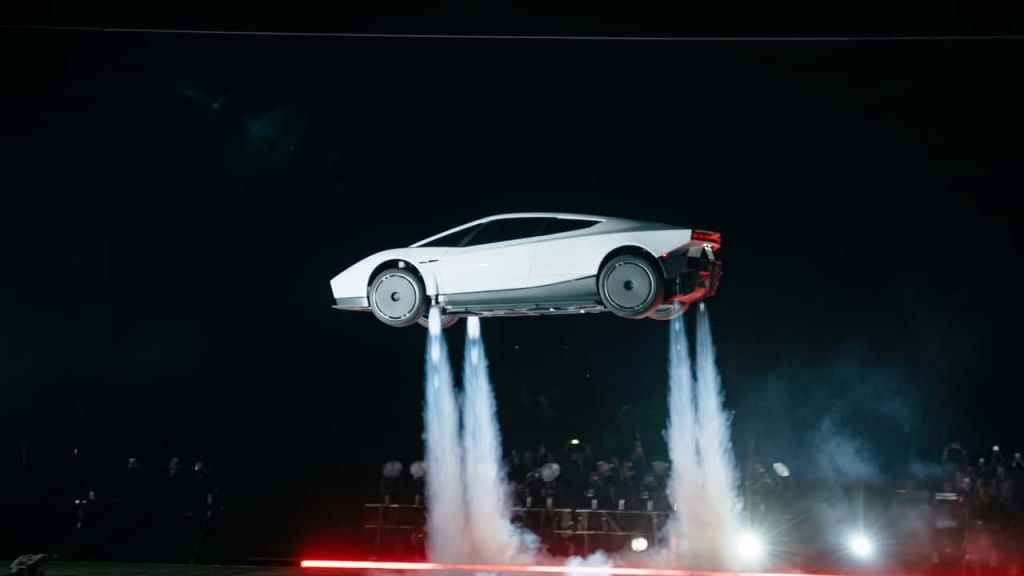
In what stands as one of the most remarkable technical demonstrations in modern automotive history, Tesla has officially revealed its long-awaited next-generation Roadster equipped with rocket thruster technology. Unveiled during a live-streamed keynote demonstration in Texas, Chief Executive Officer Elon Musk presented a fully functional sports vehicle capable of performing vertical hops and mid-air orientation maneuvers powered by high-pressure gas propulsion. The long-delayed flagship project, developed through cross-industry collaboration with SpaceX, shifts the boundaries between land transportation and personal aviation, setting an ambitious production launch target for 2028.
The Technology Behind the Flight: SpaceX Thrusters and Cold-Gas Engineering
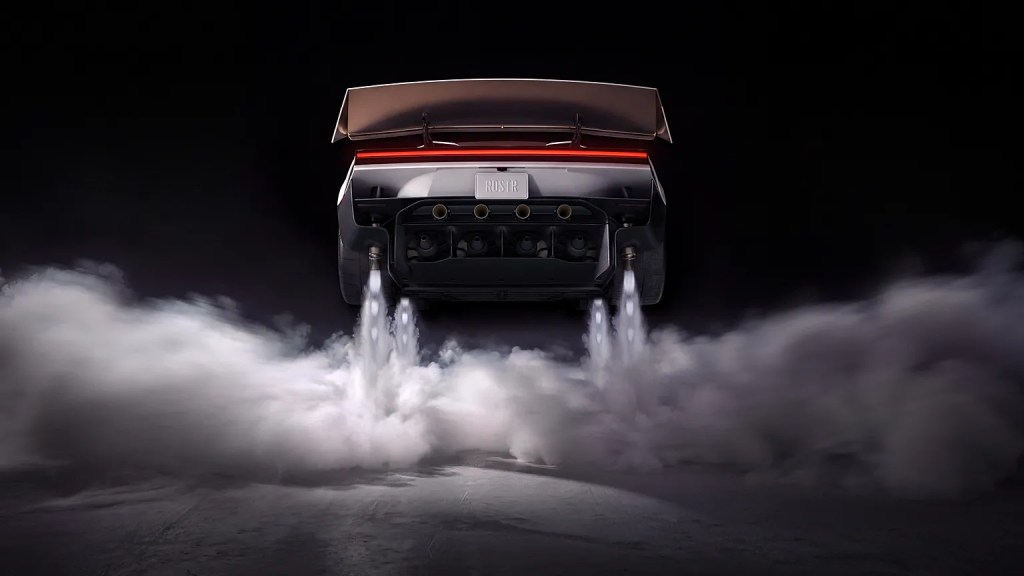
The technical realization of a road-legal electric vehicle with flight capabilities relies on cold-air thruster systems derived from spacecraft reaction control architectures. Rather than relying on traditional rotary wings or tilt-rotor assemblies commonly found in electric vertical takeoff and landing (eVTOL) aircraft, Tesla’s engineering team integrated composite high-pressure air vessels directly into the vehicle’s chassis framework.
Mechanical and Aerodynamic Specifications
| Component / Metric | Technical Specification (European & Global Units) | Performance Impact |
| Acceleration (0–100 km/h) | < 0.95 Seconds | World’s fastest production-targeted road vehicle |
| Top Speed | Over 370 km/h (230 mph) | High-speed highway and track capability |
| Propulsion System | Cold-Gas Air Thrusters + Quad Electric Motors | Instantaneous directional thrust vectoring |
| Air Tank Pressure | ~700 Bar (Composite Pressure Vessels) | Rapid pneumatic burst release for lift off |
| Seating Capacity | 2-Seater Configuration | Optimized weight distribution for lift mechanics |
| Target Production Year | 2028 | Commercial assembly timeline |
By utilizing compressed atmospheric air stored at ultra-high pressures, the thrusters release rapid propulsive bursts that negate gravity for short intervals. This mechanism enables the Roadster to clear obstacles, launch over elevation changes, and perform stabilization rolls in low-altitude airspaces.
Performance Benchmark: Breaking Automotive World Records
The integration of pneumatic rocket boosters transforms the fundamental physics of vehicle acceleration. Standard performance EVs are constrained by tire-to-tack traction limits governed by friction coefficients. By firing rearward and downward thrusters simultaneously, the Roadster overcomes tire traction limitations, generating immediate downforce and forward momentum.
Musk claimed during the unveiling that the thruster package enables zero to 100 km/h acceleration times below one second. This figure bypasses existing hypercar benchmarks, positioning the vehicle as a unique hybrid between high-performance track cars and tactical aerospace platforms.
Global Regulatory Challenges: EASA, FAA, and Road Homologation
While the technological demonstration highlights significant engineering progress, commercializing a flying road vehicle presents monumental regulatory challenges across global jurisdictions. Establishing dual compliance—meeting both automotive safety crash testing and civil aviation airworthiness standards—requires completely new legal frameworks.
European and International Regulatory Comparison
To understand the hurdles facing commercial rollout, consider how international oversight bodies regulate road and air vehicles:
| Oversight Body | Jurisdiction | Regulatory Domain | Key Approval Challenges |
| EASA | European Union | Civil Aviation Safety | Certification of cold-gas thrusters in urban airspaces |
| UNECE | Global / Europe | Road Vehicle Homologation | External pedestrian crash protection vs thruster nozzles |
| FAA | United States | Aviation Infrastructure | Low-altitude urban flight corridors and noise caps |
| NHTSA | United States | Highway Safety | Steering wheel design, airbag deployment under flight shock |
In Europe, vehicle type approval is governed by strict United Nations Economic Commission for Europe (UNECE) regulations and European Union Aviation Safety Agency (EASA) guidelines. Operating high-pressure gas thrusters on public streets raises immediate concerns regarding pedestrian protection, noise pollution limits measured in decibels (dB), and exhaust pressure forces.
During the launch event, Musk directly addressed these challenges, admitting that the vehicle “is not necessarily safety-optimized” in the conventional sense and noting uncertainty regarding road legality in every country. Driver licensing requirements will also prove complex, potentially requiring operators to hold both a valid motor vehicle license and a light aircraft pilot rating.
For comprehensive updates on international aviation safety frameworks and regulatory compliance for emerging aircraft, readers can monitor official industry standards through the European Union Aviation Safety Agency Official Portal.
Economic Viability and Market Positioning
Tesla has initiated online reservations with a standard $5,000 (€4,600) initial deposit requirement, though final retail pricing for the thruster-equipped tier has not been fully detailed. The vehicle serves as a technology halo model designed to elevate brand prestige, demonstrate advanced engineering, and drive consumer interest toward Tesla’s broader mass-market electric vehicle lineup.
Analysts emphasize that initial production volumes will remain highly restricted due to complex manufacturing requirements for ultra-high-pressure tanks and custom carbon fiber structural elements. Rather than operating as a high-volume commuter vehicle, the flying Roadster is expected to function as an exclusive collector product for early adopters and tech enthusiasts.
Infrastructure Requirements: Charging, Refilling, and Airspace Control
Integrating thruster-assisted vehicles into urban transport systems demands new physical and technological infrastructure. Beyond standard high-voltage DC fast-charging networks like Tesla Superchargers, flying models require specialized equipment:
- On-Board Pneumatic Compressors: High-efficiency onboard air compressors capable of repressurizing the central air tanks while driving or charging.
- Urban Traffic Management (UTM): Digital airspace management systems capable of tracking low-altitude flight paths to avoid collisions with power lines, buildings, and personal drones.
- Reinforced Landing Zones: Designated urban drop zones equipped to withstand high-velocity air bursts during descent maneuvers.
Industry Reaction and Future Outlook
The unveiling has ignited widespread debate among aerospace engineers, automotive analysts, and urban planners. Skeptics point to lingering delays in original delivery timelines and caution that regulatory approvals could push full commercial availability beyond the targeted 2028 window. Proponents, however, view the vehicle as a crucial stepping stone toward breaking conventional mobility limits and accelerating research into advanced composite materials, energy-dense battery packs, and automated flight control systems.
As production development continues over the coming years, Tesla’s flying Roadster will remain a focal point for global transport discussions. Whether navigating suburban roadways or utilizing rocket thrusters for vertical bursts, the vehicle marks a bold experiment in merging personal transit with aerospace engineering.