





The New Era of Space Governance: UN Enacts Binding Global Orbit Traffic and Conflict Prevention Treaty for Low Earth Orbit
The celestial domain surrounding Earth, once regarded as a vast and limitless void, has reached a critical tipping point. Over the past decade, the rapid proliferation of commercial mega-constellations alongside military reconnaissance hardware has transformed Low Earth Orbit (LEO) into an increasingly overcrowded and hazardous arena. Recognizing the existential threat posed by potential in-orbit collisions, catastrophic debris cascades, and severe radio frequency interference, the United Nations Office for Outer Space Affairs (UNOOSA) has officially announced a landmark agreement: the Binding Global Orbital Traffic Management (STM) and Conflict Prevention Treaty. Dated October 22, 2026, this international legal accord establishes mandatory operational rules, standardizes real-time telemetry sharing, overhauls electromagnetic spectrum allocation, and introduces stringent enforcement mechanisms to preserve outer space for future generations.
The Genesis of Orbital Congestion: Why International Legal Reform Became Imperative
To fully understand the necessity of this binding UN framework, one must examine the unprecedented expansion of space assets over the last fifteen years. Historically, space activity was the exclusive domain of state actors operating a small number of heavy, expensive satellites in high orbits. However, the advent of standardized CubeSats, reusable launch vehicles, and private satellite telecommunication networks radically shifted the paradigm.
Between 2010 and 2026, the active satellite population in LEO grew exponentially expanding from fewer than 1,000 active units to well over 30,000 active platforms. This surge was primarily driven by commercial telecommunication companies delivering global broadband coverage, earth-observation firms capturing real-time imagery, and state military agencies deploying distributed surveillance networks.
| Year | Active Satellites in LEO |
| 2010 | 950 |
| 2015 | 1,400 |
| 2020 | 3,300 |
| 2024 | 10,500 |
| 2026 | 32,000 plus |
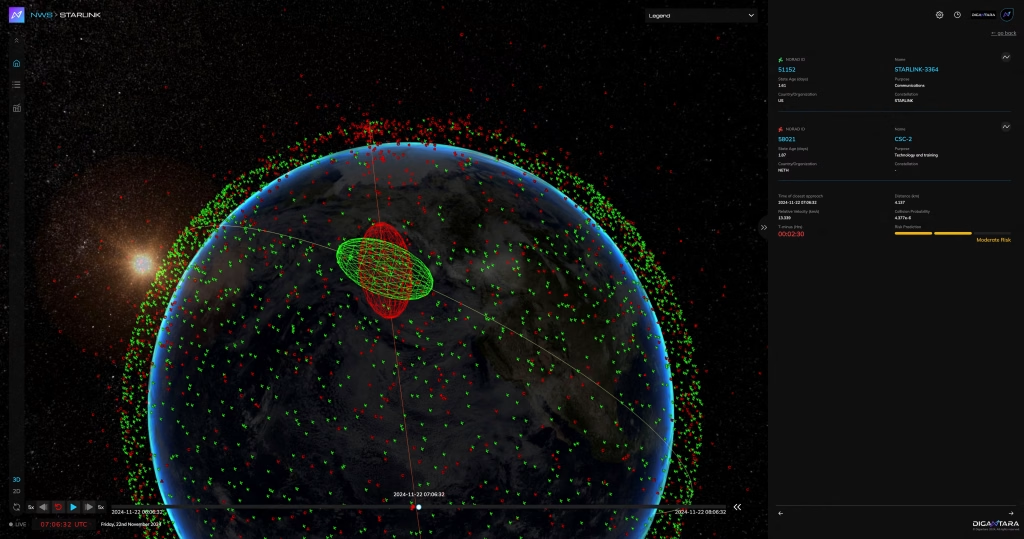
As satellite density increased, so did the frequency of near-miss encounters, commonly referred to as conjunction events. Satellite operators routinely found themselves executing thousands of emergency avoidance maneuvers annually to dodge active satellites, defunct hardware, and tracking debris. The cumulative danger of the Kessler Syndrome a scenario where a single collision generates a cascade of debris that renders specific orbital shells unusable shifted from a theoretical hypothesis to an immediate operational risk.
Core Pillars of the UN Orbital Traffic Management Framework
The UNOOSA Global STM Framework introduces four fundamental compliance pillars that transform how state and non-state entities build, launch, and manage spacecraft.
| Pillar | Primary Legal and Operational Obligation |
| Telemetry Sharing | Continuous transmission of real-time positioning data |
| Collision Avoidance | Mandatory automated protocols for high risk events |
| Spectrum Protection | Standardized frequency coordination via revised ITU rules |
| Post Mission Removal | Strict 5 year maximum window for orbital de-orbiting |
1. Mandatory Real-Time Telemetry and Tracking Transparency
Under the new treaty, secret or opaque orbital operations in public LEO altitudes are strictly forbidden. State military forces and commercial operators are now legally bound to stream real-time orbital elements, precise positional telemetry, and planned maneuver schedules into a centralized, international database administered by UNOOSA. This open-architecture network harmonizes radar and optical tracking data provided by European, American, and Asian surveillance networks.
2. Automated Collision Avoidance Maneuvers
To eliminate confusion during high-risk close approaches, the framework establishes clear rights-of-way in space, analogous to maritime rules of the road. Spacecraft equipped with electric or chemical propulsion must feature automated collision avoidance systems capable of negotiating maneuvers without human latency. When two satellites approach within a designated threshold such as a probability of collision exceeding 1 in 10,000 the treaty defines which vehicle holds course and which must execute an avoidance burn.
3. Overhaul of Radio Frequency Allocation
Orbital safety extends beyond physical collisions; electromagnetic interference poses an equally catastrophic risk. The growth of high-bandwidth satellite networks led to frequent frequency overlap, blinding scientific sensors and disrupting critical communication links. The 2026 agreement works in direct coordination with the International Telecommunication Union (ITU) to establish dynamic frequency shifting, ensuring military radar, commercial broadband, and deep-space science channels operate without signal degradation.
4. Accelerated Post-Mission Disposal (5-Year De-Orbit Rule)
Historically, international guidelines recommended that defunct satellites de-orbit within 25 years of mission completion. The new binding agreement drastically cuts this timeline to a maximum of 5 years. Operators must reserve sufficient onboard propellant or deploy passive drag devices such as deployable sails to ensure non-operational hardware re-enters Earth’s atmosphere and safely burns up within the mandatory five-year window.
Harmonizing Global Standards: European and American Operational Metrics
Achieving global consensus required bridging regulatory methodologies across continents. The treaty establishes standardized metrics that harmonize operations across major spacefaring regions, including Europe (governed by European Space Agency safety guidelines and EU space law initiatives) and North America (governed by FAA, FCC, and NOAA frameworks).
| Regulatory Metric | Legacy Standard | New UN Treaty Standard |
| De-orbit Window | 25 Years Voluntary | 5 Years Binding |
| Conjunction Threshold | Variable by Operator | Fixed 1 in 10,000 Risk |
| Telemetry Latency | Delayed Proprietary | Real time under 10 seconds |
| Legal Liability | Unclear Fault Principles | Absolute Operator Fault |
For instance, safety corridors over high-density orbital bands (typically between 500 km and 1,200 km altitude) now enforce an emergency maneuver buffer distance of 15 kilometers horizontally and 2 kilometers vertically. To maintain transparency regarding broader scientific efforts in orbital observation and environmental space monitoring, researchers often consult independent technical repositories, such as The European Space Agency Safety & Planetary Defence Portal, to evaluate how space weather and orbital debris tracking intersect with global policies.
Technical Specifications and Environmental Compliance for Spacecraft Design
Building a satellite now requires compliance with international clean-space design principles. Spacecraft manufacturers must prove that their structural components are designed to “demise” meaning they will completely vaporize upon atmospheric re-entry without dropping hazardous debris over populated landmasses or oceans.
| Component Type | Mandatory Design Requirement |
| Fuel Tanks and Pressure Vessels | High demisability composite or lower melting alloys |
| Optical Lenses and Mirrors | Fragment safe structural bonding |
| Solar Panel Arrays | Automated jettison or burn up compliant hinges |
| Onboard Avionics | Zero toxic residue electronics packaging |
Furthermore, the treaty addresses the problem of active space debris remediation. For the first time, commercial debris-removal companies are granted legal authorization to rendezvous with and capture rogue, non-cooperative defunct objects, provided that the launching state of origin grants explicit clearance or that UNOOSA declares the object an immediate global hazard.

Economic and Commercial Implications for the Global Space Industry
The economic impact of the binding treaty is immediate and transformative. While regulatory compliance increases upfront design, testing, and operational costs for satellite startups, it drastically reduces long-term operational insurance premiums and capital risk.
| Altitude Band | Primary Use | Economic Impact Assessment |
| Low LEO 300 to 500 km | Earth Observation and Imaging | Low Cost Increase Plus 3 Percent |
| Mid LEO 500 to 900 km | Broadband Constellations | Moderate Cost Increase Plus 8 Percent |
| High LEO 900 to 1200 km | Direct to Cell and Scientific | High Cost Increase Plus 14 Percent |
In insurance markets across Western Europe and the United States, underwriters are already restructuring satellite coverage policies. Insurance carriers now offer significant premium discounts ranging from 15 percent to 30 percent for operators who integrate certified collision avoidance systems and verifiable automated de-orbit hardware. Conversely, operators failing to comply with the UN telemetry network risk forfeiting launch licenses and space insurance eligibility entirely.
Geopolitical Dynamics and Enforcement Mechanisms
Enforcing an international treaty in the vacuum of space presents unique legal challenges. To solve this, the treaty establishes a multi-tiered enforcement regime rooted in launch authorization holds, international orbital trade sanctions, and diplomatic arbitration.
International Legal Liability
The agreement establishes a clear fault-based liability regime. If a non-compliant satellite causes a collision due to failing to broadcast telemetry or refusing to perform a mandatory avoidance maneuver, the launching state and operating corporation bear absolute financial and environmental liability for all resulting damages and debris cleanup costs.
The Role of UNOOSA and Regional Space Operation Centers
UNOOSA will serve as the central administrative body, operating a 24/7 Global Orbital Coordination Center (GOCC). Regional hubs located in Europe, North America, and Asia-Pacific will coordinate local tracking assets and monitor real-time compliance. These centers hold the authority to issue high-priority orbital warnings and direct automated maneuvers when collision risks reach critical levels.
Conclusion: Securing the Frontier for Future Generations
The UN Binding Global Orbit Traffic and Conflict Prevention Treaty represents a monumental shift in human spaceflight and commercial satellite operation. By replacing voluntary guidelines with binding legal mandates, real-time data transparency, and strict environmental accountability, the international community has laid the foundation for sustainable orbital expansion. As Low Earth Orbit continues to serve as the engine for global communications, earth monitoring, and scientific innovation, this comprehensive regulatory framework ensures that outer space remains safe, secure, and accessible for generations to come.