




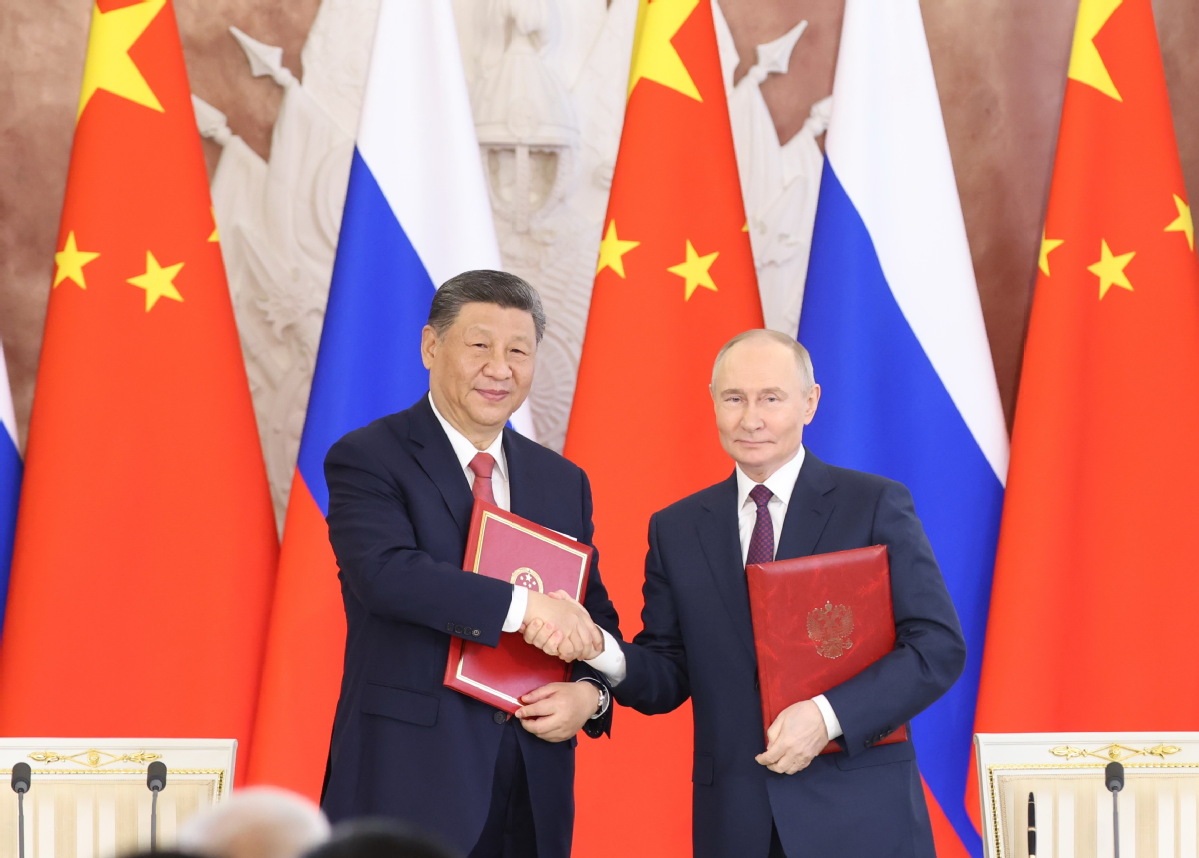
The Beijing-Moscow Strategic Axis: Redefining Eurasian Trade Corridors, Arctic Shipping, and Global Energy Markets
On October 20, 2026, premier-level delegations representing the People’s Republic of China and the Russian Federation concluded an intensive series of high-level bilateral negotiations in Moscow. This historic summit marked a significant step forward in the strategic alignment between the two Eurasian powers. Led by senior government executives and economic ministers, the meeting yielded comprehensive agreements spanning cross-border energy infrastructure, industrial supply chains, financial settlement mechanisms, and, most notably, the institutionalization of the Northern Sea Route (NSR) as a primary commercial shipping arterial connecting European and Asian markets.
This long-term shift in global trade routes reflects a broader geopolitical effort to create resilient, non-western trade corridors. As supply chains face disruptions from geopolitical tension, maritime bottlenecks, and regulatory changes, China and Russia are systematically building infrastructure that bypasses traditional chokepoints. By linking Siberia’s energy reserves directly with China’s industrial demand and connecting Arctic maritime passages to global trade lanes, this partnership establishes a robust economic framework capable of sustaining long-term Eurasian commerce.
The Summit Architecture: Key Decisions and Strategic Agreements
The Moscow bilateral summit addressed both immediate economic needs and long-term strategic infrastructure projects. Beyond diplomatic rhetoric, the executive delegations established functional working groups tasked with implementing specific projects across several key sectors:
| Strategic Sector | Core Target Objective | Implementation Focus |
| Northern Sea Route Transport | Year-Round Arctic Transit | Polar Icebreaker Fleet & Deep-Water Ports |
| Pipeline Infrastructure | Expanded Hydrocarbon Delivery | Cross-Border Gas & Crude Networks |
| Financial Settlement Systems | Non-Dollar Sovereign Clearing | Interbank CIPS & SPFS Integration |
| Arctic Maritime Research | Technology & Safety Standards | Real-Time Satellite Monitoring & Navigation |
The discussions focused on securing cross-border trade flows against external economic shifts. By establishing dedicated trade corridors and integrating industrial standards, both capitals seek to build an independent trade ecosystem across the Eurasian landmass.
Arctic Maritime Transformation: The Northern Sea Route (NSR)
The central pillar of the newly ratified bilateral agreement is the joint development and commercialization of the Northern Sea Route (NSR). Stretching across the Arctic Ocean from the Kara Sea to the Bering Strait, the NSR offers a significantly shorter shipping pathway between European ports and East Asian industrial centers compared to standard southern routes passing through the Suez Canal or around the Cape of Good Hope.
| Route Pathway | Distance (Nautical Miles) | Average Transit Time | Fuel Savings Index |
| Suez Canal Route | ~11,000 nm | 30 to 35 Days | Baseline |
| Cape of Good Hope | ~14,500 nm | 40 to 45 Days | +35% Fuel Cost |
| Northern Sea Route | ~6,500 nm | 18 to 22 Days | -40% Fuel Cost |
Infrastructure Development and Polar Icebreaker Fleets
Operationalizing the Northern Sea Route for high-volume commercial container transit requires heavy capital expenditure in specialized maritime infrastructure. Russia’s state-backed nuclear icebreaker fleet, operated by Rosatom, will work alongside Chinese shipbuilding enterprises to construct next-generation ice-class container vessels and heavy polar transport ships.

Key components of the Arctic infrastructure agreement include:
- Deep-Water Port Modernization: Upgrading Russian Arctic ports, including Murmansk, Sabetta, and Arkhangelsk, with high-capacity container terminals and automated cold-weather cargo cranes.
- Navigation and Satellite Surveillance: Deploying a dedicated constellation of polar-orbiting satellites to deliver real-time ice monitoring, automated route calculation, and high-bandwidth emergency communications for commercial vessels.
- Joint Search and Rescue (SAR) Facilities: Establishing fully equipped rescue stations along the Arctic coastline to ensure operational safety and satisfy international maritime insurance standards.
By reducing maritime transit distances between European hubs and China by up to 40 percent, the NSR provides shipping lines with substantial fuel savings and lower operational overheads, while avoiding standard maritime chokepoints like the Malacca Strait.
Energy Security and Infrastructure Grid Integration
Energy trade remains the economic backbone of the Beijing-Moscow axis. During the October 2026 summit, negotiators confirmed expansion plans for cross-border pipeline networks, liquefied natural gas (LNG) export projects, and power grid interconnectivity.
| Energy Project | Capacity Volume | Primary Corridor Target | Operational Status |
| Power of Siberia 1 | 38 Billion m³/yr | Northern China | Fully Operational |
| Power of Siberia 2 | 50 Billion m³/yr | Western China | Under Construction |
| Arctic LNG 2 Project | 19.8 Million Tons | Global & Asian Grid | Capacity Expansion |
Natural Gas and LNG Supply Networks
The expansion of natural gas pipelines represents a long-term commitment between Russian supply bases and Chinese industrial centers. Natural gas supplied via cross-border land pipelines guarantees China a continuous energy supply shielded from maritime blockades or external trade disruptions.
Concurrently, Chinese investment in Arctic LNG terminals strengthens Russia’s position in liquefied gas markets. By securing long-term off-take agreements, Chinese firms receive discounted energy supplies while providing Russian state enterprises with steady capital flow to expand northern extraction operations.
Clean Energy Technology and Power Grid Integration
While fossil fuels dominate current bilateral trade volumes, the 2026 summit introduced strategic initiatives focused on renewable energy and high-voltage electrical grid integration. Joint research teams will focus on developing cold-climate solar panels, specialized wind turbines designed for sub-zero operation, and high-voltage direct current (HVDC) power transmission lines connecting Siberian hydroelectric facilities to northern Chinese urban centers.
Financial Architecture and Sovereign Settlement Mechanisms
A major operational goal of the Beijing-Moscow alignment is building a sovereign financial framework that operates independently of Western clearing institutions and the SWIFT messaging system.
| Calendar Year | US Dollar Share (%) | Renminbi (RMB) Share (%) | Russian Ruble (RUB) Share (%) |
| 2020 | 45% | 17% | 10% |
| 2023 | 10% | 68% | 20% |
| 2026 Target | Below 2% | 80% | 18% |
Interbanking Systems Integration
To protect bilateral trade from external sanctions and financial restrictions, Chinese and Russian banking authorities have linked Russia’s System for Transfer of Financial Messages (SPFS) with China’s Cross-Border Interbank Payment System (CIPS). This integrated system enables direct commercial settlements in Chinese Renminbi (RMB) and Russian Rubles (RUB), cutting reliance on Western intermediary banks.
Main benefits of this sovereign financial structure include:
- Reduced Currency Conversion Losses: Direct RMB-RUB currency pairs eliminate intermediate conversions through the US Dollar or Euro, lowering costs for commercial importers and exporters.
- Transaction Speed and Security: Integrated banking systems offer rapid transaction settlement, protecting trade operations from external policy shifts.
- Institutional Independence: A closed-loop clearing mechanism allows small and mid-sized enterprises in both countries to trade without exposure to international financial sanctions.
To explore detailed context on how global international institutions track shifting international trade patterns and regional economic integration across major markets, refer to official analytical resources available on the World Trade Organization portal.
Geopolitical Implications for Europe and North America
The deepening Beijing-Moscow partnership directly affects international trade balances and security frameworks across North America and Europe. By establishing a sovereign economic and logistical corridor across Eurasia, both nations are altering established global trade dynamics.
| Global Region | Core Strategic Impact | Primary Policy Challenge |
| European Union | Shift in Eurasian trade lanes | Arctic transit regulation compliance |
| United States | Emerging non-dollar financial ecosystems | Altered sanctions enforcement capability |
| Asia-Pacific Nations | Enhanced inland Eurasian supply integration | Navigating dual economic alignment choices |
European Supply Chains and Maritime Security
For European markets, the development of the Northern Sea Route presents both strategic challenges and potential opportunities. On one hand, shorter Arctic transit times offer European shippers reduced sea transport times to East Asia. On the other hand, heavy Russian regulatory control over Arctic navigation rights requires Western operators to navigate complex legal and political conditions to access these northern corridors.
Furthermore, as Eurasian trade flows pivot inward, European manufacturing hubs face changing supply dynamics. Energy supplies previously bound for Western Europe are being permanently redirected toward Asian industrial hubs, altering global energy pricing and trade dynamics.
Strategic Considerations for Western Trade Policy
Western policymakers face a changing trade environment. The emergence of a self-sustaining Eurasian economic zone with integrated energy pipelines, sovereign clearing systems, and Arctic shipping lanes diminishes the impact of traditional economic sanctions. Consequently, transatlantic trade strategies must adapt to address an increasingly multipolar global trade system.
Technological and Industrial Supply Chain Integration
Beyond raw materials and energy transportation, the summit underscored growing technical cooperation between Chinese manufacturing firms and Russian industrial producers. Facing import restrictions on Western machinery and electronics, Russian heavy industries have rapidly integrated Chinese components, automotive vehicles, consumer electronics, and specialized industrial equipment.
Advanced Automotive and Heavy Machinery Exports
Chinese automotive manufacturers now hold a dominant market share in Russia, replacing European, American, and Japanese brands. Joint ventures announced during the Moscow summit aim to establish local assembly plants inside Russia, transferring manufacturing capabilities while supplying Russian consumers with modern passenger vehicles and heavy industrial transport trucks.

Industrial Automation and Robotics
To address labor shortages and boost industrial throughput, Russian manufacturing plants are increasingly turning to Chinese industrial automation solutions. Joint programs focus on integrating advanced robotics, CNC machining units, and automated warehouse management platforms across Russian manufacturing hubs, modernizing production facilities across Siberia and western Russia.
Environmental and Ecological Governance in the Arctic Basin
Accelerated development along the Northern Sea Route and heavy resource extraction across Arctic coastal regions present serious environmental considerations. The fragile Arctic ecosystem is particularly sensitive to industrial activity, carbon emissions, and potential marine pollution.
| Environmental Risk | Strategic Mitigation Measure | Implementation Standard |
| Black Carbon Output | Deployment of LNG-Powered Vessels | Cold-Climate Maritime Regulations |
| Maritime Incidents | Joint Incident Response & Salvage Stations | Mandatory Arctic Insurance Protocols |
| Tundra Disturbance | Elevated Pipeline Construction | Automated Permafrost Sensor Monitoring |
Eco-Conscious Shipping Standards
Acknowledging environmental risks, the summit agreement includes commitments to implement strict environmental safety protocols along the Northern Sea Route. Both nations agreed to promote LNG-powered propulsion for new ice-class cargo vessels, reducing black carbon emissions that accelerate polar ice melt.
Permafrost Monitoring and Infrastructure Safety
Climate-induced thawing of Arctic permafrost poses a major structural challenge to pipelines, railways, and port facilities across Siberia. The newly established joint research framework includes automated sensor networks designed to monitor soil stability, detect structural shifts early, and protect critical energy pipelines built over delicate tundra ground.
Comprehensive Long-Term Future Outlook
The high-level bilateral summit held in Moscow on October 20, 2026, represents a clear step in the ongoing restructuring of the global geopolitical order. By connecting Chinese economic demand and industrial manufacturing with Russia’s vast natural resources and Arctic coastal geography, both nations are establishing a resilient trade ecosystem designed to endure long-term international friction.
As Northern Sea Route infrastructure expands, pipeline networks expand, and sovereign financial mechanisms mature, the Beijing-Moscow axis will play an increasingly influential role in shaping global commerce. Importers, exporters, financial institutions, and policy analysts worldwide must adjust their strategic planning to navigate a world where Eurasian commerce moves along non-traditional channels, marking a historic shift in global trade dynamics.