




NATO in space operations has become a critical pillar of modern collective defense, transforming the final frontier from a strategic afterthought into an operational domain that safeguards global security. Security in the modern world now extends beyond our planet, into the vast expanse of space. As technology advances and more nations develop capabilities in this domain, the role of organizations like NATO becomes increasingly crucial. In this article, you will explore the significance of NATO’s involvement in space operations, the threats posed by potential adversaries, and the importance of collaboration and coordination in ensuring the security and stability of space.
Key Takeaways:
- NATO’s Role in Space Operations: NATO plays a crucial role in coordinating, planning, and executing space operations to support its member countries.
- Space Security: NATO is increasingly focused on enhancing space security to protect its satellites and infrastructure from potential threats.
- Space Domain Awareness: NATO is working on improving its ability to monitor and detect activities in space to ensure effective response and defense.
- Interoperability: NATO promotes interoperability among member countries to facilitate joint space operations and information sharing.
- Global Partnerships: NATO collaborates with international partners to strengthen space capabilities and address common challenges in space operations.
The Evolution of NATO’s Role in Space

While NATO was originally established to focus on terrestrial defense in the aftermath of World War II, the alliance has evolved over the years to recognize the increasing importance of space in modern military operations.
From Terrestrial to Celestial Defense
From its inception, NATO’s primary focus was on terrestrial defense, with a clear emphasis on protecting member countries from threats on land, sea, and in the air. However, as technology advanced and the strategic importance of space became apparent, NATO began to consider how to incorporate space into its defense strategies. This shift marked the beginning of NATO’s expanded role in space operations.
The Rise of Space-Based Assets
Terrestrial military operations have increasingly come to rely on space-based assets for communication, surveillance, and navigation. The emergence of satellites and other space-based technologies has revolutionized the way modern militaries conduct operations, providing unprecedented levels of precision, efficiency, and effectiveness in the field. This has led NATO to recognize the importance of securing these assets and integrating space capabilities into its overall defense framework.
Evolution: NATO’s evolution from focusing solely on terrestrial defense to incorporating space operations highlights the alliance’s adaptability and recognition of emerging threats. Securing space-based assets has become crucial for modern military operations, with NATO playing a key role in shaping the future of space defense strategies.
The Importance of Space Operations in Modern Warfare
Enhancing Situational Awareness
To enhance situational awareness in modern warfare, space operations play a crucial role. By leveraging satellite technology, you can gain real-time access to invaluable information such as enemy movements, weather patterns, and potential threats. This data allows you to make informed decisions swiftly and effectively, giving you a significant advantage over your adversaries.
Enabling Precision Strike Capabilities
Importance of enabling precision strike capabilities cannot be overstated in modern warfare. With precision-guided munitions and advanced targeting systems supported by space operations, you can accurately engage targets with minimal collateral damage. This capability not only maximizes the effectiveness of your attacks but also reduces the risk to civilian populations and friendly forces.
With enabling precision strike capabilities, you can incapacitate key enemy assets with minimal resources and in a shorter timeframe, significantly influencing the outcome of a conflict.
Disrupting Adversarial Communications
Precision in disrupting adversarial communications is a critical aspect of modern warfare, where space operations are indispensable. By intercepting and jamming enemy communication signals from space-based platforms, you can create confusion and disarray among your adversaries. This disruption severely hampers their ability to coordinate and execute strategic operations effectively.
Space-based communication disruption can neutralize enemy command and control structures, rendering their forces disjointed and vulnerable to attack. By denying them the ability to communicate securely and efficiently, you gain a significant tactical advantage on the battlefield.
NATO’s Current Space Capabilities
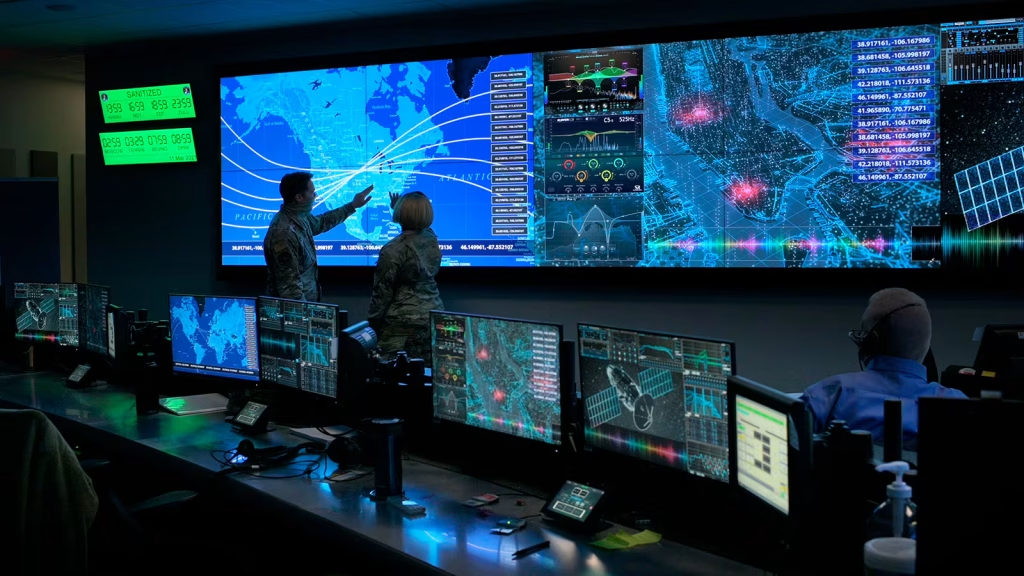
Keep in mind that NATO’s current space capabilities play a vital role in enhancing the alliance’s ability to monitor and secure activities on Earth. Let’s explore into some of the key areas where NATO has been actively developing its space capabilities.
Satellite-Based Surveillance and Reconnaissance
NATO’s satellite-based surveillance and reconnaissance capabilities are critical for monitoring potential security threats, providing important data for mission planning, and enabling real-time situational awareness. These satellites can detect military movements, track maritime activity, and assist in disaster response efforts, showcasing NATO’s commitment to leveraging space technology for enhanced security.
Space-Based Navigation and Timing
Timing is crucial in military operations, and NATO’s space-based navigation and timing systems provide accurate and reliable positioning data to troops on the ground, ships at sea, and aircraft in the air. This capability not only enhances the effectiveness of military activities but also contributes to overall safety and mission success.
This space-based navigation and timing infrastructure, including systems like GPS, GLONASS, and Galileo, ensures that NATO forces have access to precise and resilient positioning information, even in challenging environments or during denied access to traditional navigation sources.
Cybersecurity in Space
For NATO, ensuring cybersecurity in space is paramount to safeguarding critical space assets from emerging threats. Space systems are vulnerable to cyberattacks that could disrupt communications, navigation, and intelligence capabilities, posing significant risks to NATO’s operations and missions.
You can enhance your understanding of the importance of cybersecurity in space by recognizing that NATO continuously invests in developing secure communication networks, implementing encryption protocols, and enhancing threat detection mechanisms to protect its space infrastructure from malicious actors.
Challenges and Opportunities in NATO’s Space Operations
Addressing the Vulnerability of Space-Based Assets
One of the key challenges facing NATO in space operations is addressing the vulnerability of space-based assets. As mentioned in a report on NATO’s Role in Space, these assets are critical for communication, intelligence gathering, and navigation. However, they are increasingly susceptible to attacks from adversaries seeking to disrupt NATO’s operations.
Developing a Unified Space Policy
To effectively tackle the challenges in space, NATO must work towards developing a unified space policy. This policy would outline the alliance’s approach to space operations, including enhancing space situational awareness, improving resilience against attacks, and promoting responsible space behavior. By unifying their efforts, NATO can better protect its space assets and ensure the security of its member states.
For instance, a unified space policy would establish clear guidelines on how NATO member states should respond to potential threats in space, minimizing the risk of miscalculations or escalations. Additionally, it would streamline decision-making processes and facilitate coordination among different NATO entities involved in space operations.
Collaborating with Non-NATO Partners
Space-based operations are increasingly reliant on collaboration with non-NATO partners to enhance capabilities and strengthen resilience. **Policy** alliances, such as those with key spacefaring nations or international organizations, can provide valuable resources and expertise that complement NATO’s efforts in space.
**Collaborating with non-NATO partners** allows for the sharing of intelligence, technology, and best practices, improving the overall effectiveness of NATO’s space operations. By building partnerships with like-minded entities, NATO can expand its reach and influence in space while fostering a more cooperative and secure space environment for all stakeholders.
The Role of NATO in Countering Space-Based Threats
Detecting and Tracking Space-Based Assets
Not only does NATO play a crucial role in countering space-based threats, but its ability to detect and track space-based assets is paramount in safeguarding the interests of member states. You must understand that with the proliferation of space technology, the ability to monitor activities in space has become increasingly vital. NATO’s advanced surveillance capabilities enable you to identify potential threats early on, allowing for timely and effective responses to protect critical assets.
Developing Counter-Space Capabilities
To effectively counter space-based threats, NATO is at the forefront of developing counter-space capabilities that can neutralize hostile actions in space. These capabilities include jamming communications, disrupting satellite functions, and even kinetic destruction of enemy satellites. The role of NATO in this realm is crucial, as it ensures that member states are equipped with the necessary tools to defend themselves in the increasingly contested space domain.
Role: NATO’s development of counter-space capabilities not only serves as a deterrent against potential adversaries but also strengthens the alliance’s commitment to ensuring the security and stability of space operations for all member states.
Enhancing International Cooperation
Space-Based threats are not limited to individual countries, making international cooperation crucial in effectively mitigating risks. NATO actively collaborates with organizations like the European Space Agency and other partner countries to share information, coordinate responses, and enhance overall space situational awareness. By enhancing international cooperation, NATO not only strengthens its own defenses but also contributes to the collective security of space operations worldwide.
Enhancing: Through collaborative efforts and information sharing, NATO fosters a cohesive approach to addressing space-based threats, reinforcing your confidence in the alliance’s ability to protect your interests in the ever-evolving space domain.
Implications for NATO’s Future Operations
Integrating Space into NATO’s Military Doctrine
For NATO’s future operations, integrating space into its military doctrine is crucial. Space capabilities play a significant role in modern warfare, providing imperative services such as communication, navigation, and intelligence. By incorporating space assets into its operational planning, NATO can enhance its overall effectiveness and situational awareness on the battlefield.
Developing Space-Based C2 Systems
On the path to future endeavors, NATO must focus on developing advanced space-based command and control (C2) systems. These systems will enable real-time information sharing, enhanced decision-making capabilities, and improved coordination among allied forces. By investing in such technologies, NATO can gain a competitive edge in conflict scenarios and ensure better operational success.
It is imperative for NATO to prioritize the development of resilient and secure space-based C2 systems. These systems should be designed to withstand potential interference or attacks, ensuring continuity of operations in all circumstances. By establishing robust communication links through space assets, NATO can maintain reliable command and control capabilities even in contested environments.
Enhancing Space Situational Awareness
Situational awareness in space is critical for NATO‘s future operations. As the number of satellites and space debris continues to increase, NATO must enhance its ability to monitor and track objects in orbit. By improving space situational awareness, NATO can effectively protect its space assets, mitigate potential threats, and ensure the overall safety and security of space operations.
To enhance its space situational awareness, NATO should invest in advanced surveillance and tracking technologies. These systems can provide real-time data on space activities, detect anomalies or hostile actions, and enable timely response measures. By staying vigilant and proactive in monitoring the space domain, NATO can uphold its strategic interests and safeguard its assets effectively.
To wrap up
Now that you’ve researchd into the role of NATO in space operations, you can see the significance of the organization’s presence in this domain. As space becomes increasingly militarized and contested, NATO’s involvement in ensuring space security and stability is vital. The alliance’s ability to coordinate and cooperate with member states and partners in space activities helps to enhance the overall security and defense capabilities.
Furthermore, NATO’s role in space operations not only contributes to deterring potential threats but also promotes transparency and confidence-building measures among allies. As technology advances and space capabilities evolve, NATO’s adaptation and focus on the space domain will continue to be crucial in safeguarding the alliance’s interests and maintaining peace and security in the broader international arena.
FAQ
Q: What is the role of NATO in space operations?
A: NATO plays a crucial role in coordinating space operations among its member states and ensuring the security of space assets.
Q: Why is NATO’s role in space operations important?
A: As space becomes increasingly militarized, NATO’s role becomes more necessary in safeguarding space assets and preventing conflicts in the domain.
Q: How does NATO contribute to space situational awareness?
A: NATO member states share information on space objects and activities, enhancing space situational awareness and enabling better coordination in space operations.
Q: Does NATO have a role in space-related conflicts?
A: NATO is prepared to respond to any potential conflicts that may arise in space and has established policies to deter aggression against space assets.
Q: How does NATO collaborate with other space-faring nations in space operations?
A: NATO engages in partnerships and dialogue with other space-faring nations to promote transparency, reduce the risk of misperceptions, and enhance the peaceful use of outer space.