




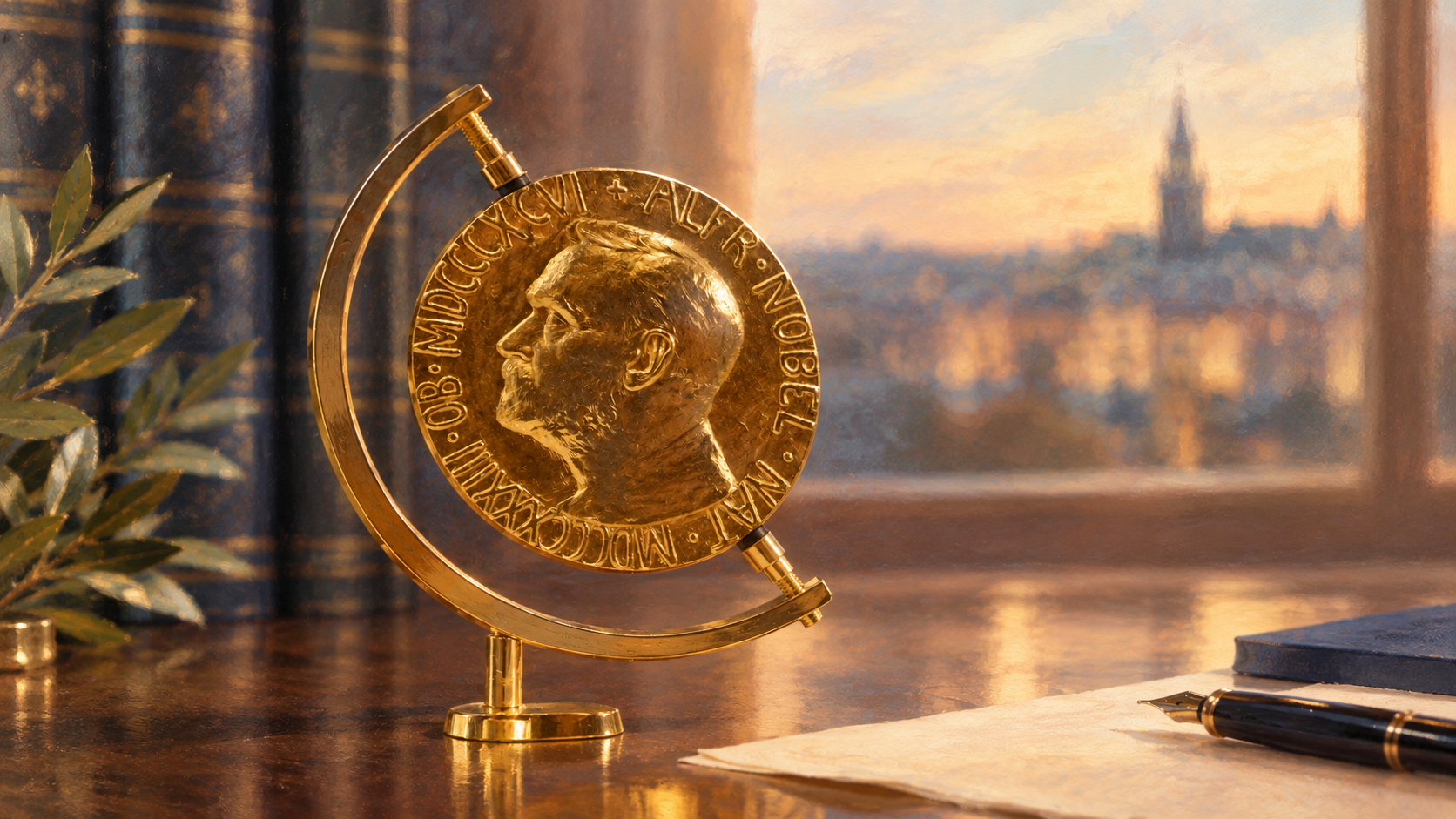
The 2026 Nobel Prize season has officially unveiled its esteemed laureates, celebrating a remarkable array of intellectual, creative, and humanitarian achievements that redefine the boundaries of human knowledge. Established through the 1895 will of Swedish industrialist Alfred Nobel, these awards represent the highest international recognition across various disciplines.
As the traditional announcements unfold between October 5 and October 12, 2026, committees in Stockholm and Oslo have honored trailblazing researchers, visionary writers, and courageous jurists. With major announcements in Medicine, Physics, Chemistry, Literature, and Peace completed, the world eagerly awaits the final award of the week—the Sveriges Riksbank Prize in Economic Sciences in Memory of Alfred Nobel, scheduled for reveal on Monday, October 12, 2026.
Below is an extensive analysis of the 2026 laureates, their monumental discoveries, and the global societal impact of their recognized accomplishments.
Overview of the 2026 Nobel Prize Laureates
The following modern overview summarizes the 2026 laureates, their primary research centers or origins, and the recognized contributions across all announced categories:
| Discipline | Laureate(s) | Institution / Origin | Key Breakthrough / Citation Summary |
| Physiology or Medicine | Karl Deisseroth Peter Hegemann Georg Nagel | Stanford University (USA) Humboldt University (Germany) University of Würzburg (Germany) | Discovery of light-gated ion channels and the development of optogenetics for controlling neural activity. |
| Physics | Francis Halzen | University of Wisconsin–Madison (USA) | Crucial contributions to the IceCube Neutrino Observatory and detection of high-energy cosmic neutrinos. |
| Chemistry | Henri B. Kagan Kenso Soai | Université Paris-Saclay (France) Tokyo University of Science (Japan) | Discovery of non-linear effects and autocatalysis in asymmetric organic synthesis. |
| Literature | Anne Carson | Canada | Bold, inventive oeuvre engaging in playful dialogue with classical tradition to shape new literary forms. |
| Peace | Navi Pillay | South Africa | Longstanding commitment to advancing peace, international human rights law, and institutional accountability. |
| Economic Sciences | Pending Announcement | To be announced Oct 12, 2026 | Focusing on innovation-driven growth and technological economics. |
Physiology or Medicine: Illuminating the Mysteries of the Brain Through Optogenetics
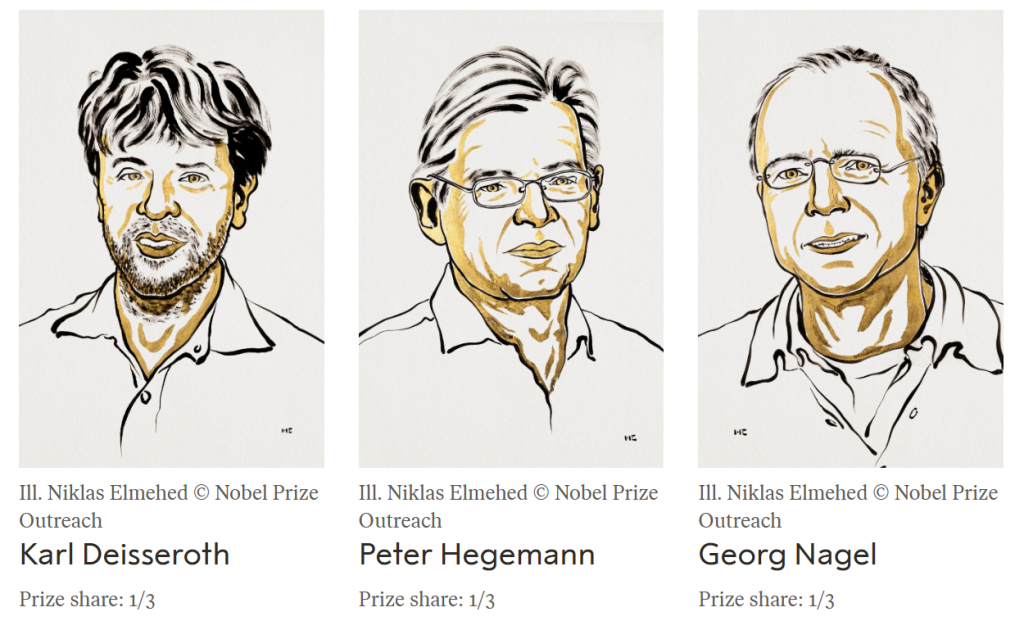
On October 5, 2026, the Nobel Assembly at Karolinska Institutet awarded the 2026 Nobel Prize in Physiology or Medicine jointly to Karl Deisseroth, Peter Hegemann, and Georg Nagel for their landmark breakthroughs concerning light-gated ion channels and the invention of optogenetics.
The Science Behind Light-Gated Ion Channels
For decades, neuroscientists struggled to isolate and control specific neuronal pathways in living organisms. Traditional electrical stimulation activated all surrounding tissue indiscriminately, making it impossible to establish precise cause-and-effect relationships within complex neural networks.
In the late 1990s and early 2000s, biophysicists Peter Hegemann and Georg Nagel conducted fundamental research on light-sensitive proteins found in green algae, specifically channelrhodopsins. They discovered that these specialized proteins function as ion channels that open directly in response to light absorption, permitting positive ions to cross cellular membranes.
The Development of Optogenetics
Building upon these biophysical insights, neuroscientist and psychiatrist Karl Deisseroth successfully integrated channelrhodopsin genes into mammalian neurons using viral vectors. When exposed to pulses of fiber-optic laser light, these genetically modified neurons fired with millisecond precision. This breakthrough methodology—termed optogenetics—allowed researchers to turn targeted brain cells on or off at will.
Global Health and Clinical Impact
Optogenetics has transformed neuroscience research across global laboratories, including major institutes across Europe, North America, and Asia. Key biomedical applications include:
- Parkinson’s Disease: Mapping basal ganglia circuits to optimize deep brain stimulation therapies.
- Depression and Anxiety: Mapping emotion-regulating pathways in the limbic system.
- Blindness Restoration: Expressing opsins in surviving retinal cells to restore vision.
- Addiction and Memory: Dissecting reward circuits to understand craving mechanisms.
Financial allocations for neurodegenerative research across public entities like the European Research Council (ERC) and the US National Institutes of Health (NIH) exceed €3.5 billion annually, underscoring the vast economic and clinical relevance of optogenetic applications.
Physics: Catching Ghost Particles at the South Pole with Francis Halzen
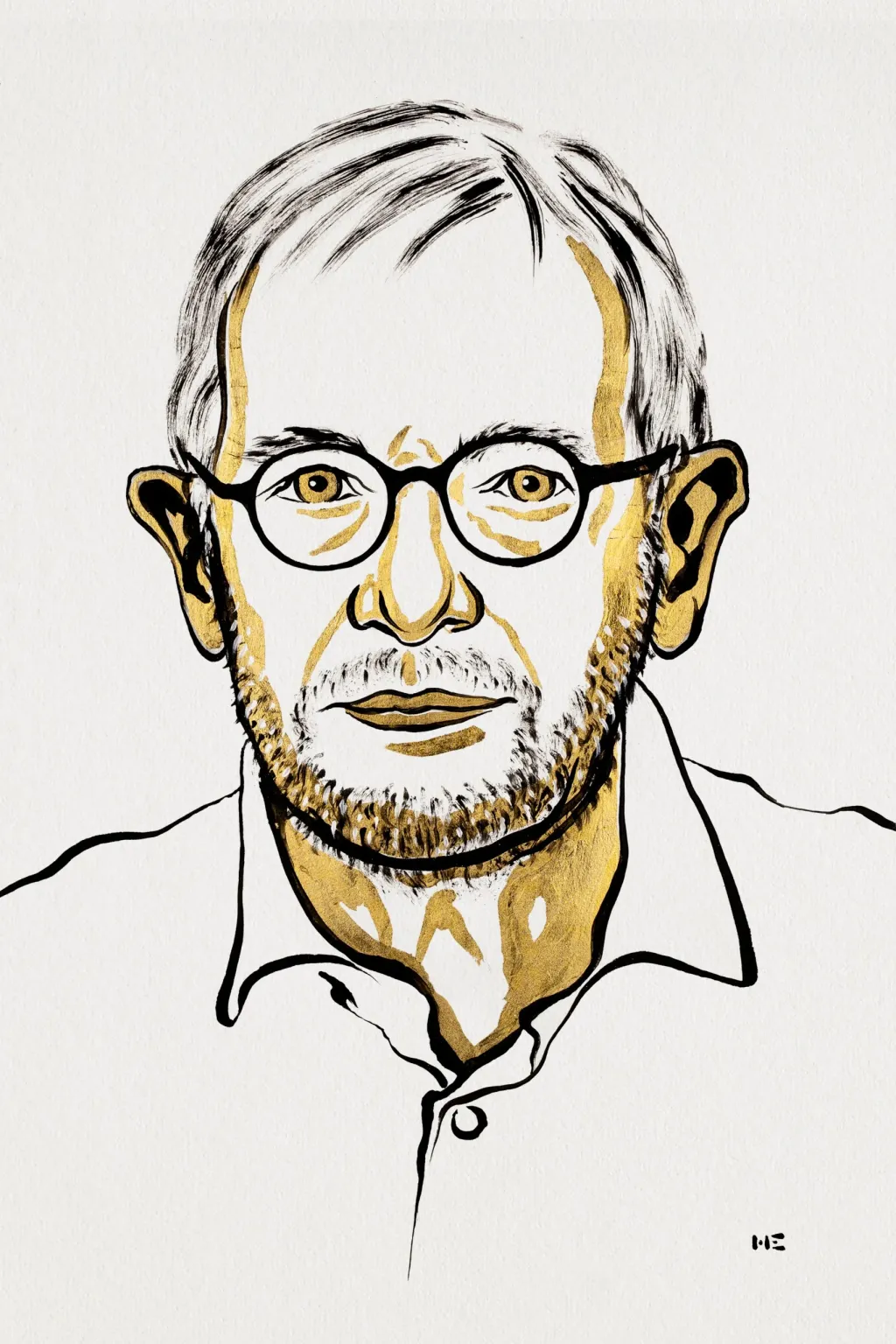
On October 6, 2026, the Royal Swedish Academy of Sciences awarded the 2026 Nobel Prize in Physics to Francis Halzen for his foundational leadership in constructing the IceCube Neutrino Observatory and detecting high-energy neutrinos originating from distant cosmic events.
Neutrinos: The Ghost Particles of the Cosmos
Neutrinos are elementary particles with near-zero mass and no electric charge. Millions pass through every square centimeter of Earth every second without interaction. Because they travel in straight lines across billions of light-years without being deflected by magnetic fields or absorbed by matter, neutrinos serve as pristine cosmic messengers.
Engineering a One-Cubic-Kilometer Detector
Detecting high-energy neutrinos required an instrument of unprecedented scale. Francis Halzen conceptualized and led the construction of the IceCube Neutrino Observatory, located at the Amundsen-Scott South Pole Station in Antarctica.
- Volume: 1 cubic kilometer of pristine Antarctic ice instrumented between depths of 1,450 meters and 2,450 meters.
- Instrumentation: 5,160 Digital Optical Modules (DOMs) suspended along 86 vertical strings.
- Detection Principle: When a high-energy neutrino interacts with an ice atom, it generates charged secondary particles that travel faster than light in ice, producing Cherenkov radiation—a faint blue light captured by the DOM sensors.
Cosmic Discoveries and Astrophysical Significance
Halzen’s work culminated in the first identification of high-energy astrophysical neutrinos, tracing cosmic rays back to extreme environments such as blazars (supermassive black holes emitting powerful relativistic jets) and active galactic nuclei. This landmark achievement laid the groundwork for multi-messenger astronomy, combining neutrino detection with optical, radio, and gamma-ray astronomy.
For researchers seeking further scientific literature on high-energy astrophysics, comprehensive observational data and multi-messenger astronomical catalogs are published through the European Southern Observatory (ESO).
Chemistry: Unlocking Molecular Asymmetry with Henri B. Kagan and Kenso Soai
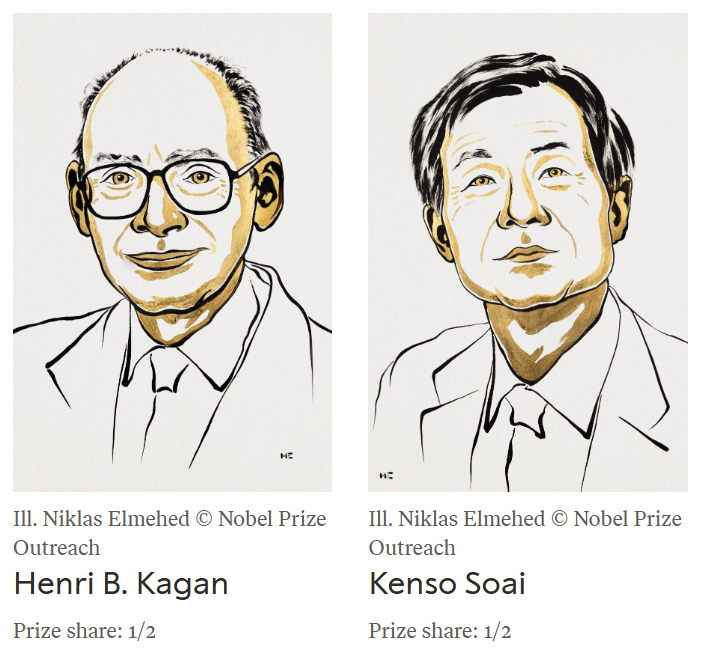
The 2026 Nobel Prize in Chemistry was awarded on October 7, 2026, to Henri B. Kagan and Kenso Soai for discovering non-linear effects and autocatalysis in asymmetric organic synthesis.
The Homochirality Puzzle in Biology
Many organic molecules exhibit chirality, existing in two non-superimposable mirror-image forms known as enantiomers (often referred to as “left-handed” and “right-handed” forms). While chemical syntheses in lab settings naturally produce equal 50:50 mixtures (racemic mixtures), biological systems are almost exclusively homochiral—proteins consist solely of left-handed amino acids, while DNA and RNA incorporate right-handed sugars.
Non-Linear Effects and Autocatalytic Amplification
Henri B. Kagan revolutionized asymmetric catalysis by demonstrating non-linear effects (NLE). Kagan proved that a catalytic mixture containing a low optical purity can yield reaction products with unexpectedly high enantiomeric excess, defying conventional linear proportional models.
Building upon these principles, Kenso Soai discovered the celebrated Soai Reaction—the first undeniable example of asymmetric autocatalysis. In this reaction, a chiral compound acts as a catalyst for its own formation from achiral precursors. Even an imperceptibly tiny initial chiral bias (as low as 0.00001% enantiomeric excess) is exponentially amplified to near-100% enantiomeric purity.
Industrial and Pharmaceutical Relevance
The discovery of non-linear asymmetric synthesis has profoundly influenced the €1.2 trillion global pharmaceutical market:
- Drug Safety: Ensures single-enantiomer formulations, avoiding tragic side-effects caused by inactive or harmful mirror-image isomers (such as historical thalidomide cases).
- Green Chemistry: Dramatically lowers catalyst consumption and operational costs by allowing low-purity chiral catalysts to produce high-purity chiral compounds.
Literature: Crafting New Horizons with Anne Carson

On October 8, 2026, the Swedish Academy awarded the 2026 Nobel Prize in Literature to Canadian poet, essayist, and translator Anne Carson.
A Masterclass in Hybrid Literary Form
Carson’s work is celebrated for dissolving traditional boundaries between poetry, scholarly translation, literary criticism, and visual drama. Trained as a classical philologist, Carson merges deep academic scholarship with playful contemporary sensibilities.
Key Works and Themes
- Autobiography of Red (1998): A verse novel reimagining the surviving fragments of ancient Greek poet Stesichoros’ myth of Geryon into a modern story of art, love, and identity.
- Nox (2010): An accordion-style epitaph book combining photos, collage, and Latin dictionary entries analyzing a single poem by Catullus following the loss of her brother.
- Eros the Bittersweet (1986): A foundational scholarly critique analyzing ancient concepts of desire, language, and distance.
Carson’s oeuvre demonstrates that classical texts remain vibrant, dynamic structures capable of illuminating modern human vulnerability.
Peace: Upholding International Law and Human Dignity with Navi Pillay

On October 9, 2026, the Norwegian Nobel Committee awarded the 2026 Nobel Peace Prize to Navanethem “Navi” Pillay of South Africa for her tireless advocacy for peace, human rights, and the rule of law.
A Career Dedicated to Global Justice
Navi Pillay’s pioneering career spans key historical milestones in international jurisprudence:
- Anti-Apartheid Struggle: As a young attorney in South Africa, she broke legal barriers by defending anti-apartheid political prisoners, including members of the African National Congress.
- International Criminal Tribunal for Rwanda (ICTR): Appointed as a judge in 1995, Pillay presided over landmark rulings establishing that sexual violence and mass rape constitute crimes against humanity and acts of genocide.
- International Criminal Court (ICC): Served as a judge in the founding years of the ICC in The Hague.
- UN High Commissioner for Human Rights (2008–2014): Led global efforts to combat discrimination, defend civil liberties, and enforce international accountability.
Strengthening the International Rule of Law
At a time when global stability faces severe challenges from armed conflicts and autocratic shifts, the Norwegian Nobel Committee highlighted Pillay’s steadfast independence and legal expertise in reinforcing global human rights frameworks.
Looking Ahead: The Sveriges Riksbank Prize in Economic Sciences
The 2026 Nobel week will reach its conclusion on Monday, October 12, 2026, when the Royal Swedish Academy of Sciences announces the laureate(s) for the Sveriges Riksbank Prize in Economic Sciences in Memory of Alfred Nobel.
Key Themes in Modern Economic Research
Recent economic prize announcements have focused on structural macroeconomic topics, including:
- Innovation-Driven Economic Growth: Models evaluating how technological change fuels long-term prosperity.
- Creative Destruction: Schumpeterian frameworks analyzing industrial transformation and market dynamics.
- Institutional Economics: Studies examining how societal laws and governance shape national wealth distribution.
The upcoming announcement will provide valuable insights into addressing contemporary global economic challenges, including inflation management, energy transitions, and digital economy regulations.