




The frozen expanses of the Antarctic Peninsula are undergoing some of the most rapid environmental transformations recorded on Planet Earth. As global surface temperatures rise and sea-ice distributions shift, polar wildlife faces unprecedented ecological pressures. Yet, amid shifting ice shelves and rising waters, a remarkable story of evolutionary resilience and ecological adaptation is unfolding inside one of the world’s most extraordinary natural amphitheatres: Deception Island.
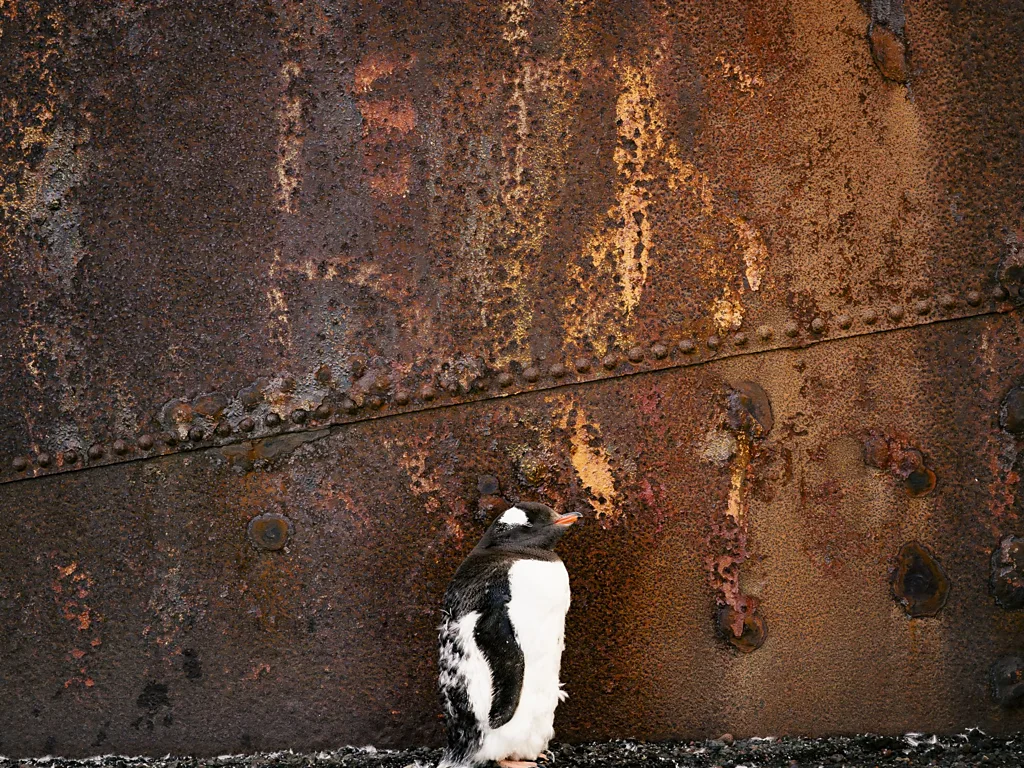
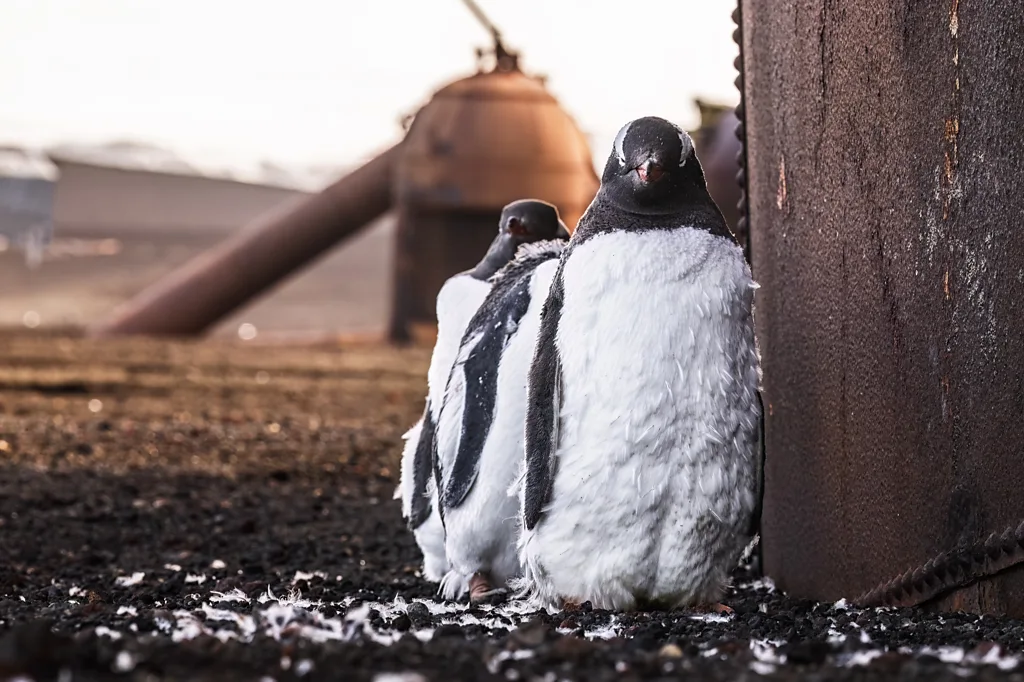
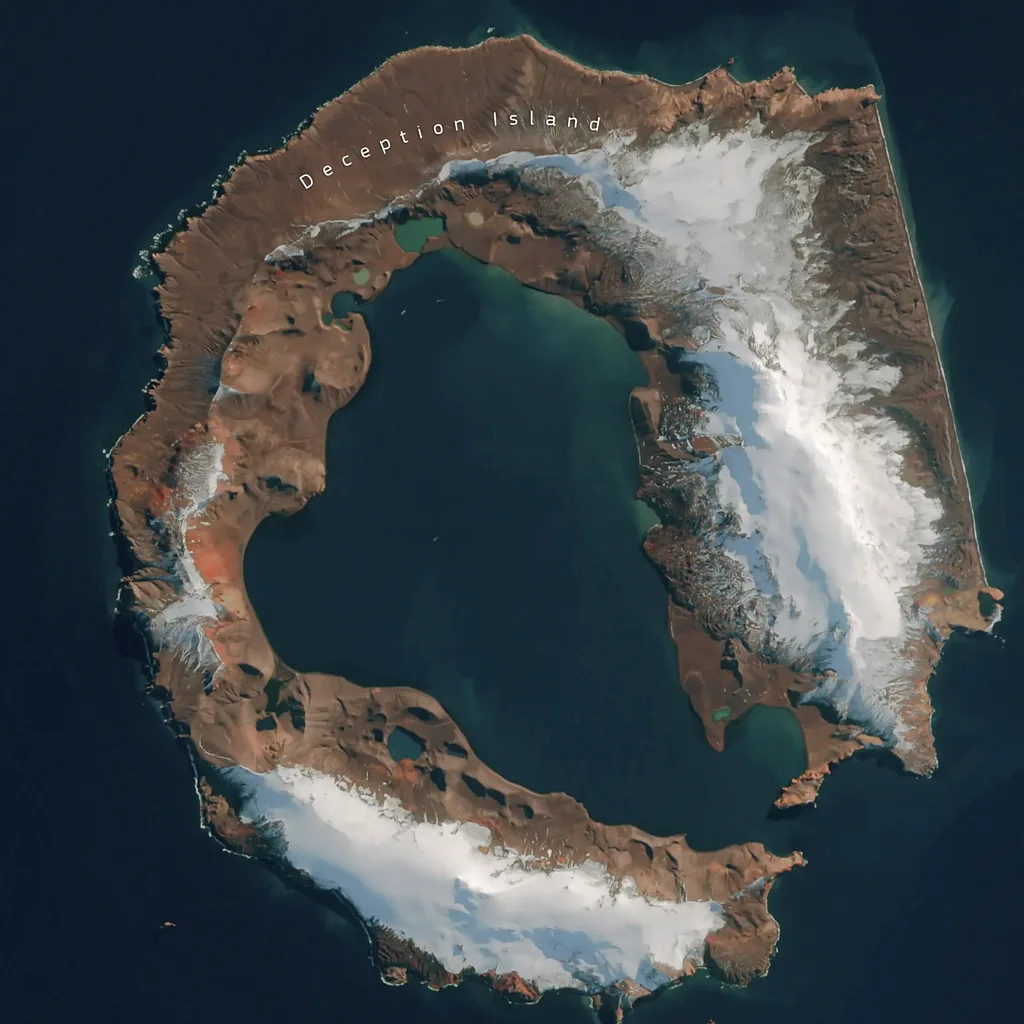
Located within the South Shetland Islands archipelago just off the Antarctic Peninsula, Deception Island is not a typical icy landmass. It is the submerged, flooded caldera of an active volcano. Within this doughnut-shaped ring of dark volcanic sand, geothermal forces warm the shoreline, while rusting remnants of early 20th-century whaling infrastructure dot the beach. Against this haunting backdrop, wildlife photographer Romain Barats captured a striking image of gentoo penguins (Pygoscelis papua) standing beside decaying steel whale oil tanks. The image, recognized as a finalist in the prestigious Ocean Photographer of the Year 2026 competition, captures an iconic symbol of modern polar biology: an adaptable species turning both human industrial ruins and geothermal phenomena into a vital sanctuary.
1. Deception Island: An Unlikely Geothermal Haven
To understand why gentoo penguins are gathering among industrial ruins on an active volcano, one must examine the unique geography of Deception Island. The island’s caldera was formed thousands of years ago when a massive eruption caused the volcano’s peak to collapse, allowing the Southern Ocean to flood the interior crater through a narrow breach known as Neptune’s Bellows.
For decades in the early 1900s, humans exploited this sheltered natural harbor. Whalers established shore-based operations, leaving behind massive steel oil tanks, wooden barracks, and processing machinery. When economic shifts, severe Antarctic weather, and volcanic eruptions in the late 1960s forced human abandonment, nature slowly moved back in. Today, the island offers two distinct features critical to polar survival:
- Geothermal Microclimates: Volcanic heat radiates through dark basaltic sands and underground steam vents, providing ambient temperatures noticeably higher than surrounding Antarctic coastlines.
- Artificial Windbreaks: Abandoned structures break the punishing sub-Antarctic winds, creating micro-refuges along the shore.
Deception Island Caldera Structure & Geothermal Microclimate
Zone | Geothermal Feature | Ecological & Environmental Function |
| Outer Ocean Entrance | Neptune’s Bellows | Narrow breach allowing Southern Ocean water into the caldera |
| Volcanic Rim & Shoreline | Geothermal Sand & Vents | Elevated temperatures from volcanic activity; subterranean steam vents |
| Whaling Ruins | Post-Industrial Structures | Abandoned oil tanks and barracks offering crucial wind shelter |
| Flooded Caldera | Thermal Water Pocket | Protected, warmer marine zone ideal for gentoos during moulting |
For gentoo penguins undergoing their annual catastrophic moult, these conditions are exceptionally advantageous. Unlike birds that replace feathers gradually, penguins shed and replace their entire coat of waterproof feathers simultaneously over two to three weeks. During this critical window, their insulation is severely compromised. They cannot enter the freezing ocean to hunt, rendering them vulnerable to hypothermia, starvation, and extreme weather. By hauling out onto the heated volcanic sands of Deception Island and sheltering beside rusting whale tanks, gentoos preserve crucial body heat during their most vulnerable biological cycle.
2. Comparative Analysis: Winners and Losers of Polar Warming
While the Antarctic ecosystem as a whole faces severe disruption, species do not respond uniformly to climate change. Polar biologists frequently categorize Antarctic seabirds into ecological “winners” and “losers” based on their dietary flexibility, breeding habits, and habitat preferences.
Gentoo penguins are unequivocally emerging as the primary climate change winners along the Western Antarctic Peninsula. Conversely, their two closest relatives within the Pygoscelis genus—the Adélie penguin (Pygoscelis adeliae) and the Chinstrap penguin (Pygoscelis antarcticus)—are experiencing dramatic population declines across much of the peninsula.
| Species Name | Common Name | Antarctic Peninsula Population Trend | Primary Diet Composition | Nesting & Reproductive Flexibility |
| Pygoscelis papua | Gentoo Penguin | +23% Increase (2013–2020) | Opportunistic: Krill, Fish, Cephalopods | Highly Flexible: Multi-clutch capability, adjustable timing |
| Pygoscelis antarcticus | Chinstrap Penguin | Severe Decline (Varies by site) | Specialized: Antarctic Krill (Euphausia superba) | Rigid: Single-clutch per season, strict ice reliance |
| Pygoscelis adeliae | Adélie Penguin | -65% Decline (Past 25 Years) | Specialized: Sea-ice dependent Krill | Rigid: Requires ice-free rock, highly sensitive to rain/flooding |
The contrasting trajectories of these three species highlight fundamental differences in ecological specialization versus generalist adaptation.
3. The Evolutionary Trait Spectrum: Why Gentoos Excel
The remarkable success of gentoo penguins in a warming climate is driven by a suite of distinct behavioral and physiological mechanisms that distinguish them from other Antarctic fauna.
Gentoo Adaptability Matrix
| Adaptability Pillar | Biological Strategy | Climate Impact & Benefit |
| Dietary Plasticity | Shifts seamlessly between krill, fish, and squid | Free from total dependence on ice-reliant krill populations |
| Reproductive Flexibility | Multi-clutch capability within a single season | Re-lays eggs if severe weather or flooding destroys primary nests |
| Range Expansion | Opportunistic movement southward along peninsula | Takes immediate advantage of newly ice-free land and ruins |
A. Dietary Flexibility and Foraging Depth
Adélie and chinstrap penguins are extreme dietary specialists. They rely almost exclusively on Antarctic krill (Euphausia superba), a small crustacean that depends directly on winter sea ice for shelter and algae feeding. As sea ice coverage decreases along the Antarctic Peninsula, krill populations fluctuate drastically, depriving specialist penguins of their primary food supply.
Gentoo penguins, in contrast, are generalist foragers. They possess a highly plastic diet, effortlessly transitioning between krill, coastal fish species (such as Antarctic silverfish), and squid. Furthermore, gentoos are exceptionally fast underwater swimmers, capable of diving to deeper water depths than chinstraps or Adélies, enabling them to locate food across varied marine environments.
B. Reproductive Resilience and Multi-Clutch Capability
In sub-Antarctic ecosystems, climate change brings increased atmospheric moisture, resulting in unseasonal rain and flash snowfall. When snow melts rapidly or torrential rain floods nesting sites, penguin eggs are frequently destroyed or chilled beyond viability.
- Adélie and Chinstrap Behavior: Lay a single clutch of eggs per breeding season. If their nest is flooded or buried under snow, the entire reproductive year is permanently lost.
- Gentoo Behavior: Possess the rare physiological ability to lay a second clutch of eggs within the same season if the first is destroyed early in the cycle. Additionally, gentoos display remarkable flexibility in shifting their breeding timelines forward or backward to align with localized weather conditions.
C. Open-Water Preference vs. Ice Reliance
Adélie penguins are fundamentally tied to sea ice dynamics for roosting, foraging, and predator avoidance. As sea ice retreat accelerates along the peninsula, their natural habitat contracts. Gentoo penguins, historically adapted to warmer sub-Antarctic islands such as the Falklands (Malvinas) and South Georgia, prefer open-water conditions. As the Antarctic Peninsula warms, ice-free coastal land expands southward, effectively opening thousands of square kilometers of new habitat for gentoo colonization.
4. Scientific Observations and Future Ecological Shifts
Ecologists and polar researchers tracking Antarctic fauna have documented widespread expansion of gentoo populations into territories where they were historically rare or absent. Between 2013 and 2020, while global gentoo numbers rose by roughly 11 percent, localized populations along the Western Antarctic Peninsula surged by approximately 23 percent.
Professor Heather Lynch, an expert in ecology and evolution at Stony Brook University, highlights that gentoos are continually pushing their range boundary farther south. “Everywhere we turn in the Antarctic on the peninsula here, we’re finding more gentoo penguins,” Lynch notes, describing the phenomenon as a “gentoo penguin takeover.”
Antarctic Peninsula Population Trends (2013–2020)
| Species | Population Change (%) | Key Ecological Trait |
| Gentoo Penguin (Pygoscelis papua) | +23% | Highly adaptable generalist; thrives in open water |
| Global Gentoo Average | +11% | Baseline growth across sub-Antarctic regions |
| Adélie Penguin (Pygoscelis adeliae) | -65% (Past 25 yrs) | Sea-ice specialist; highly vulnerable to ocean warming |
While active volcanic eruptions over the past 7,000 years have periodically disrupted wildlife on Deception Island, scientists suspect it is only a matter of time before gentoos establish active nesting colonies inside the caldera itself. Their willingness to explore post-industrial structures, roost near warm volcanic vents, and nest on newly exposed gravel slopes positions gentoos as the prime candidates to pioneer new terrestrial habitats in high-latitude environments.
For further detailed scientific literature on global polar ecosystems and ongoing marine biological studies, visit the comprehensive resources published by the National Science Foundation Office of Polar Programs.
5. Industrial Archaeology and Nature’s Resurgence
Beyond the biological implications, the sight of gentoo penguins sheltering among rusting oil tanks and decayed whaling vessels presents a profound philosophical reflection on human impact and natural restoration.
Deception Island was once the epicenter of intensive marine harvesting, where thousands of whales were processed for oil to fuel northern hemisphere industrial expansion. Decades after human economic operations vanished, nature has not merely recovered; it has repurposed the structural debris. The steel hulks that once held whale oil now serve as shields against Antarctic gales, illustrating a dramatic post-industrial transformation where wildlife reclaims landscapes altered by humanity.
As photographer Romain Barats observed when capturing his celebrated image, visiting Deception Island evokes a sensation comparable to visiting abandoned post-human zones like Chernobyl—places where human activity abruptly receded, allowing wild ecosystems to reclaim built environments. In an era dominated by concerns over biodiversity loss and rapid warming, the gentoo penguin’s flourishing presence inside an active Antarctic volcano offers a rare, captivating testament to biological adaptability and nature’s enduring power.