




The Last Tango of a Legend: How Lionel Messi Reconstructed Football, National Identity, and Global Greatness
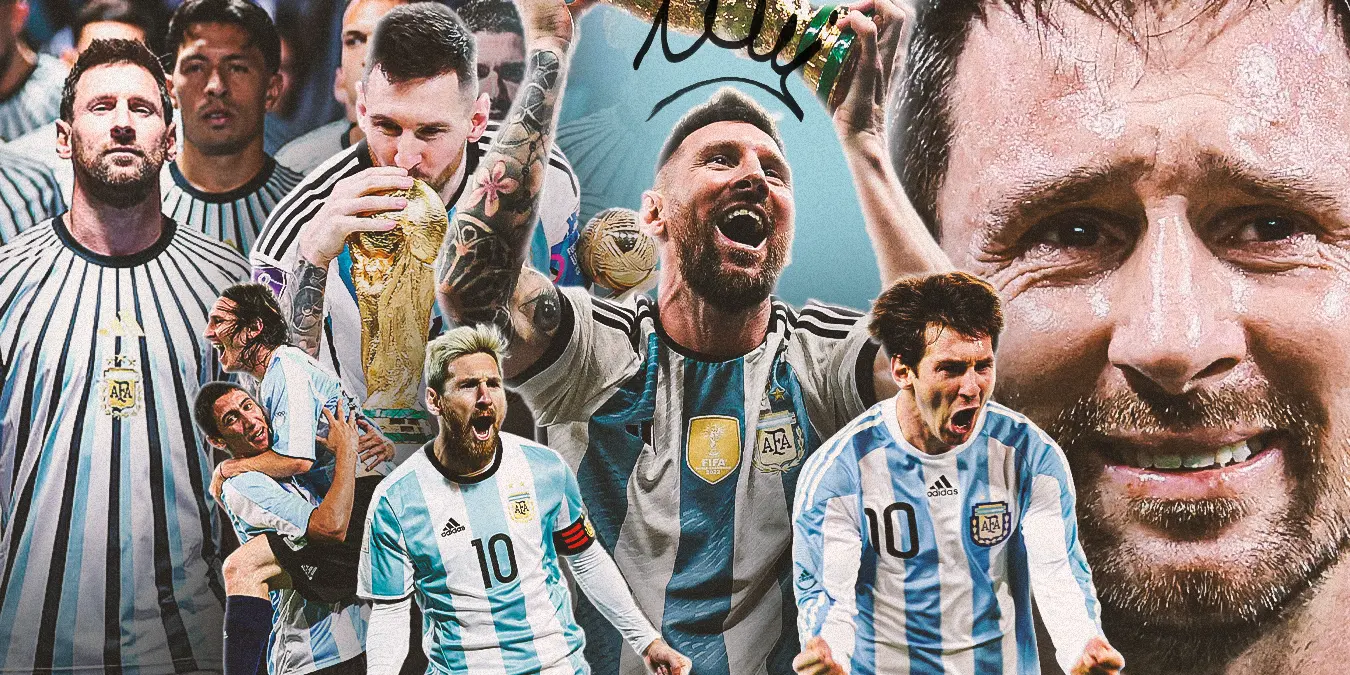
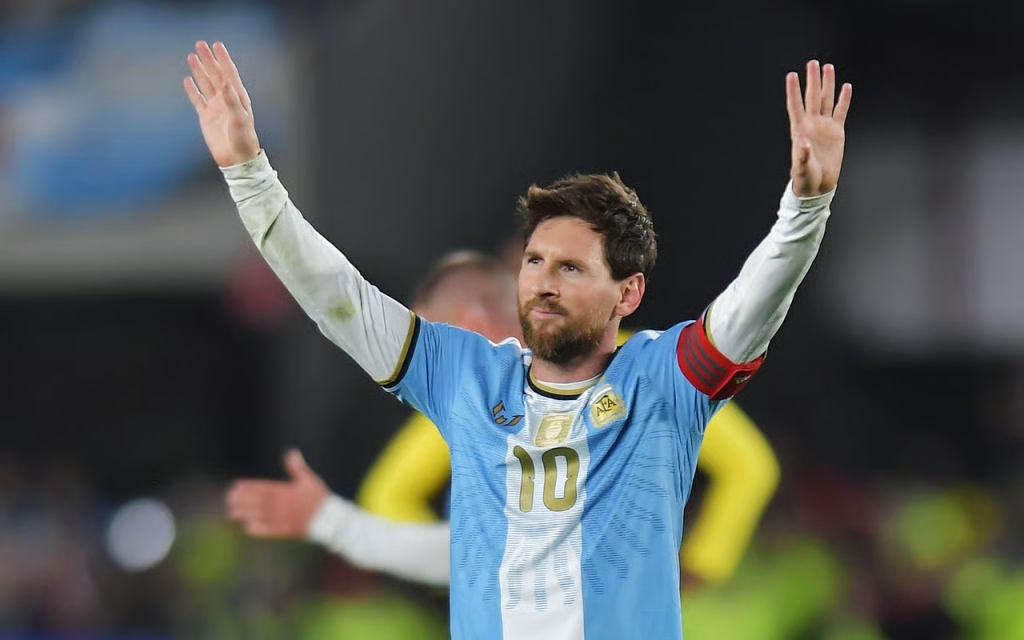
The roar inside the Estadio Mâs Monumental in Buenos Aires was not merely the sound of 85,000 football supporters celebrating a victory. It was the collective exhale of a nation coming to terms with the end of an epoch. When Lionel Andrés Messi stepped off the pitch following Argentina’s 3-0 victory against Benin, he brought down the curtain on a 21-year international career that redefined not only modern sport, but the cultural fabric of a country. With 208 caps, 126 goals, two Copa América trophies, a Finalissima title, and the crown jewel—the 2022 FIFA World Cup—Messi’s journey with the Albiceleste stands as one of the most complex, dramatically compelling, and ultimately triumphant narratives in athletic history.
For decades, the story of Messi and Argentina was framed as an unrequited romance. Leaving his hometown of Rosario at age 13 to join Barcelona’s famed La Masia academy, Messi spent the early half of his career walking a fine line between supernatural admiration abroad and lingering skepticism at home. Yet, by the time he played his final international fixture at age 39, the narrative had transformed entirely. Messi left the pitch not just as Argentina’s greatest player, but as an eternal symbol of resilience, unity, and excellence.
The Statistical Reality of a Legendary International Career
To understand the magnitude of Lionel Messi’s international retirement, one must first look at the quantitative scale of his accomplishments. Over more than two decades representing Argentina at senior level, Messi built a statistical footprint that rivals any athlete across any era.
| Metric / Milestone | Total / Details | Historical Context & Significance |
| International Senior Caps | 208 Appearance | Most appearances in South American (CONMEBOL) football history |
| International Senior Goals | 126 Goals | All-time leading scorer for Argentina and top CONMEBOL international scorer |
| FIFA World Cup Appearances | 5 Tournaments (2006, 2010, 2014, 2018, 2022) | One of only a handful of players to feature in five World Cup editions |
| Major International Trophies | 4 Senior Titles | Copa América (2021, 2024), Finalissima (2022), FIFA World Cup (2022) |
| Individual International Honors | 2 FIFA World Cup Golden Balls | Only player in history to win the Golden Ball twice (2014, 2022) |
| Peak Career Transfer Value | €180.00 Million (circa 2018) | Highest market evaluation during his European club dominance |
Messi’s numbers reflect an unprecedented level of consistency at the elite international tier. Averaging over 0.60 goal contributions per game across two decades of high-stakes international competition, his impact remained steady even as the style and physical demands of global football evolved.
From Rosario to Catalonia: The Early Skepticism and Cultural Friction
The relationship between Messi and the Argentine public was never simple. Unlike Diego Maradona, who learned his craft in the rough neighborhoods of Villa Fiorito and rose to fame playing for Argentinos Juniors and Boca Juniors, Messi departed Argentina before ever playing a single professional minute in the domestic league.
This early departure created an emotional distance. In Buenos Aires and across the provinces, football is intrinsically tied to local identity, fan culture, and criollo swagger. Messi’s reserved personality, quiet demeanour, and heavy Spanish linguistic influences initially led critics to label him as cold or detached.
The Shadow of 1986
For years, every performance by Messi in the national shirt was judged against the phantom of 1986, when Diego Maradona single-handedly carried Argentina to World Cup glory in Mexico. When Argentina suffered heart-breaking final losses at the 2014 World Cup in Brazil, followed by back-to-back Copa América final defeats to Chile in 2015 and 2016, public frustration reached its boiling point. Critics pointed to his success with FC Barcelona—where he won four UEFA Champions League titles and ten La Liga crowns—and asked why the same success could not be replicated for his home nation.
The pressure reached such an acute intensity in 2016 that a devastated Messi briefly announced his retirement from international football. “For me, the national team is over. I’ve done all I can,” he said after the 2016 Copa América Centenario final penalty shootout defeat. That retirement lasted only a few weeks, prompted by widespread public rallies across Argentina pleading for his return—a clear indication that despite the criticism, the country recognized his singular importance.
The Great Turnaround: Copa América 2021 and Qatar 2022
The turning point of Messi’s international narrative arrived not in Buenos Aires, but at the iconic Maracanã Stadium in Rio de Janeiro on July 10, 2021. Facing fierce rivals Brazil in the Copa América final, Argentina secured a 1-0 victory courtesy of an Angel Di Maria goal. At the final whistle, every Argentine player bypassed the bench and ran directly to fall upon Messi, who dropped to his knees in tears.
That tournament victory broke a 28-year major trophy drought for Argentina and lifted a massive psychological weight from Messi’s shoulders. With a major international title finally secured, the nature of his game for Argentina shifted from anxious obligation to joyous mastery.

| 2006–2019: The Burden Era | Heartbreak in 2014 World Cup Final Consecutive 2015 & 2016 Copa América Final Losses Heavy Comparisons to Diego Maradona |
| 2021: The Turning Point | Victory in 2021 Copa América Final vs. Brazil Release of 28-Year National Trophy Drought |
| 2022–2026: The Golden Era | Finalissima Victory over Italy (2022) FIFA World Cup Triumph in Qatar (2022) 2024 Copa América Defense Emotional Farewell Match in Buenos Aires (2026) |
The World Cup Coronation in Qatar
The 2022 FIFA World Cup in Qatar solidified Messi’s legacy. Scoring seven goals throughout the tournament, including two in the final against France, Messi produced a masterpiece of leadership, skill, and tactical intelligence. His iconic performance in Lusail Stadium sealed Argentina’s third World Cup title and answered any lingering questions regarding his place in the pantheon of global sports legends.
Financial analysts estimated that Argentina’s World Cup triumph generated over $100.00 million (€92.00 million) in increased economic output, boosting tourism, merchandise sales, and global brand visibility for the South American country during a period of macroeconomic difficulty.
To explore detailed historical statistics on global sporting achievements and national team records, visitors can review official performance databases on Statista’s Sports & Recreation Hub.
Tactical Evolution: How Messi Adapted Over Two Decades
Messi’s longevity at the international level was made possible by continuous tactical evolution. Early in his career under managers like José Pékerman and Diego Maradona, Messi operated primarily as an explosive right winger who relied on rapid acceleration, tight control, and dribbling past multiple defenders.
As his physical explosive speed gradually moderated with age, Messi transformed into a supreme playmaker and attacking midfielder. Under the stewardship of manager Lionel Scaloni, Argentina built a structured system—nicknamed La Scaloneta—specifically designed to maximize Messi’s efficiency while minimizing his defensive workload.
Comparative Tactical Breakdown Throughout His Career
| Career Phase | Tactical Position | Key Responsibilities | Primary Physical/Technical Demands |
| 2006–2012 | Right Winger / Inverted Forward | Isolation 1v1s, diagonal cutting runs, high-speed counter-attacks | Maximum acceleration, agility, burst speed |
| 2012–2018 | “False 9” / Central Playmaker | Dropping deep to build play, central combination passing, direct goal scoring | Spatial awareness, quick turn of pace, precise finishing |
| 2019–2026 | Free-Roaming Attacking Midfielder | Dictating tempo, key passes, set-piece execution, decisive final-third actions | Advanced vision, tactical positioning, energy conservation |
This tactical shift allowed Messi to remain effective well into his late 30s. In his final international appearance against Benin, despite playing at a reduced physical tempo, his vision and spatial awareness allowed him to easily manage the flow of the match, setting up two goals and converting a signature penalty.

Economic and Cultural Impact of Messi’s Farewell
The financial scale of Messi’s international retirement match demonstrated his unparalleled commercial power. The Argentine Football Association (AFA) turned the friendly against Benin into a massive commercial spectacle.
- Ticket Resale Dynamics: Original ticket prices ranged from $60.00 (€55.00) to $300.00 (€275.00). Within 90 minutes of release, all 85,000 seats at the Mas Monumental stadium were sold out. Resale market prices on primary platforms spiked past $2,500.00 (€2,300.00) per seat.
- Global Broadcast Footprint: The match was broadcast across more than 170 countries, drawing estimated television and streaming audiences exceeding 45.00 million viewers worldwide.
- Merchandising Revenue: Official jersey sales featuring the special edition “Eternal Captain” patch generated an estimated $12.50 million (€11.50 million) in gross merchandise value within the 48 hours surrounding the match.
Beyond the numbers, Messi’s farewell represents a major cultural shift for Argentina. For a population navigating persistent economic inflation and political changes, football serves as an essential source of social cohesion. Messi offered a narrative of success built on persistence, humbleness, and work ethic.
Looking Ahead: The Future of the Argentine National Team
With Messi’s international career officially concluded, manager Lionel Scaloni and the AFA face the daunting task of building a future without their captain. The immediate question centers on who will wear the prestigious No. 10 shirt.
Scaloni confirmed that the jersey number will remain unassigned for the upcoming qualification fixtures to allow the team time to adjust. Emerging talents like Lautaro Martínez, Julián Álvarez, and Alexis Mac Allister now form the core of a resilient, world-champion squad that must learn to win without relying on Messi’s individual brilliance.
Messi will continue his domestic club career with Inter Miami in Major League Soccer through the 2028 season, bringing his extraordinary talents to North American audiences. However, his chapter with Argentina is closed. As a banner hanging at midfield in Buenos Aires simply stated during his final lap of honor: “Gracias, Cápitan. Serás Eterno.” (Thank you, Captain. You will be eternal.)