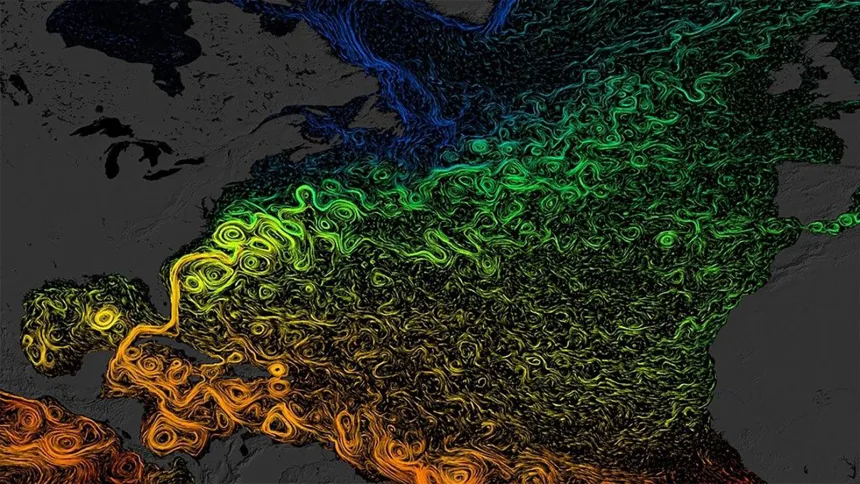




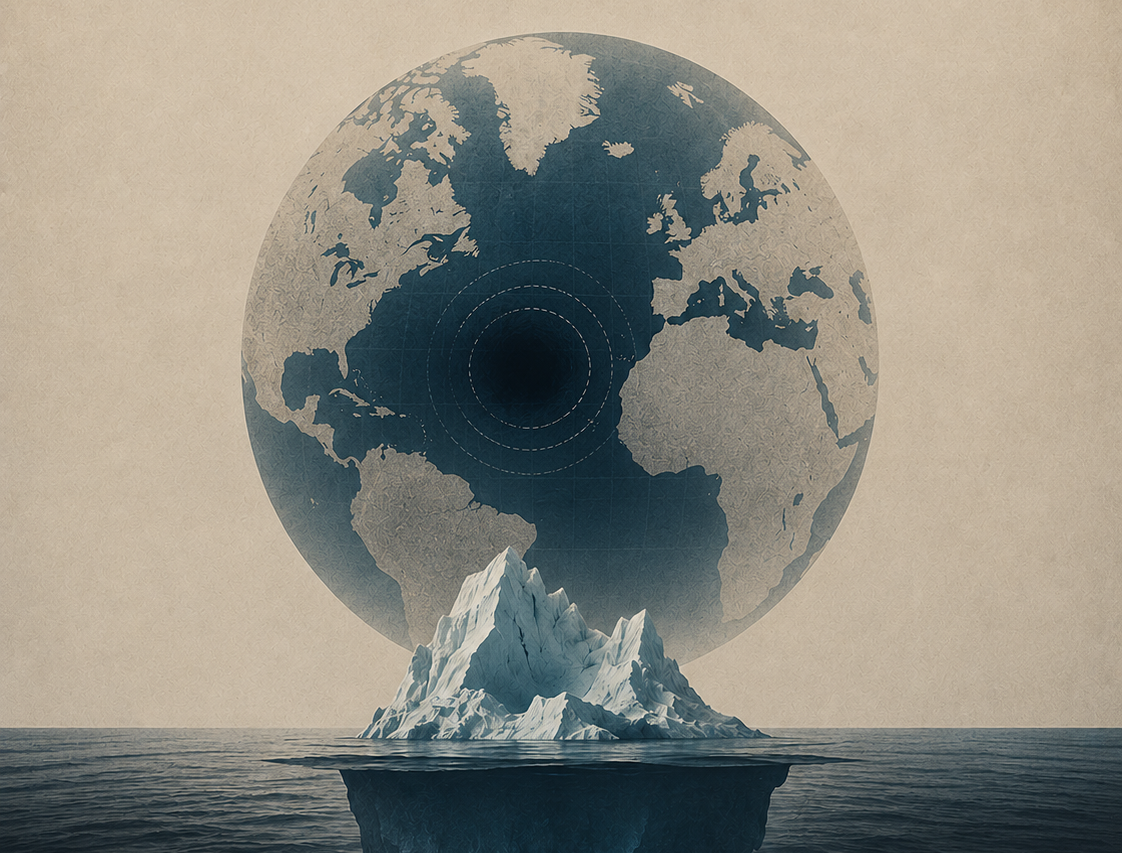
With ocean temperatures rising globally, you’re witnessing a striking anomaly: a persistent patch of cooling in the North Atlantic, known as the Cold Blob. This cooling signals a potential slowdown of the Gulf Stream system, a shift that could disrupt weather patterns across Europe and North America. While the planet warms, this region’s unusual trend highlights the complex, non-uniform nature of climate change, offering critical clues about how ocean circulation may reshape our future.
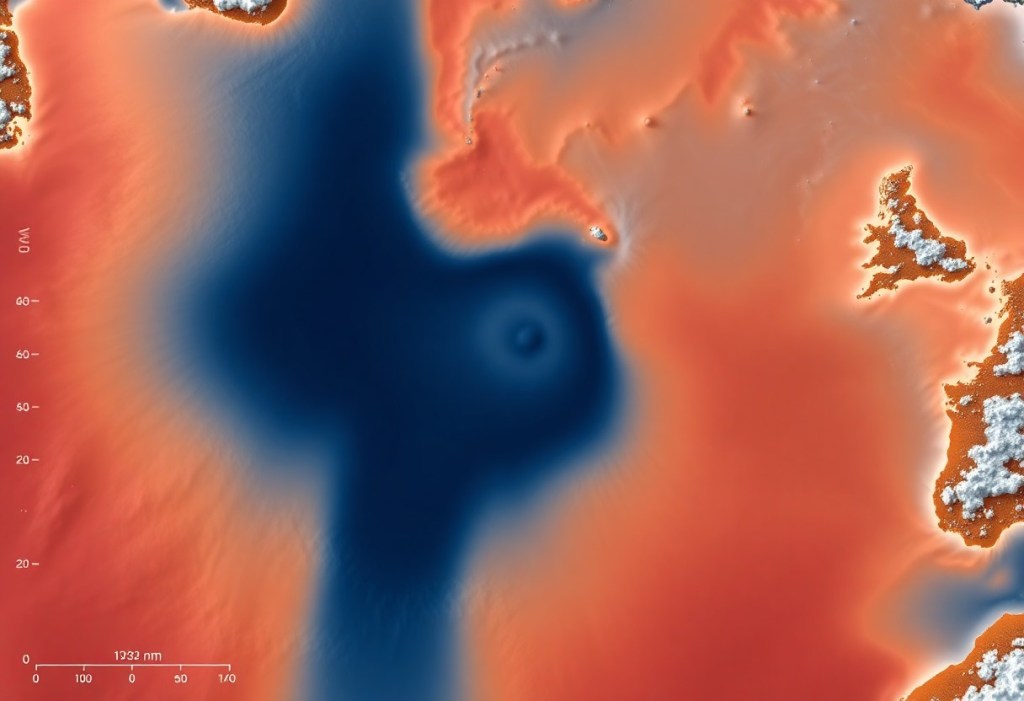
The Dilution of the Great Brine
You’re witnessing a quiet but dangerous shift in the North Atlantic, where massive volumes of freshwater from melting glaciers are weakening the ocean’s salt-driven circulation. This influx dilutes the dense, salty water that normally sinks and powers the Atlantic Meridional Overturning Circulation (AMOC), slowing its flow. The result? A direct threat to global heat distribution, with potential disruptions to weather patterns far beyond the region.
Changes in this system don’t unfold gradually over centuries-they can accelerate with little warning. Evidence suggests the AMOC is already at its weakest point in over a millennium. If it collapses, you’ll face more extreme winters in Europe, intensified storms, and prolonged droughts in agricultural zones, reshaping food security and human migration on a continental scale.
The Faltering Pulse of the AMOC
Your planet’s circulatory system is slowing. The Atlantic Meridional Overturning Circulation (AMOC), long responsible for distributing heat across the Northern Hemisphere, shows signs of unprecedented weakening. Recent studies indicate this slowdown may be the most severe in over a millennium, driven by melting Greenland ice and rising ocean temperatures disrupting salt and density balances.
Changes in the AMOC directly affect weather patterns, storm intensity, and regional climates. A weaker circulation could mean harsher winters in Europe, disrupted monsoons, and accelerated sea-level rise along the U.S. East Coast. Scientists warn that crossing a tipping point could lead to abrupt, irreversible shifts-altering global climate far beyond gradual warming trends.
Terrestrial Echoes of the Cold
You feel the ripple in seasonal rhythms-crops flowering later, migratory birds arriving off-schedule. The Atlantic’s cold blob distorts atmospheric flow, pushing Arctic air deeper into continental zones during winter, leading to unexpected freezes that damage vulnerable ecosystems. These disruptions mirror oceanic anomalies, proving climate change doesn’t unfold uniformly.
Weather patterns over North America show increased stagnation, with high-pressure systems locking in place for weeks. This means prolonged droughts in some regions and relentless rains in others, directly tied to the weakened jet stream. You’re not imagining the erratic springs or harsher winters-these are land-based signals of a much larger imbalance.
The Precipice of the Abyss
You’re standing where ocean and atmosphere conspire in ways that defy old climate models. The Atlantic’s Cold Blob isn’t just a patch of cool water-it’s a disturbance in the planet’s heat engine, a sign that the Gulf Stream system may be nearing a tipping point. This slowdown could unravel weather patterns across continents, bringing extreme winters to Europe and intensified storms to the eastern U.S.
Climate signals here are louder than before. What you’re witnessing isn’t natural variation but a direct consequence of melting Greenland ice, pouring freshwater into the North Atlantic and disrupting deepwater formation. If this continues, the collapse of the Atlantic Meridional Overturning Circulation isn’t a distant theory-it’s a plausible future within this century.
To wrap up
Summing up, the Atlantic’s Cold Blob challenges your assumptions about uniform global warming. This anomaly-a patch of cooling ocean amid rising temperatures-signals disruptions in the Atlantic Meridional Overturning Circulation, a key regulator of Earth’s climate. You are witnessing real-time evidence that climate change does not proceed smoothly or predictably. The Cold Blob underscores how regional shifts can diverge from global trends, demanding sharper models and more responsive policies. Your understanding of climate must account for such contradictions, not dismiss them.
FAQ
Q: What is the “Cold Blob” in the North Atlantic, and why is it significant?
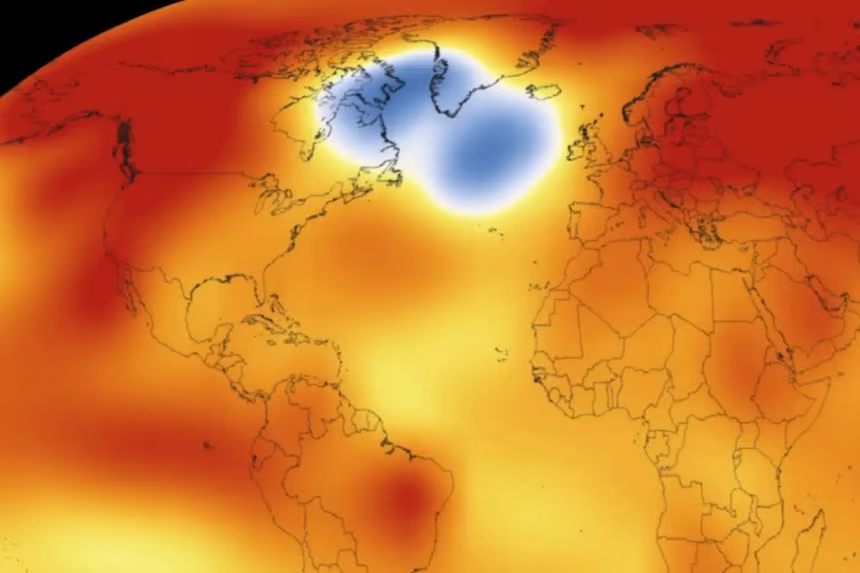
A: The “Cold Blob” refers to a region of unusually cool sea surface temperatures in the subpolar North Atlantic, particularly south of Greenland. While global temperatures rise overall, this area has shown a cooling trend since the mid-20th century. Scientists link this anomaly to a slowdown in the Atlantic Meridional Overturning Circulation (AMOC), a major ocean current system that transports warm water from the tropics northward. The cooling effect appears to result from reduced heat transport due to weakened circulation, possibly driven by melting Greenland ice and increased freshwater input. This pattern stands out against broader warming trends and suggests changes in ocean dynamics that could affect climate systems across the Northern Hemisphere.
Q: How does the Cold Blob relate to climate change?
A: The Cold Blob is considered a potential fingerprint of human-induced climate change. As global temperatures rise, ice sheets in Greenland are melting at an accelerating rate, releasing large volumes of freshwater into the North Atlantic. This freshwater dilutes the saltier, denser seawater that normally sinks and drives the AMOC. When this sinking weakens, the entire circulation slows, reducing the flow of warm water to higher latitudes. The Cold Blob emerges as a direct consequence-less heat reaching that part of the ocean. Climate models that include these freshwater inputs reproduce the cooling pattern, strengthening the argument that the phenomenon is tied to anthropogenic warming and ice melt.
Q: Could the Cold Blob lead to extreme weather or climate shifts in nearby regions?
A: Yes, changes linked to the Cold Blob may already be influencing weather patterns in Europe and North America. A weaker AMOC can alter atmospheric circulation, potentially leading to more persistent weather extremes. For example, cooler waters in the North Atlantic can affect the jet stream, making it wavier and slower. This behavior can prolong heatwaves, cold spells, or storm systems over certain areas. Some studies suggest the Cold Blob may have played a role in extreme winters in Europe during the 2010s or contributed to shifts in storm tracks. If the AMOC continues to weaken, such disruptions could become more frequent, affecting agriculture, infrastructure, and seasonal climate predictability.