




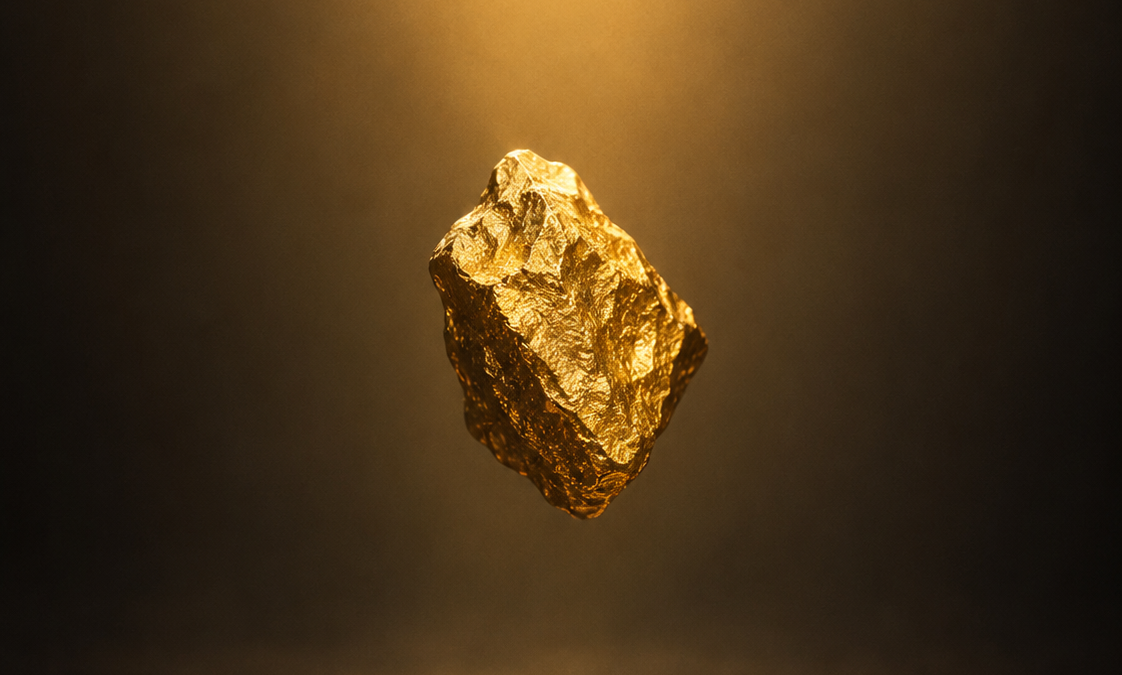
Australia hosts one of Earth’s most dangerous and enigmatic impact sites-where a massive meteor strike may have scattered precious metals across the outback. You’re standing at the center of a scientific mystery: could gold have literally fallen from the sky? Evidence suggests the collision altered geology in unexpectedly rich ways, challenging what you know about mineral origins.
Serpent Trails and Local Lore
Stories wind through the desert like ancient tracks, telling of a time when the land was shaped by spiritual forces. You hear them in hushed tones near campfires, where elders speak of creation beings who carved rivers, raised mountains, and left marks still visible today. These are not mere myths-they are living knowledge, passed down for thousands of years, mapping both land and law.
The Rainbow Serpent and the crater
One tale speaks of the Rainbow Serpent, Kandimalal, streaking across the sky before plunging into the earth with cosmic force. The impact carved the crater, scattering gold-like stones across the scorched ground. You’re told this was no ordinary fall-it was a transformation, a moment where spirit and stone became one.
Kandimalal as a cultural landmark
Kandimalal is more than a geological feature-it’s a sacred site where songlines converge and ceremony continues. You walk here with respect, knowing every ridge and gully holds ancestral memory. The land warns as much as it teaches, demanding humility from those who approach.
This place remains a center for cultural transmission, where young people learn law through story, dance, and the contours of the earth. You witness firsthand how Kandimalal is not frozen in the past but lives actively in the present, shaping identity and community with unbroken continuity.

The Moment of Cosmic Impact
Energy exploded across the ancient Australian plains when a meteorite slammed into Earth at hypersonic speed. You’re witnessing a flash brighter than the sun, felt hundreds of kilometers away. The blast released thousands of times more energy than an atomic bomb, vaporizing rock and metal instantly.
Sound followed in a crushing wave, flattening everything in its path. Dust and debris shot high into the atmosphere, some escaping into space. This single moment reset the local environment in seconds, marking the birth of a crater now buried beneath time and silence.
Physics of the prehistoric blast
Velocity determined the destruction-this meteorite struck at over 20 kilometers per second. The sudden deceleration generated pressures exceeding a million atmospheres, enough to melt quartz instantly. You’re seeing physics at its most violent, where kinetic energy transforms rock into plasma.
Shockwaves radiated outward, fracturing bedrock deep below the surface. Temperatures briefly surpassed those on the surface of the sun, creating rare minerals found nowhere else. The crater’s structure reveals how extreme forces shape planetary surfaces in microseconds.
Landscape transformation in seconds
Ground heaved upward like water struck by a stone, forming a transient crater over a kilometer wide. Entire ecosystems vanished in the fireball, replaced by molten rock and superheated gas. You’re standing where solid earth briefly behaved like a liquid, folding and collapsing under unimaginable stress.
Within seconds, the initial cavity collapsed, forming a deeper, more stable bowl. Ejecta blanketed the region, burying forests and rivers under sterile debris. This reshaped drainage patterns for millennia, altering how water moved across the continent.
What remains is a silent record of sudden change-layers of fused rock and displaced soil tell of a day when the sky fell. You can still find shocked quartz and tektites scattered near the site, physical proof of a transformation that lasted less than a minute but altered the region forever. Time erased the scar, but geology remembers.
A Long Drive to Nowhere
You leave the last paved road behind, and the red dust begins to coat your windshield like dried blood. The journey into Australia’s outback is not for the unprepared-fuel, water, and spare tires are non-negotiable. This isolation preserved the crater’s secrets for millions of years, and now it guards them from the curious and the ambitious alike.
Hours stretch into a blur of scrubland and horizon. Then, a faint anomaly on the GPS marks the site where a 100 Million-Year-Old Meteorite Crater Found While Drilling … disrupted the ancient crust. No signs welcome you-just silence and the weight of deep time pressing down.
Logistics of an outback expedition
Planning begins months in advance, with satellite maps and weather windows dictating your route. Supplies must cover every emergency-mechanical failure here could be fatal. Communication is limited; satellite phones are your only link to help if something goes wrong.
Permits from Indigenous land councils are required, respecting the cultural significance of the region. Every vehicle is tracked, and fuel caches are pre-positioned. The remoteness demands precision-there are no second chances when the nearest town is 500 kilometers away.
Standing on the rim of history
At dawn, the crater reveals itself-a vast, subtle depression ringed by shattered rock. You’re standing where an asteroid struck when dinosaurs still roamed, a moment frozen in geology. The air feels charged, as if the impact’s energy still lingers beneath your boots.
Chunks of shocked quartz glint in the sunlight, evidence of pressures no Earth process could replicate. This is not just a scar-it’s a time capsule. Scientists have dated the event to the Cretaceous, a period when Australia was part of Gondwana.
That moment on the rim connects you to a cataclysm that reshaped ecosystems. The crater’s discovery during gold drilling underscores how unexpected science emerges from industry. You’re not just observing geology-you’re touching a violent, transformative instant in Earth’s story.
Conclusion
Following this investigation, you understand that gold did not literally fall from the sky. The stories surrounding Australia’s strange meteor crater blend myth with geological curiosity, but scientific analysis shows the gold deposits formed through natural Earth processes long after the impact. You see that while meteor strikes can alter landscapes and expose mineral veins, they do not deliver precious metals from space.
You now recognize the value of separating folklore from fact. The crater remains a significant site, not for extraterrestrial treasure, but for what it reveals about planetary history and mineral formation under extreme conditions.
FAQ
Q: Did gold actually fall from the sky in Australia?
A: No physical evidence confirms that gold literally fell from the sky. The idea stems from the discovery of tiny gold particles near the Wolf Creek Crater in Western Australia, a well-known meteorite impact site. Scientists believe the gold likely originated from Earth’s crust, disturbed and redistributed by the meteor’s explosive force. The impact may have fractured underground veins, bringing trace amounts of gold to the surface. While the image of golden rain from space captures the imagination, geologists explain the presence of gold as a result of terrestrial processes amplified by the meteor strike, not extraterrestrial delivery.
Q: What makes the Wolf Creek Crater linked to stories about gold from space?
A: The Wolf Creek Crater, formed about 300,000 years ago by a meteorite impact, lies in a region historically rich in gold deposits. Early prospectors and local legends noticed small gold fragments scattered around the crater’s rim and began speculating about a cosmic origin. The dramatic force of the impact-equivalent to a large nuclear explosion-can vaporize and eject subsurface material, including minerals. This natural excavation likely brought gold-bearing rock to the surface, creating the illusion that gold had arrived with the meteor. The blend of real geology and frontier folklore helped fuel the myth of gold falling from the sky.
Q: Can meteorites carry gold, and did the one at Wolf Creek bring any?
A: Some meteorites do contain trace amounts of gold, but usually in very low concentrations-far too little to be economically valuable. The meteorite that created the Wolf Creek Crater was primarily composed of iron and nickel, typical of iron meteorites. Scientific analysis of fragments from the site has not revealed significant gold content within the meteorite material itself. Any gold found nearby is geochemically consistent with local Earth sources. The impact acted like a natural drill, exposing buried minerals, but the gold did not come from space. The story persists more as a colorful tale than a scientific fact.