



You, as a gaming enthusiast, may wonder how gaming PCs evolved in terms of performance and design over the years. From bulky, noisy machines to sleek, powerful rigs, the transformation is truly remarkable. This blog post investigates into the fascinating journey of gaming PCs, exploring the technological advancements that have revolutionized the way we experience gaming. Let’s begin on this enlightening journey together and unravel the secrets behind the evolution of gaming PCs.
Key Takeaways:
- Increased Performance: Gaming PCs have evolved to offer significantly improved performance over the years, with faster processors, higher RAM capacity, and more advanced graphics cards.
- Design Innovation: Gaming PC designs have become more sleek, aesthetically pleasing, and innovative, incorporating RGB lighting, tempered glass panels, and customizable elements.
- Enhanced Cooling Systems: Modern gaming PCs are equipped with improved cooling solutions such as liquid cooling, larger fans, and better airflow designs to maintain optimal temperatures during intense gaming sessions.
- Smaller Form Factors: There is a trend towards smaller gaming PC form factors, such as mini-ITX and micro-ATX, which offer powerful performance in compact sizes, ideal for space-constrained setups.
- VR-Ready Technology: Gaming PCs now come with VR-ready specifications to support virtual reality gaming experiences, including high-resolution displays, low latency, and high frame rates.
The Early Days of Gaming PCs
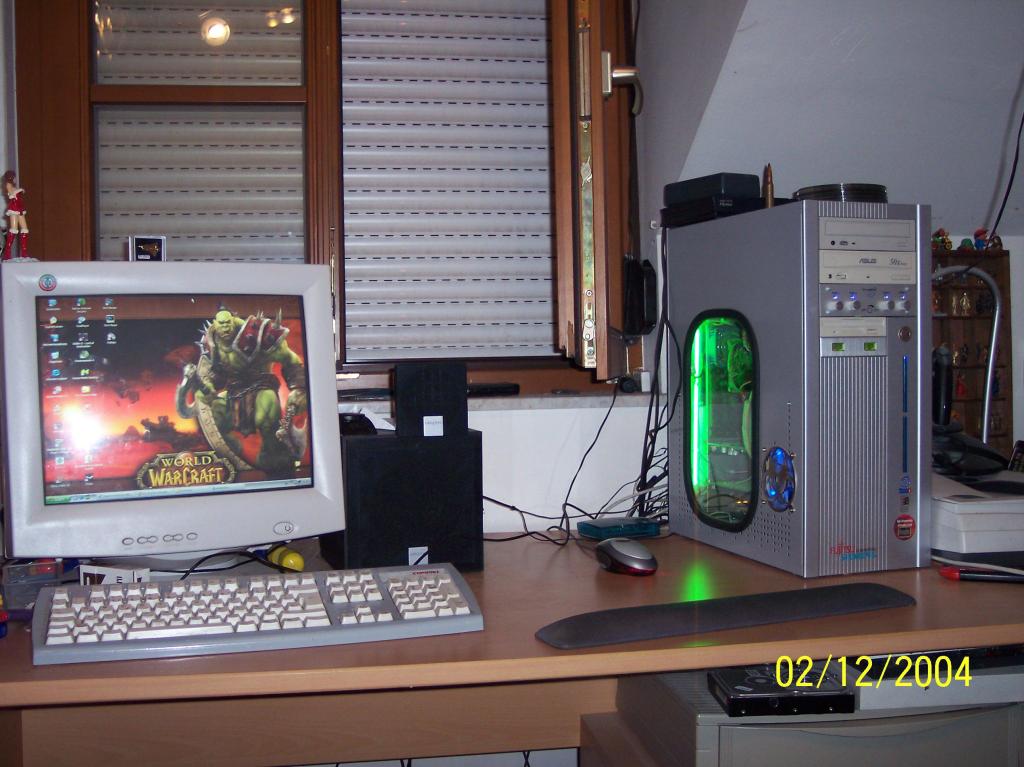
The First Gaming PCs: 1980s-1990s
As you step back in time to the 1980s and 1990s, you’ll find the humble beginnings of gaming PCs. The first gaming PCs were often homemade or customized from early personal computers. These machines laid the foundation for what would eventually become the powerful gaming rigs we know today.
Limited Performance and Design Options
The early gaming PCs of the 1980s and 1990s were characterized by limited performance and design options. Processors were slow, memory capacity was minuscule, and graphics were basic at best. You were lucky to have a few colors on the screen, let alone detailed 3D graphics. Additionally, the design of these early gaming PCs was quite basic, often resembling standard desktop computers rather than the sleek, gaming-oriented designs we see today.
Performance was a major concern for early gaming PCs. With limited memory and processing power, games had to be simplistic in both design and gameplay. You could forget about realistic graphics or complex AI – it just wasn’t possible with the technology available at the time. Despite these constraints, the love for gaming and the potential of this budding industry kept pushing the boundaries of what gaming PCs could achieve.
The Rise of Customization
Some of the most significant advancements in the world of gaming PCs have come from the ability to customize and upgrade components to enhance performance. This customization allows you to tailor your gaming rig to suit your specific needs and preferences, whether you’re looking to boost processing power, increase storage capacity, or improve graphics capabilities.
The Emergence of Upgradeable Components
An necessary aspect of gaming PC evolution has been the emergence of upgradeable components. This feature enables you to **stay ahead of the curve**, adapting your system to meet the demands of the latest games and software. Upgrading components like the graphics card, processor, and RAM can **significantly enhance your gaming experience** without having to invest in an entirely new system.
Enthusiasts Take Charge: Overclocking and Modding
To truly push the limits of your gaming PC’s performance, enthusiasts have turned to overclocking and modding. Overclocking allows you to **increase the clock speed of your components** beyond their factory settings, boosting overall performance. On the other hand, modding involves **customizing the physical appearance** of your PC, from LED lighting and custom cooling systems to unique case designs.
Overclocking your system can **provide a substantial performance boost**, but it’s necessary to proceed with caution to prevent overheating or damaging your components. Modding, while offering a chance for **personal expression**, requires careful planning and execution to ensure compatibility and longevity of your gaming rig.
The Birth of the Gaming PC Community
Community-driven forums and online platforms have played a crucial role in fostering a vibrant gaming PC community. **Engaging with fellow enthusiasts** allows you to exchange tips and tricks, discover new technologies, and seek advice on optimizing your setup. This sense of **camaraderie and shared passion** has propelled the gaming PC community forward, driving innovation and pushing the boundaries of what’s possible.
Community interaction not only provides valuable insights and support but also creates a sense of belonging and connection with like-minded individuals who share your enthusiasm for gaming PCs. **Collaborating and learning from others** can enhance your gaming experience and inspire you to continue evolving your setup to achieve peak performance and aesthetics.
Advances in Processor Technology
Once again, gaming hardware needs to grow up Gaming hardware needs to grow up, and one of the key components driving this evolution is the processor. Over the past decade, we have witnessed a significant leap in processing power, moving from Pentium processors to the powerhouse performance of the Core i9 series.
From Pentium to Core i9: A Decade of Progress
Processor technology has advanced by leaps and bounds, with each new iteration offering faster clock speeds, more cores, and improved efficiency. The transition from the humble Pentium processors to the cutting-edge Core i9 series represents a decade of remarkable progress in the field of computing power.
Multicore Processors and Hyper-Threading
An integral part of this evolution has been the development of multicore processors and hyper-threading technology. These innovations allow a single processor to handle multiple tasks simultaneously, significantly boosting performance and productivity.
This shift towards multicore processors and hyper-threading has transformed the way we approach computing tasks, enabling smoother multitasking, faster data processing, and more efficient resource management across a wide range of applications.
The Impact of Processor Evolution on Gaming
Gaming has particularly benefited from the advancements in processor technology. Modern games demand substantial processing power to deliver immersive graphics, realistic physics simulations, and seamless gameplay experiences. The evolution from single-core processors to multicore powerhouses has revolutionized gaming performance, allowing for more complex game worlds, advanced artificial intelligence, and higher frame rates.
For instance, with a multicore processor equipped with hyper-threading technology, you can enjoy smoother gameplay, reduced loading times, and enhanced visual fidelity in the latest AAA titles. The impact of processor evolution on gaming is undeniable, shaping the way we experience and interact with virtual worlds.
Graphics Cards: The Heart of Gaming PCs

Your gaming PC’s performance largely depends on the graphics card you have. As highlighted in a fascinating article on PC Gaming over the years. How much has it changed?, the evolution of graphics cards has been a significant driving force behind the advancements in PC gaming technology.
The Evolution of GPU Architecture
To keep up with the demands of modern gaming, graphics processing units (GPUs) have undergone remarkable changes in architecture over the years. From simple 2D graphics to complex and realistic 3D environments, GPUs have evolved to handle increasingly sophisticated game graphics with greater speed and accuracy.
From Integrated to Dedicated Graphics Cards
Graphics cards have transitioned from integrated solutions on motherboards to dedicated GPUs that are specifically designed for rendering graphics. This shift has significantly impacted gaming performance, allowing for higher frame rates, greater visual fidelity, and support for advanced features like ray tracing and AI-enhanced graphics.
Gaming on a dedicated graphics card ensures that the heavy lifting of rendering complex game visuals is handled efficiently, leaving your CPU free to manage other tasks and ensuring a smoother overall gaming experience.
The Role of Graphics Cards in Modern Gaming
To fully immerse yourself in the latest AAA titles, a powerful graphics card is vital. Modern gaming GPUs offer real-time ray tracing, high refresh rates for smooth gameplay, and support for 4K resolution for stunning visual fidelity. The latest graphics cards are designed to deliver a seamless gaming experience at ultra-high settings for the most demanding games.
From enhanced realism to faster load times and improved overall performance, the graphics card remains a critical component in shaping your gaming experience, pushing the boundaries of what’s possible in the world of PC gaming.
Storage and Memory: The Unsung Heroes
After The Evolution of Gaming PCs, it’s clear that storage and memory play a crucial role in the performance of gaming PCs. These components are often the unsung heroes, quietly working behind the scenes to ensure smooth gameplay and lightning-fast loading times.
The Shift from HDD to SSD: Faster Load Times
Shift your focus to the transition from traditional Hard Disk Drives (HDD) to Solid State Drives (SSD). This shift has been a game-changer in the world of gaming PCs. SSDs offer significantly faster read and write speeds compared to HDDs, resulting in quicker boot times, reduced loading screens, and a more responsive gaming experience. **The difference in performance is undeniable, as games installed on an SSD can load in seconds compared to minutes on an HDD**. Upgrading to an SSD is one of the most impactful improvements you can make to your gaming rig.
The Importance of RAM in Gaming Performance
On the other hand, **RAM (Random Access Memory)** is equally crucial for gaming performance. RAM acts as temporary storage for data that the CPU needs quick access to. The more RAM you have, the smoother your gaming experience will be, especially when running memory-intensive games or multitasking. It’s not just about having a lot of RAM, but also about having **fast RAM** with high frequencies for optimal performance.
Storage and memory technologies are advancing rapidly, paving the way for even better gaming experiences in the future. Manufacturers are constantly pushing the boundaries to offer **faster, more reliable, and higher-capacity storage solutions** that cater to the growing demands of modern games.
The Future of Storage and Memory Technologies
Memory technologies like **DDR5 RAM** promise **even faster speeds and greater efficiency**, further enhancing gaming performance. **NVMe SSDs** are becoming more prevalent, providing lightning-fast data transfer rates that reduce load times to a minimum. **Optane memory** is also on the rise, offering a blend of **SSD-like speed and traditional hard drive capacity**. As technology continues to evolve, **the future of storage and memory in gaming PCs looks incredibly promising**.
The evolution of storage and memory components is revolutionizing the gaming experience, ensuring that your gaming PC can keep up with the demands of the latest titles and deliver **unparalleled speed and performance**.
Design Innovations and Cooling Solutions
All gaming PCs have come a long way in terms of design innovations and cooling solutions.
From Tower Cases to Compact Builds
Innovations in design have shifted gaming PCs from bulky tower cases to more sleek and compact builds. Manufacturers have focused on creating space-saving designs without compromising on performance. This has led to the rise of smaller form factors such as Mini-ITX and Micro-ATX cases, allowing gamers to set up powerful rigs in tighter spaces.
Liquid Cooling and Air Cooling: A Comparison
Cooling is a crucial aspect of gaming PC design to ensure your components are operating at optimal temperatures. Let’s compare liquid cooling and air cooling solutions:
| Liquid Cooling | Air Cooling |
| More efficient at dissipating heat | Simple and cost-effective |
| Quieter operation | Less maintenance required |
| Can be more expensive | May not be as effective for high-end CPUs |
The Aesthetics of Modern Gaming PCs
Another aspect of gaming PC evolution is the focus on aesthetics. Modern gaming PCs not only perform well but also look visually stunning.
With customizable RGB lighting, tempered glass side panels, and sleek, futuristic designs, gaming PCs have become a statement piece in any setup. Manufacturers have incorporated elements that allow you to personalize your rig and showcase your style.
For instance, you can choose components with RGB lighting that sync up to create a cohesive look, or opt for a case with intricate patterns and textures to make your gaming PC stand out.
Summing up
From above, you have learned about the remarkable evolution of gaming PCs in terms of performance and design. Over the years, there have been significant advancements in technology that have led to faster processors, more powerful graphics cards, and sleeker, more efficient designs. These improvements have resulted in a more immersive gaming experience with higher frame rates, better visuals, and smoother gameplay.
As you look back at the history of gaming PCs, you can appreciate how far we have come from the bulky, noisy machines of the past to the sleek, powerful systems of today. With cutting-edge technology driving innovation in the industry, the future of gaming PCs promises even greater performance and design improvements. So, whether you are a casual gamer or a hardcore enthusiast, you can look forward to an exciting and ever-evolving gaming experience on your high-performance gaming PC.
Q: How have gaming PCs evolved in terms of performance?
A: Over the years, gaming PCs have evolved in terms of performance by incorporating more powerful processors, higher capacity RAM, faster storage options like SSDs, and advanced graphics cards that support high-resolution gaming.
Q: What role has design played in the evolution of gaming PCs?
A: Design has played a crucial role in the evolution of gaming PCs by focusing on factors such as thermal management, aesthetics, and customization options to enhance the overall gaming experience.
Q: How has cooling technology advanced in gaming PCs?
A: Cooling technology in gaming PCs has advanced significantly with the introduction of liquid cooling systems, improved airflow designs, and efficient heat dissipation mechanisms to prevent overheating and ensure optimal performance during intense gaming sessions.
Q: What are some key factors driving the continuous evolution of gaming PCs?
A: Key factors driving the continuous evolution of gaming PCs include advancements in hardware technology, demand for immersive gaming experiences, competitive gaming trends, and the need for higher performance to support VR gaming and resource-intensive applications.
Q: What can we expect in the future of gaming PCs in terms of performance and design?
A: In the future, we can expect gaming PCs to continue pushing the boundaries of performance with faster processors, higher resolution displays, real-time ray tracing capabilities, AI enhancements, and innovative designs that prioritize both aesthetics and functionality to meet the evolving demands of gamers.
