


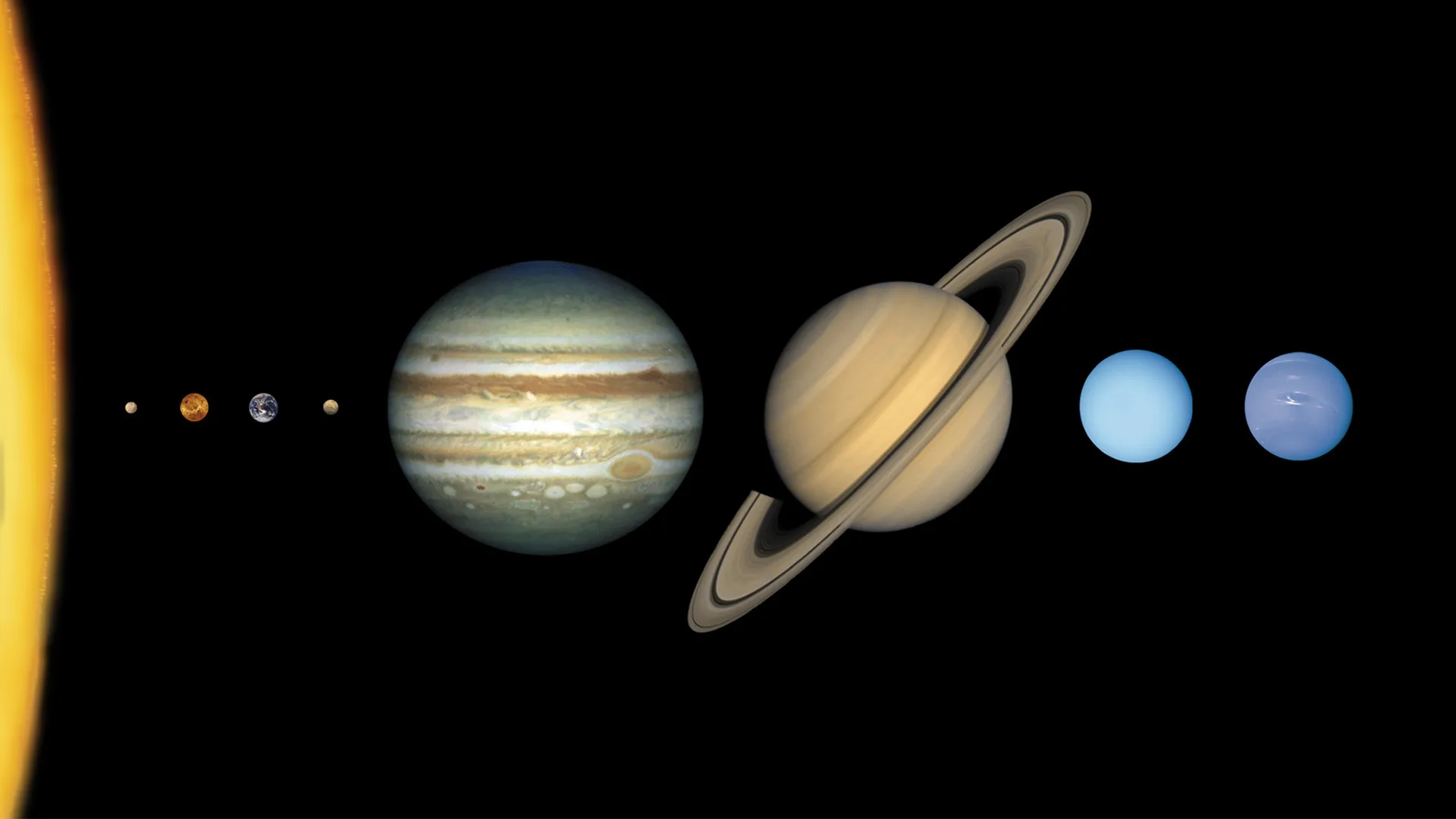
Many centuries ago, humans began to gaze up at the night sky, wondering about the distant lights that wandered among the stars. Have you ever pondered when each of the planets in our solar system was first discovered by scientists and astronomers? Join us on a journey through time to uncover the fascinating history of how each of these celestial bodies was unveiled to humanity.
Key Takeaways:
- Mercy for the Planets: The planets in our solar system were first discovered thousands of years ago, starting with Mercury, Venus, Mars, Jupiter, and Saturn.
- Revolutionary Telescope: The discovery of Uranus in 1781 marked a significant milestone, as it was the first planet to be discovered using a telescope.
- Neptune’s Prediction: Neptune was mathematically predicted before it was actually observed in 1846, based on discrepancies in Uranus’s orbit.
- Pluto’s Downfall: Pluto, once considered the ninth planet, was reclassified as a dwarf planet in 2006, changing the known number of planets in our solar system to eight.
- Modern Discoveries: With advancements in technology, astronomers continue to discover new objects in our solar system, such as dwarf planets, asteroids, and moons.
Ancient Civilizations and Early Observations
Mesopotamia and the First Recorded Astronomical Observations
Before modern telescopes and advanced technology, ancient civilizations like the Mesopotamians gazed up at the night sky to make sense of the celestial bodies. Your journey into the history of discovering the planets begins with the Mesopotamians, who are credited with some of the oldest recorded astronomical observations. Around 3500 BCE, they started cataloging the movements of the planets, stars, and constellations. Your fascination with the planets can be traced back to these early astronomers.
The Mesopotamians built ziggurats, massive temple structures, that also served as astronomical observatories. They tracked the motions of celestial objects and recorded them on clay tablets. These observations laid the foundation for future civilizations to examine deeper into planetary discoveries. Your interest in the planets aligns with the curiosity that drove these ancient astronomers to study the skies with such precision.
As you explore the origins of planetary discovery, consider the Mesopotamians and their significant contributions to early astronomy. The intricate record-keeping and observations made by these ancient skywatchers paved the way for your understanding of the planets in our solar system today.
Ancient Greek Philosophers and Their Contributions to Astronomy
An important chapter in the history of planetary discovery involves the contributions of ancient Greek philosophers. The Greeks, particularly figures like Aristotle, Plato, and Ptolemy, played a crucial role in shaping early astronomy. Your quest for planetary knowledge leads you to the profound insights of these thinkers, who pondered the nature of the cosmos and the movements of the planets.
The ancient Greeks believed in a geocentric model of the universe, with Earth at the center and the planets, including the Sun, revolving around it in perfect circular orbits. This cosmological view dominated for centuries until challenged by later astronomers like Copernicus. Your fascination with the planets is intertwined with the intellectual debates and discoveries made by these early Greek scholars.
To deepen your understanding of how the planets were first discovered, examine into the works of ancient Greek philosophers and astronomers. Their meticulous observations, theoretical frameworks, and mathematical calculations laid the groundwork for your appreciation of the vast mysteries of our solar system.
The Age of Telescopes
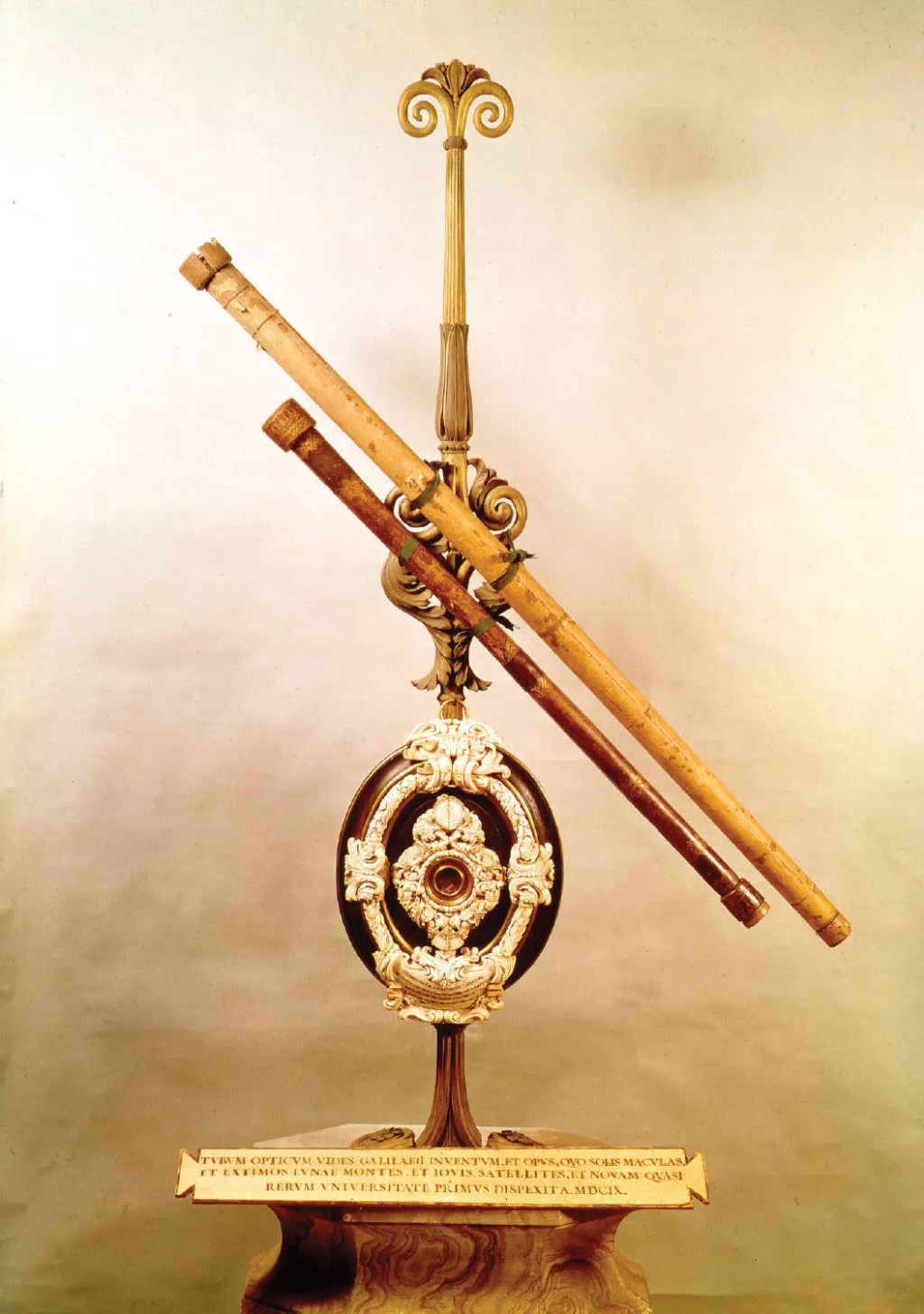
While Solar system planets, order and formation: A guide can provide a comprehensive overview of the history of our solar system, it was the Age of Telescopes that truly revolutionized our understanding of the cosmos. It was during this time that astronomers like Galileo Galilei and Johannes Kepler made groundbreaking discoveries that forever changed how we view the planets in our solar system.
Galileo Galilei and the First Telescope Observations
The Age of Telescopes was ushered in by Galileo Galilei, who, in the early 17th century, made the first observations of celestial objects through a telescope. Galileo’s telescopic observations of the night sky revealed astonishing details about the Moon, the moons of Jupiter, and the phases of Venus. These observations provided strong evidence in support of the heliocentric model of the solar system proposed by Nicolaus Copernicus.
Galileo’s discoveries sparked a revolution in astronomy, challenging long-held beliefs about the nature of the cosmos. His observations not only supported the Copernican model but also paved the way for future astronomers to make further discoveries about the planets in our solar system.
Johannes Kepler and the Laws of Planetary Motion
The work of Johannes Kepler in the early 17th century further revolutionized our understanding of planetary motion. Kepler’s three laws of planetary motion provided a mathematical framework for describing the orbits of planets around the Sun. Kepler’s laws, based on meticulous observations made by Tycho Brahe, laid the foundation for Isaac Newton’s law of universal gravitation.
Observations made by Kepler helped astronomers understand that planets move in elliptical orbits around the Sun, rather than in perfect circles as previously believed. This discovery was a significant breakthrough in our understanding of the mechanics of the solar system and laid the groundwork for modern astronomy.
For instance, Kepler’s laws not only revolutionized our understanding of planetary motion but also paved the way for future generations of astronomers to research deeper into the mysteries of our solar system. The Age of Telescopes marked a turning point in human history, where our curiosity about the cosmos led to incredible discoveries that continue to inspire and educate us to this day.
The Discovery of the Inner Planets
Now let’s probe into the fascinating discovery of the inner planets in our solar system. These rocky worlds closer to the sun have captivated astronomers and stargazers for centuries.
Mercury: The Swift Planet
With its close proximity to the sun, **Mercury** is a challenging planet to observe. Named after the Roman messenger god, Mercury is known for its swift speed as it zips around the sun in just 88 Earth days. The first recorded observation of Mercury dates back to ancient times, with civilizations like the Sumerians and Babylonians recording its movements in the sky.
Mercury’s proximity to the sun makes it a difficult planet to study due to the sun’s glare. However, advancements in telescopic technology have allowed astronomers to gain a better understanding of this rocky world. Its surface is scarred with craters from impacts with asteroids and comets, revealing a turbulent history.
Exploration of Mercury has continued in modern times, with NASA’s MESSENGER mission providing detailed images and data on this mysterious planet. **Mercury**’s extreme temperatures, ranging from scorching hot to freezing cold, make it a truly unique world in our solar system.
Venus: The Veiled Planet
Mercury is not the only inner planet with a long history of observation. **Venus** has also fascinated astronomers for centuries, earning the nickname “the veiled planet” due to its thick clouds that obscure its surface from view. Ancient civilizations like the Maya and the Greeks observed **Venus** and even incorporated it into their mythologies.
Plus, Venus is often referred to as Earth’s “sister planet” due to their similar size and composition. However, that is where the similarities end. Venus has a hostile environment with high temperatures that can melt lead and a thick atmosphere that creates a runaway greenhouse effect.
Earth: Our Home Planet
**Planet** Earth, our home in the vast cosmos, is the only inner planet known to support life. Teeming with a diverse array of ecosystems and life forms, Earth is a truly unique oasis in the solar system. Its moderate temperatures, abundant liquid water, and protective magnetic field make it an ideal haven for life as we know it.
This blue marble is a precious gem in the darkness of space, serving as a beacon of hope and wonder. **This** is the planet we call home, where every corner holds a new discovery and every horizon promises adventure.
Mars: The Red Planet
One of the most intriguing inner planets, **Mars** has captured the imagination of scientists and dreamers alike. Its reddish hue earned it the title “the Red Planet,” and its appearance in the night sky has sparked curiosity for centuries. The ancient Egyptians and Chinese observed **Mars**, attributing its color to gods associated with war and fire.
Discovery of **Mars**’s polar ice caps and surface features has revealed a dynamic world that may have once harbored liquid water. The potential for past life on **Mars** continues to drive exploration efforts, with rovers and orbiters studying its surface and searching for clues of ancient habitability.
Discovery of the inner planets has paved the way for a deeper understanding of our solar system and the possibilities of life beyond Earth. Each of these worlds holds its own mysteries and secrets, waiting to be uncovered by future generations of scientists and explorers.
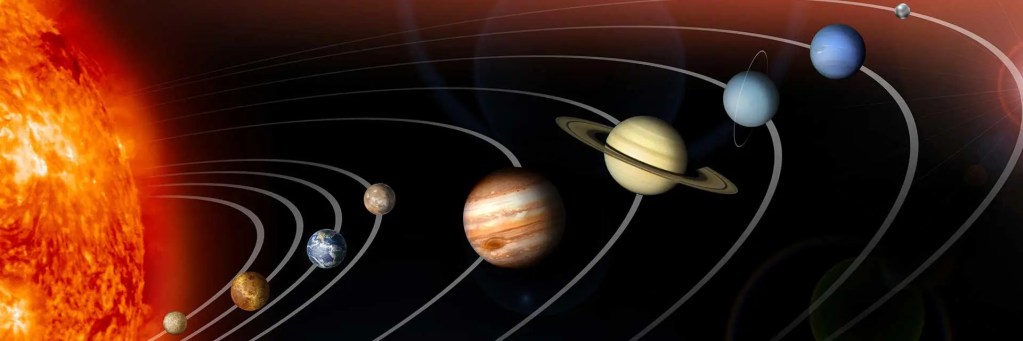
The Discovery of the Outer Planets
Jupiter: The Gas Giant
Discovery – To understand the discovery of Jupiter, you have to go back to ancient times. Jupiter is one of the five planets visible to the naked eye from Earth. **It** wasn’t until Galileo Galilei turned his telescope to the heavens in 1610 that he spotted Jupiter’s four largest moons, now known as the Galilean moons – Io, Europa, Ganymede, and Callisto. These discoveries shattered the belief that all celestial bodies revolved around the Earth, forever changing our understanding of the universe. **Jupiter** is not just the largest planet in our solar system; it’s also a **strong** source of radio waves and has a massive magnetic field.
Saturn: The Ringed Beauty
Outer – The discovery of Saturn dates back to ancient civilizations, as it is visible to the naked eye in the night sky. The **most** iconic feature of Saturn is its **rings**, which were first observed by Galileo Galilei in 1610. **It** wasn’t until 1655 that Dutch astronomer Christiaan Huygens correctly identified the rings as a disk surrounding the planet. **Saturn** is known for its mesmerizing beauty, with its intricate ring system captivating astronomers and space enthusiasts for centuries.
**Saturn** has a unique hexagonal-shaped storm at its north pole, adding to its mystique and allure. The planet has more than 80 moons, with Titan being the largest and most fascinating due to its thick atmosphere and hydrocarbon lakes. **Saturn** continues to be a subject of study and wonder for scientists exploring the mysteries of our solar system.
Uranus: The Tilted Planet
To – The discovery of Uranus is credited to the British astronomer Sir William Herschel in 1781. Herschel initially thought **he** had discovered a comet but soon realized it was a new planet. **Uranus** is unique in that it rotates on its side, possibly due to a collision with a massive object in its distant past. The planet is often referred to as an “ice giant,” composed mainly of water, ammonia, and methane.
Giant: Uranus has a system of 13 rings, which were first discovered in 1977 when the planet passed in front of a star. The rings of Uranus are dark and composed of small particles, making them challenging to observe from Earth. **The** planet also has 27 known moons, each with its own characteristics and mysteries waiting to be unraveled by future missions and exploration.
Neptune: The Farthest Planet
On – Neptune, the farthest planet in our solar system, was discovered in 1846 by astronomers Johann Galle and Urbain Le Verrier. **It** was the first planet to be predicted mathematically before being observed. **Neptune** is a frigid world with powerful winds, reaching speeds of up to 1,200 miles per hour. The planet has a bluish tint due to the presence of methane in its atmosphere, giving it a distinct appearance among the gas giants.
Planet: Neptune has 14 known moons, with Triton being the largest and most intriguing. Triton’s retrograde orbit and icy surface make it a subject of fascination for scientists studying the outer reaches of our solar system. **Neptune** remains a target for further exploration, with potential missions planned to research deeper into its mysteries and uncover the secrets of this distant world.
The Discovery of the Dwarf Planets
All the planets in our solar system were discovered at different times in history. The journey to understanding our celestial neighborhood also led to the discovery of dwarf planets, a classification that includes Pluto, Eris, and other celestial bodies. Let’s research into the fascinating discoveries of these dwarf planets.
Pluto: The Controversial Planet
The discovery of Pluto in 1930 by astronomer Clyde Tombaugh marked a significant moment in astronomical history. For decades, Pluto was considered the ninth planet in our solar system until it was reclassified as a dwarf planet in 2006 by the International Astronomical Union (IAU). This reclassification sparked controversy and debate among astronomers and the general public, with many questioning Pluto’s status.
Despite its controversial classification, Pluto continues to captivate us with its unique characteristics and mysterious surface features. The New Horizons spacecraft’s historic flyby in 2015 provided valuable data and stunning images of this distant dwarf planet, shedding light on its composition and environment. Exploration efforts like these help us uncover the secrets of Pluto and deepen our understanding of the outer reaches of our solar system.
While Pluto may no longer hold the title of a full-fledged planet, its discovery and subsequent reclassification have expanded our knowledge of celestial bodies beyond traditional planets. Its story serves as a reminder of the ever-evolving nature of science and the intricate dance of discovery that continues to unfold in the cosmos.
Eris and the Kuiper Belt Objects
The discovery of Eris in 2005 challenged our understanding of the solar system’s outer boundaries. Eris, a dwarf planet similar in size to Pluto, resides in the Kuiper Belt—a region beyond Neptune filled with icy bodies and dwarf planets. Eris’s discovery highlighted the diverse nature of objects in the Kuiper Belt and raised questions about how we define planets in our solar system.
This region, teeming with small celestial bodies like Eris, offers a glimpse into the ancient remnants of the early solar system. Studying Kuiper Belt objects provides valuable insights into the solar system’s formation and evolution, offering clues about the conditions that existed billions of years ago. The continued exploration of Eris and its neighboring Kuiper Belt objects enriches our understanding of the vast and complex tapestry of our cosmic backyard.
The Role of Space Exploration in Planetary Discovery
NASA’s Early Space Missions

Early space missions conducted by NASA and other space agencies played a crucial role in expanding our knowledge of the planets in our solar system. Through missions like Mariner and Pioneer, scientists were able to capture close-up images of Mars, Venus, and Mercury, providing valuable insights into the composition and surface features of these celestial bodies. These early missions laid the groundwork for future explorations and discoveries.
The Voyager Program and the Outer Planets
During the era of the Voyager program in the late 1970s and early 1980s, NASA launched the Voyager 1 and Voyager 2 spacecraft to explore the outer planets of our solar system. These missions provided unprecedented views of Jupiter, Saturn, Uranus, and Neptune, capturing stunning images and valuable data about these distant worlds. The Voyager spacecraft also conducted flybys of several moons, revealing new details about these natural satellites.
Role: The Voyager program not only revolutionized our understanding of the outer planets but also demonstrated the feasibility and success of long-duration space missions. The discoveries made by Voyager continue to inspire scientists and space enthusiasts, highlighting the importance of exploration and pushing the boundaries of human knowledge.
Modern Space Missions and Ongoing Discoveries
Exploration of the planets in our solar system continues today through modern space missions like NASA’s Mars rovers and the Juno mission to Jupiter. These missions utilize advanced technology and scientific instruments to study the geology, atmosphere, and magnetic fields of these planets, uncovering new mysteries and expanding our understanding of our cosmic neighborhood.
Missions: From the search for signs of past life on Mars to the study of the stormy atmosphere of Jupiter, modern space missions are forging ahead with groundbreaking discoveries. The data collected by these missions not only deepen our knowledge of the planets in our solar system but also provide valuable insights into the potential for life beyond Earth and the dynamics of planetary systems.
Conclusion
Considering all points, you have now gained a deeper understanding of when the planets in our solar system were first discovered. From the ancient observations of visible planets like Mercury and Venus to the modern technological advancements that led to the discovery of distant planets like Uranus and Neptune, each discovery has added to our knowledge of the universe.
Reflecting on the journey of planetary discovery, you can appreciate the curiosity and perseverance of early astronomers who paved the way for future generations to explore the wonders of our solar system. By learning about the history of planetary discovery, you are better equipped to appreciate the vastness and complexity of our cosmic neighborhood.
Lastly, the ongoing study of our solar system continues to uncover new insights and mysteries waiting to be revealed. With each new discovery, we come closer to understanding our place in the universe and the intricate dance of planets that has been unfolding for billions of years. So keep looking up at the night sky, for who knows what other celestial secrets await your discovery.
FAQ
Q: When were the planets in our solar system first discovered?
A: The planets in our solar system have been known since ancient times. Mercury, Venus, Mars, Jupiter, and Saturn were all visible to the naked eye and were observed by ancient civilizations. Uranus was the first planet to be discovered with a telescope in 1781, followed by Neptune in 1846. Pluto, which was once considered the ninth planet, was discovered in 1930.
Q: Who discovered Uranus?
A: Uranus was discovered by the German-born British astronomer Sir William Herschel on March 13, 1781. He initially thought it was a comet but later realized it was a new planet.
Q: Who discovered Neptune?
A: Neptune was discovered by German astronomer Johann Galle and his assistant Heinrich d’Arrest on September 23, 1846. Its existence was mathematically predicted by French mathematician Urbain Le Verrier and British mathematician John Couch Adams.
Q: Why was Pluto demoted from planet status?
A: Pluto was demoted from planet status in 2006 by the International Astronomical Union (IAU) due to its small size and its orbit overlapping with other objects in the Kuiper Belt. It was reclassified as a “dwarf planet” because it did not meet all the criteria set by the IAU for a full-fledged planet.
Q: Are there any undiscovered planets in our solar system?
A: There is ongoing research and speculation about the existence of a possible ninth planet in our solar system, often referred to as “Planet Nine.” Astronomers have observed anomalies in the orbits of trans-Neptunian objects that could be explained by the presence of a large planet beyond Neptune. However, the existence of Planet Nine has not yet been confirmed, and more research is needed to determine if there are any undiscovered planets in our solar system.
