



Exploring the mysteries of Mars, the latest research explores into the puzzling presence of water on the red planet. Scientists have uncovered evidence suggesting that liquid water may exist beneath the surface of Mars, hidden away in icy reservoirs. This groundbreaking discovery has profound implications for our understanding of the Martian environment and the potential for life beyond Earth. Join us as we unravel the fascinating secrets of about water on Mars.
Key Takeaways:
- Presence of liquid water: Scientists have discovered a large underground reservoir of liquid brine water on Mars.
- Potential for life: The presence of liquid water raises the possibility of microbial life existing on Mars.
- Ice deposit: The discovery of a large ice deposit beneath the surface of Mars suggests the planet may have more water than previously thought.
- Impact on future exploration: Knowing where water is located on Mars will be crucial for future missions and colonization efforts.
- Understanding Martian water cycle: Studying the distribution and movement of water on Mars can provide insights into the planet’s past and potential habitability.
Historical Background
Early Mars Exploration
The exploration of Mars dates back to ancient times when early astronomers observed the Red Planet in the night sky. However, it was not until the 1960s that space agencies began sending probes to study Mars up close. One of the earliest missions was NASA’s Mariner program, which provided valuable insights into the Martian surface and atmosphere.
Search for Water on Mars
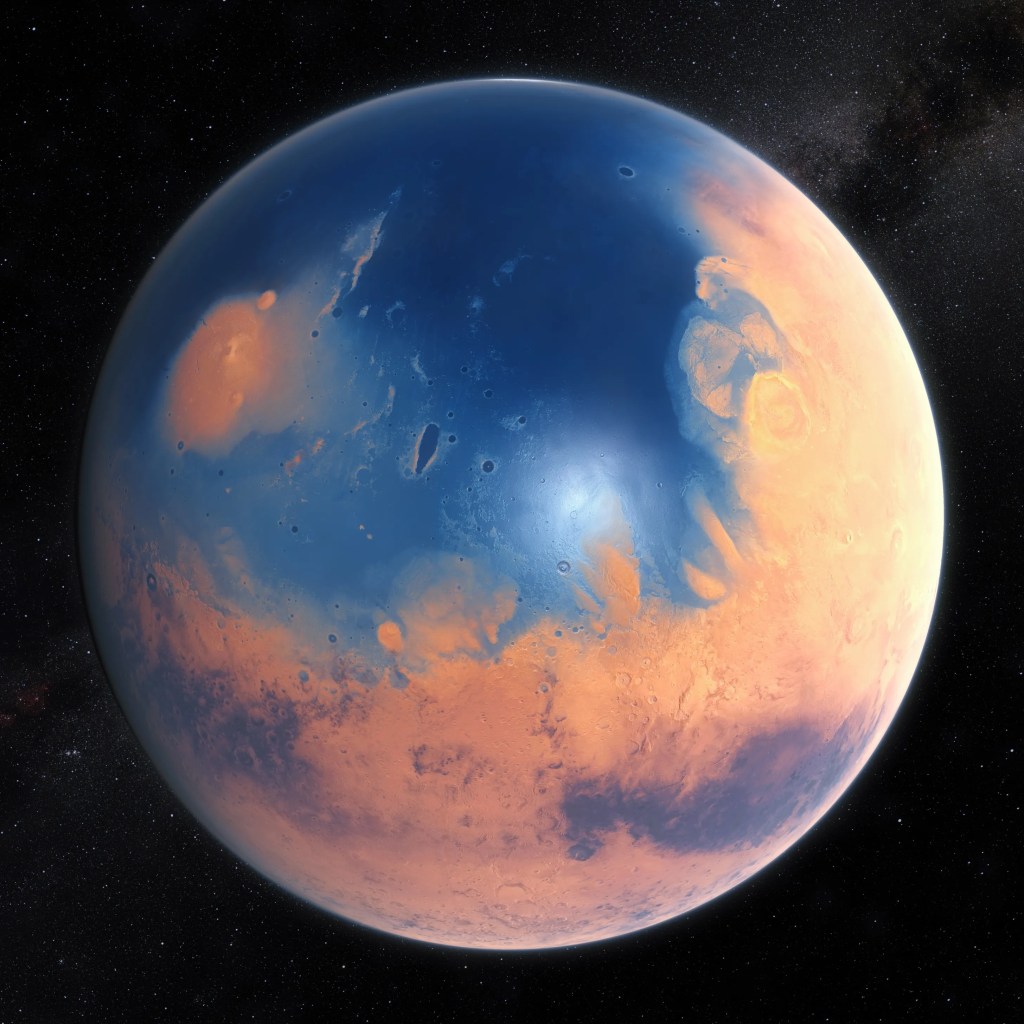
Background information on the search for water on Mars reveals a fundamental interest in understanding the potential for life beyond Earth. The presence of water is a crucial factor in determining the habitability of a planet, making it a key focus of many Mars missions. Scientists have used a variety of methods, including orbital observations and rover missions, to search for signs of water on the Red Planet.
Another crucial aspect of the search for water on Mars is the identification of water ice deposits in various regions. These ice deposits not only provide insight into Mars’ geological history but also offer a potential resource for future human missions to the planet. Understanding the distribution and composition of water on Mars is crucial for unraveling the mysteries of the planet’s past and its potential for supporting life.
The Latest Discovery
Even as scientists continue to unravel the mysteries of the Martian surface, the latest discovery about water on Mars has captured the attention of the scientific community worldwide. This discovery opens up new possibilities and raises more questions about the history and potential for life on the Red Planet.
NASA’s Perseverance Rover Findings
An exciting revelation from NASA’s Perseverance rover is the detection of ancient river delta deposits in Jezero Crater. These deltas indicate that liquid water once flowed on the surface of Mars, providing further evidence to support theories of a wetter, more Earth-like ancient Mars. The rover’s instruments have also identified mineral signatures linked to water, hinting at past habitable conditions.
Evidence of Seasonal Water on Mars
One intriguing finding that piques scientists’ interest is the evidence of seasonal water on Mars. The identification of recurring slope lineae (RSL) in various regions suggests contemporary flows of briny water during the warmer months. These salty streaks seem to ebb and flow with the changing seasons, hinting at a dynamic and potentially accessible water source on Mars.
Perseverance continues to explore the Martian terrain, shedding light on the planet’s watery past and present. The discovery of water, both ancient and potentially present, fuels scientific curiosity and lays the groundwork for future missions to research deeper into Mars’ watery secrets.
The Science Behind the Discovery
Once again, the red planet has surprised us with new findings about water on Mars. The ESA’s discovery of buried water ice at Mars’s equator has provided valuable insights into the presence of water on the planet. This discovery opens up a realm of possibilities for understanding the geological processes and potential habitability of Mars.
Geological Processes on Mars
With the uncovering of buried water ice at Mars’s equator, scientists are now able to study the geological processes that have shaped the planet’s surface. The presence of water ice indicates past climatic changes and the potential for liquid water to have existed on Mars. This discovery sheds light on the planet’s history and evolution over time.
Role of Climate Change
Any discussion of water on Mars inevitably leads to the role of climate change on the planet. The discovery of buried water ice at the equator raises questions about how climate change may have influenced the distribution of water on Mars. Processes such as sublimation and deposition may have played crucial roles in shaping the planet’s current water reservoirs.
Implications of the Discovery
Keep exploring the fascinating world of Water on Mars as it opens up a myriad of implications for our understanding of the Martian environment and its potential for supporting life.
Possibility of Life on Mars
Mars, with its history of water bodies and the recent discovery of liquid water beneath its surface, ignites the question of potential life on the Red Planet. The presence of water is crucial for life as we know it, and this finding increases the chance of microbial life existing on Mars. The search for life beyond Earth takes on a new dimension with the revelation of water sources on Mars.
Future Mars Exploration Missions

Future exploration missions to Mars will now be laser-focused on investigating these water reservoirs and understanding their extent and composition. The presence of liquid water opens up possibilities for sustained human presence on Mars, as it could be used as a resource for drinking water, fuel production, and even agriculture to support potential colonies. The discovery of water not only enhances our scientific knowledge but also paves the way for ambitious missions to the Red Planet.
Challenges and Limitations
Many discoveries about water on Mars come with their own set of challenges and limitations. For more information on the latest discovery by NASA, you can visit their website here.
Technological Challenges
The technology used to study Mars is incredibly advanced, but it still has its limitations. The harsh Martian environment presents challenges for equipment to function optimally. Extreme temperatures, radiation exposure, and dust storms can all impact the performance of the instruments used to study water on Mars.
Interpreting Data from Mars
The data collected from Mars is complex and requires careful analysis to draw accurate conclusions. Scientists must consider various factors such as geological processes, chemical composition, and potential sources of contamination. Interpreting this data accurately is crucial to understanding the presence of water on Mars and its implications for the possibility of past or present life on the planet.
To better understand the implications of the latest discovery about water on Mars, you must consider the challenges scientists face in analyzing the data. Misinterpretations could lead to inaccurate conclusions about the existence of water and potential for life on the Red Planet.
Ongoing Research and Future Directions
Upcoming Mars Missions
To explore further possibilities of water on Mars, upcoming missions are underway. These missions aim to investigate the presence of water in different forms, whether frozen beneath the surface or as vapor in the atmosphere. As technology advances, more sophisticated instruments are being developed to analyze Martian samples with greater precision and clarity. The data obtained from these missions could revolutionize our understanding of the red planet and its potential for supporting life.
Potential Breakthroughs
Ongoing research into water on Mars holds the promise of groundbreaking discoveries that could reshape humanity’s perspective on our neighboring planet. Scientists are hopeful that clues about the history of water on Mars could provide insights into the planet’s past climate and geology. Unlocking these mysteries could reveal the extent to which Mars was once habitable and whether life could have existed there.
It is vital to keep in mind that while the prospect of finding water on Mars is exciting, the challenges of exploring and potentially colonizing the red planet are immense. Researchers must overcome obstacles such as extreme temperatures, radiation exposure, and the harsh Martian environment to make significant strides in our exploration of this enigmatic world.
Summing up
Drawing together all the information presented in the article about the latest discovery on water on Mars, it becomes clear that scientists have found compelling evidence of liquid water beneath the planet’s south polar ice cap. This discovery opens up new possibilities for understanding the potential habitability of Mars and provides valuable insights into the planet’s past and present geological processes.
As you investigate deeper into the intricate world of planetary science, remember that each discovery brings us closer to unraveling the mysteries of the universe and our place within it. The quest for knowledge knows no bounds, and the exploration of Mars and other celestial bodies continues to captivate the imagination of scientists and curious minds alike.
FAQ
Q: What is the latest discovery about water on Mars?
A: The latest discovery about water on Mars is that scientists have found evidence of a large underground reservoir of liquid water on the planet.
Q: How was this discovery made?
A: This discovery was made using radar data from the Mars Express spacecraft, which detected a 12-mile wide liquid water lake under the planet’s southern polar ice cap.
Q: Why is the discovery of liquid water on Mars significant?
A: The discovery of liquid water on Mars is significant because it raises the possibility that there could be life on the planet, as water is a key ingredient for life as we know it.
Q: What are the implications of this discovery for future Mars exploration?
A: The discovery of liquid water on Mars has important implications for future Mars missions, as it could provide a potential source of water for human explorers and fuel for spacecraft.
Q: What further research is planned to learn more about water on Mars?
A: Scientists are planning further research to explore the underground water reservoir on Mars, including sending rovers or landers equipped with drills to collect samples and analyze the composition of the water.
